Sitting is supposed to be the easy part of the day, and with sciatica it's often the worst. You lower yourself into the chair and within twenty minutes there's that line of ache or buzzing running from your buttock down the back of your leg. You shift, you cross your legs, you perch on one cheek — nothing holds for long. By the end of a workday you're desperate to stand.
The phrase "best chair for sciatica" suggests there's one perfect chair to buy. There isn't, really. What matters far more is the setup — how the chair is arranged to keep pressure off the sciatic nerve and your pelvis in a neutral position. A modest chair set up well beats an expensive chair set up badly. Here's how to get the setup right, and what to look for if you are buying.
Why sitting flares sciatica
Sciatica is irritation of the sciatic nerve, the thick nerve that runs from your lower back through your buttock and down each leg. Sitting aggravates it for a few mechanical reasons that stack on top of each other.
When you sit, especially slumped, your pelvis tends to roll backward and your lower back rounds into a C. That position increases pressure on the lumbar discs and can narrow the spaces where the nerve roots exit — squeezing the nerve at its source. Lower down, sitting compresses the buttock, and the piriformis muscle there sits right next to (sometimes right on top of) the sciatic nerve. A tight piriformis under your full body weight presses on the nerve directly. So sitting can pinch the sciatic nerve at both ends — the spine and the buttock — which is why sciatica when sitting is such a common and stubborn complaint.
The fix, then, isn't a magic cushion. It's a setup that keeps your pelvis neutral, supports your lower back's natural curve, and spreads the pressure off the nerve.
The chair setup that takes pressure off the nerve
Work through these in order. They build on each other.
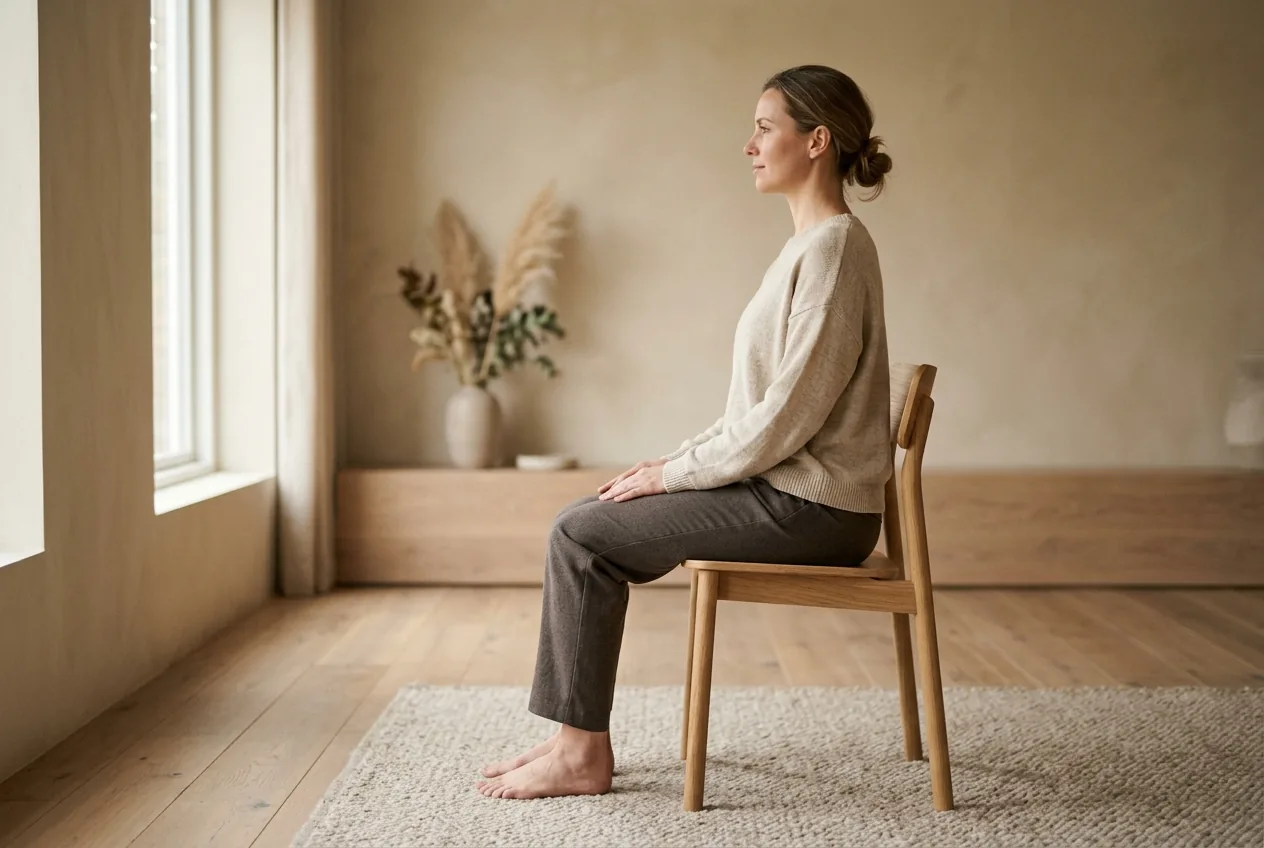
1. Get your hips slightly above your knees. This is the single most useful adjustment for sciatica. When your hips sit a touch higher than your knees, your pelvis rolls slightly forward into neutral and your lower back keeps its natural inward curve instead of slumping. Raise the seat, or sit on a wedge cushion that tilts you gently forward.
2. Support the lumbar curve. Your lower back has an inward curve, and sitting flattens it unless something fills the gap. A built-in lumbar support, or a small cushion or rolled towel placed at belt height, keeps that curve and stops the backward pelvic roll that pinches the nerve at the spine.
3. Sit all the way back. Use the full seat and backrest. Perching on the front edge — which people with sciatica often do to avoid pressure — leaves your spine unsupported and usually makes the slump worse over time.
4. Keep both feet flat and even. No crossed legs, no tucked foot. Crossing your legs tilts your pelvis and loads one side, which can press the buttock straight into the nerve. Feet flat, weight even, both sit bones sharing the load.
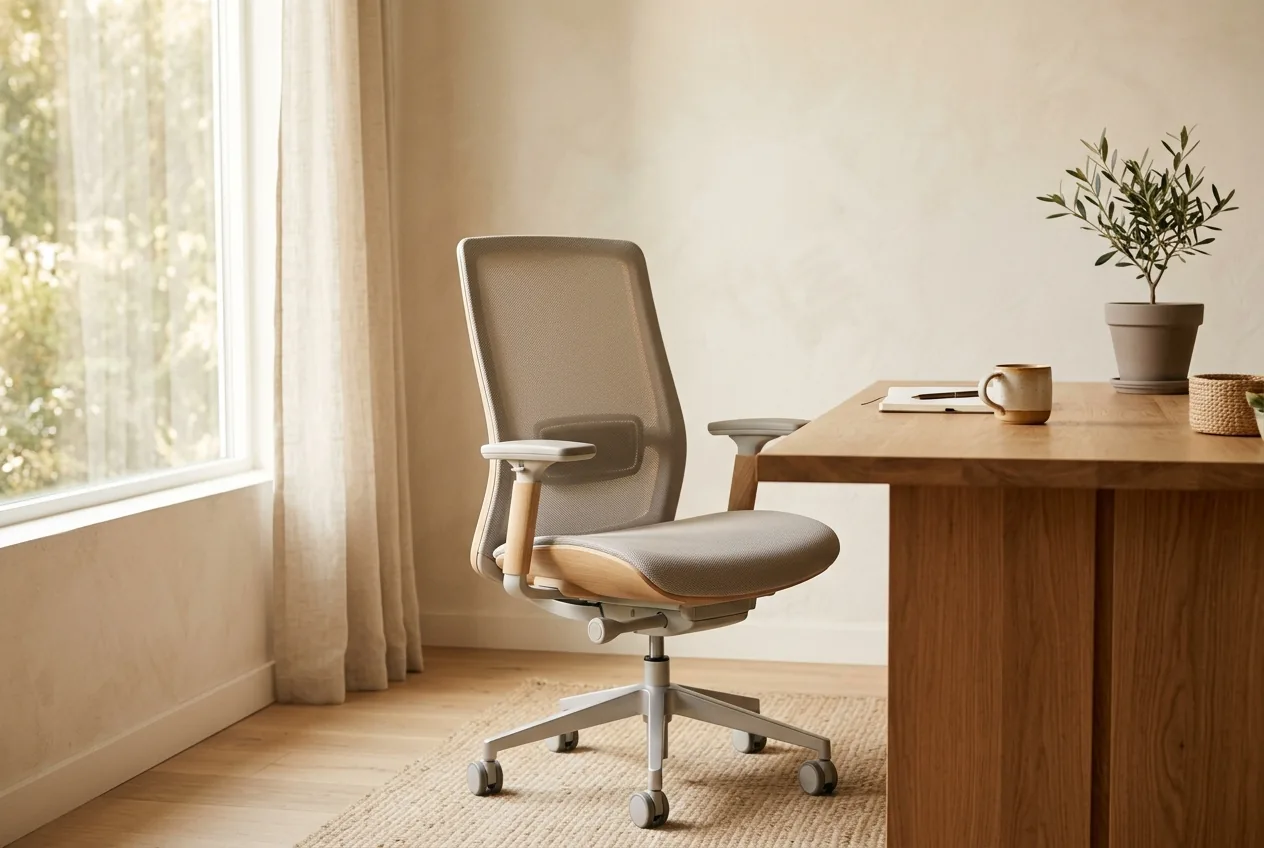
5. Mind the seat edge. A hard front edge that digs into the back of your thighs restricts circulation and adds to the discomfort. A slightly rounded "waterfall" front edge is kinder.
With sciatica, the goal of every chair adjustment is the same: pelvis neutral, lumbar curve kept, pressure off the buttock.
What to look for if you're buying
If you are shopping, the features that matter for sciatica are the ones that let you hit the setup above:
- Adjustable seat height, so you can get your hips above your knees.
- Adjustable, firm lumbar support that meets your lower back, not your mid-back.
- A seat that isn't too soft. Deep, plush seats let your pelvis sink and roll backward. Firm-but-not-hard holds neutral better.
- A seat pan you can tilt slightly forward, or room to add a wedge cushion.
- Adjustable armrests, so your shoulders relax and you're not bracing.
A chair built around back and hip support ticks most of these — the same qualities that make a good ergonomic chair for back and hip pain are the ones that help sciatica.
The thing no chair can do
Even the best setup can't fix sciatica if you stay in it for hours. Sitting still is the provocation; movement is the relief. Stand and walk for a minute or two every twenty to thirty minutes — set a timer if you have to. Walking gently mobilises the nerve and unloads the buttock and discs. A standing-desk option you can switch to helps, as long as you don't trade sitting all day for standing all day.
It also helps to address the piriformis directly between sitting bouts. Gentle piriformis stretches can ease the buttock-side compression so sitting hurts less when you do sit.
When to see a doctor
Most sciatica is mechanical and eases as you reduce the pressure on the nerve. See a clinician promptly if you develop weakness in the leg or foot, numbness in the saddle area (inner thighs, groin, buttocks), any loss of bladder or bowel control, or if the pain follows a significant injury — these can signal something that needs urgent attention. Also get assessed if the pain is severe, steadily worsening, or not improving after a few weeks of sensible self-care. A good chair setup helps comfort; it doesn't replace evaluation when these signs appear.
Matching the setup to your pattern
A neutral-pelvis, lumbar-supported chair setup helps most people with sciatica because the common drivers — pelvic roll and buttock compression — are so widespread. But which end your nerve is getting pinched at, and why, depends on your own posture. Someone whose pelvis tilts forward needs a different emphasis than someone who slumps backward.
That's the case for knowing your own pattern rather than copying a generic setup. A short posture assessment measures how your pelvis and spine actually sit and builds a daily routine around it — so the chair, the movement, and the exercises all target what's really irritating your nerve.
Common questions
What's the best sitting position for sciatica?
Hips slightly higher than your knees, lower back supported in its natural curve, feet flat and even, and your weight shared across both sit bones. This keeps the pelvis neutral and takes pressure off the nerve at both the spine and the buttock. Just as important: don't hold it for hours — break it up with movement.
Are kneeling chairs or exercise balls good for sciatica?
They can help some people by encouraging a forward pelvic tilt and a neutral lower back, but they're not universally better and can fatigue you if used all day. Treat them as one option to alternate with, not a cure. Comfort and the ability to keep your lumbar curve matter more than the chair's style.
Should I use a cushion for sciatica?
A wedge cushion that tilts your pelvis slightly forward, or a small lumbar support behind your lower back, both help by restoring the neutral position that sitting tends to collapse. A doughnut or pressure-relief cushion can ease buttock-side discomfort. The right one depends on whether your flare comes more from the spine or the buttock.
Why does my sciatica hurt more after sitting than standing?
Sitting rolls your pelvis backward, rounds your lower back, and compresses the buttock against the nerve — all at once. Standing keeps your spine in a more neutral curve and takes the direct pressure off the buttock. That's why many people with sciatica feel worse the longer they sit and get relief the moment they stand and walk.