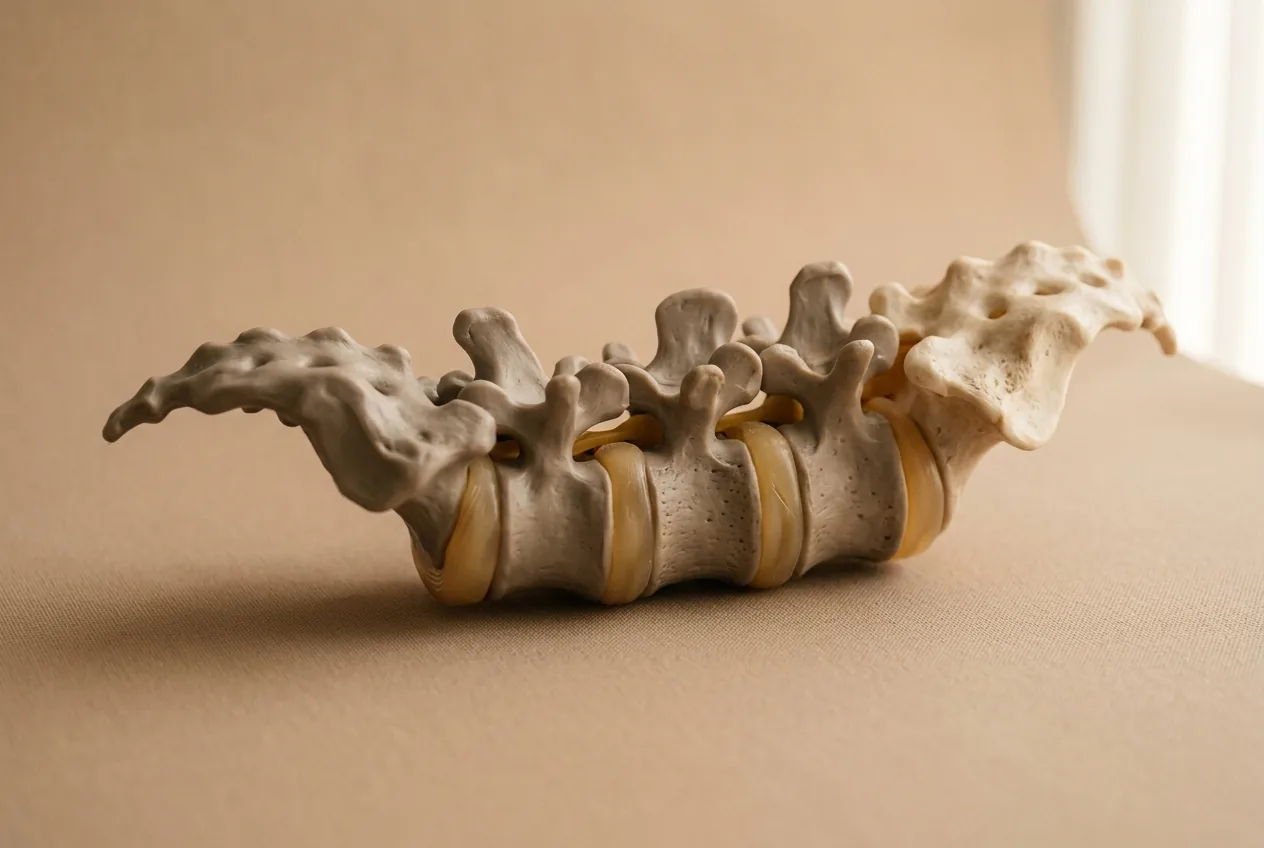

The phrase alone sounds like a slow collapse. "Degenerative disc disease" lands in your inbox after a scan, and suddenly that ache you've had for years feels like a countdown. If you've been moving more cautiously since you read it — skipping the gym, sitting stiffly, bracing every time you stand — that reaction is understandable, and mostly unnecessary.
Start with the name, because it's misleading. Degenerative disc disease isn't really a disease, and it isn't a steady downhill slide. It describes the normal drying and thinning of spinal discs that happens to almost everyone with age, the way grey hair does. Plenty of people have it on imaging and no pain at all. When it does cause symptoms, the right degenerative disc disease exercises can settle them and keep the back working — not by reversing the wear, but by supporting it well.
What's going on with the discs
Spinal discs are mostly water when you're young. Over decades they lose fluid, flatten slightly, and stiffen. That can narrow the space between vertebrae and irritate nearby structures, which is where stiffness and aching come from. Symptoms often come and go in flares rather than getting steadily worse, which surprises people who expected a one-way decline.
The wear tends to concentrate where load has been uneven for years. A pelvis tipped forward by tight hip flexors, a lower back that over-arches to compensate, a couple of segments doing the work of several — that pattern wears specific discs faster. So the degeneration is partly an age story and partly a loading story. The age part you can't change. The loading part you can.
That distinction is the whole game. You can't make discs young again, but you can change how much stress they take every day.
Movement that helps
The goals are to keep the discs nourished, build the muscle that shares load, and stay flexible enough to move without compensating. Gentle and frequent beats hard and occasional.
- Walking, daily. Rhythmic loading pumps fluid in and out of the discs and keeps the back from stiffening. A couple of relaxed walks a day does more than one grinding session.
- Glute bridges. Lying on your back, feet flat, lift the hips by squeezing the glutes — not by arching the lower back. Strong glutes take load off worn segments. This is one of the most useful moves for a degenerative lower back.
- Bird dog. On hands and knees, extend one arm and the opposite leg slowly, keeping the spine still. It trains the deep stabilisers to hold the back steady while the limbs move, which is exactly what daily life demands.
- Cat-cow, slow and small. Gently moving the spine through a comfortable range keeps the segments mobile and the discs fed. Stay within the range that feels easy.
- Hip-flexor stretching. If sitting has shortened the front of your hips, releasing them lets the pelvis sit level and takes strain off the lower back.
You're not rebuilding the discs. You're building a back strong enough that the discs don't have to do it alone.
What to ease off
- Repeated heavy spinal flexion. Loaded toe-touches, weighted sit-ups, and slumped lifting concentrate force on the worn segments. Hinge from the hips and keep the spine long when you bend.
- High-impact pounding before you're conditioned. Running on hard surfaces and jumping can aggravate a stiff, worn back. Build a strength base first.
- Long static sitting. Holding any one position lets the back stiffen and the discs go hungry. Change position often. The wider list in exercises to avoid with lower back pain is worth a look.
If a worn segment is also irritating a nerve and sending symptoms into the leg, the gentle approach in sciatica stretches at home can help calm things down.
How to pace yourself through flares
Degenerative discs flare. That's the nature of the thing — a stretch of feeling good, then a few days where the back is stiff and tetchy for no obvious reason, then back to baseline. People who do best aren't the ones who never flare; they're the ones who don't panic when they do.
The trap is the all-or-nothing swing. A flare hits, you stop everything, the back stiffens further, and you lose the strength you'd built — which makes the next flare more likely. The better move is to dial down, not stop. On a bad day, keep walking, keep the gentle range-of-motion work, and drop the harder strength sessions for a day or two. Movement on a flare day feels counterintuitive, but a back that keeps moving settles faster than one that's been wrapped in cotton wool.
A useful way to judge a new exercise is the next-morning test. Some soreness during or just after a session is fine. What you're watching for is how the back feels the next morning. If a move leaves you noticeably stiffer or sorer a day later, it was too much — scale it back, not out. Progress is measured over weeks, by how your ordinary days feel, not by how heavy or hard any single session was.
Is it the disc or something else
Degenerative changes show up on scans so often that they get blamed for pain that's actually coming from muscles, joints, or simple deconditioning. If your pain is local, achy, and eases with movement, muscle and joint sources are likely. If it shoots into the leg with numbness or tingling, a nerve may be involved. Sorting this out changes the plan, and how to tell muscle pain from disc pain lays out the signs.
When to see a doctor
Degenerative disc disease is usually managed well with movement and strength, but some signs need prompt attention. See a clinician if you notice numbness or weakness spreading down a leg, a foot that catches when you walk, or pain after a fall. Seek urgent care for any loss of bladder or bowel control or numbness around the saddle area — rare, but treated as an emergency. Also get checked for pain that's severe, steadily worsening, or comes with fever or unexplained weight loss. This is a short safety list, not a forecast. Your clinician should confirm the picture and guide your care.
Why a matched routine outlasts a generic one
Two people with the same scan can need almost opposite work. One has a back that over-arches and needs the deep core and glutes switched on; another is flat and stiff and needs gentle mobility first. Generic degenerative disc disease exercises can't tell the difference, which is why so many people drift between routines without lasting change. Relief that holds comes from training the specific correction your back needs, daily. That's the idea behind the posture-based method for chronic back pain: measure how your body is actually loading itself, then build the routine around that.
Nothing here cures degeneration or replaces your doctor's advice, and no exercise makes a disc young again. But for most people, a strong, well-supported back simply stops noticing the wear. The point is an ordinary life — lifting your kid, gardening on a Saturday, sitting through a long drive — without the back filing a complaint every time.
Common questions
Is degenerative disc disease actually a disease?
The name is misleading. It describes the normal drying and thinning of spinal discs that happens to almost everyone with age, the way grey hair does. Plenty of people have it on imaging with no pain at all, and it tends to flare and settle rather than slide steadily downhill.
Can exercise reverse degenerative disc disease?
No exercise makes a disc young again. What movement does is keep the discs nourished and build the muscle that shares load, so the back stays strong enough that the worn discs don't have to do the work alone.
What exercises help a degenerative lower back?
Daily walking, glute bridges, bird dog, slow cat-cow within a comfortable range, and hip-flexor stretching if sitting has tightened the front of your hips. Gentle and frequent beats hard and occasional.
Should I stop exercising during a flare?
Dial down rather than stop. On a bad day, keep walking and keep gentle range-of-motion work, but drop the harder strength sessions for a day or two. A back that keeps moving settles faster than one wrapped in cotton wool. Check with your clinician if symptoms change sharply.