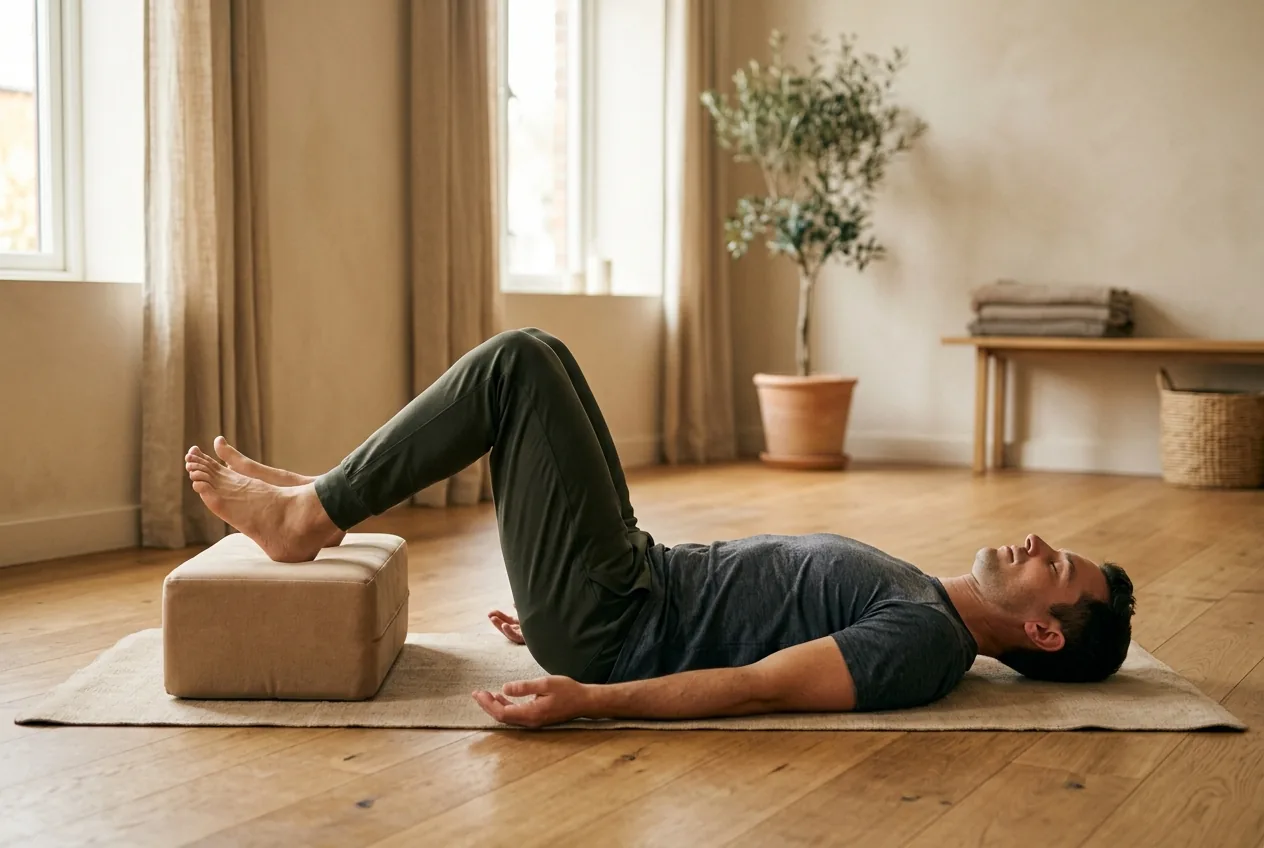

Your back seized up, you could barely straighten, and someone — a doctor, a friend, the internet — suggested a muscle relaxer. So now you're wondering whether it's worth it, whether it'll actually loosen the knot, and whether you'll just be groggy on the couch for a day. Fair questions. The honest answer about muscle relaxers for back pain is that they can take the edge off a bad spasm, but they don't fix the reason your back spasmed in the first place.
This isn't medical advice, and what's right for you is a conversation with your own clinician. What follows is the plain-English version of what these medications do and don't do, so you can have that conversation better informed.
What a back spasm actually is
When your back "goes out," what you're feeling is usually a muscle spasm — a group of muscles clamping down hard and refusing to let go. It's protective. The body senses that something in the area is irritated or under strain and locks the muscles to splint it, the way you'd instinctively guard a sore joint. That guarding is what makes you afraid to move and what makes straightening up feel impossible.
The spasm itself is rarely the root problem. It's the body's response to something underneath — an irritated joint, an overworked muscle that finally gave out, a part of your spine that's been taking strain it wasn't built for, often for a long time. The spasm is the alarm, not the fire.
That distinction matters for the whole question of medication, because a muscle relaxer works on the alarm.
What muscle relaxers actually do
There are a few kinds, and they don't all work the same way. The prescription ones most people get for back pain (the centrally acting type) don't really "relax" the specific knotted muscle directly. They work more broadly on the nervous system, dialing down the signaling that keeps muscles tense and producing a general sedative, calming effect. That's why they often make you drowsy — the sedation is part of how they ease the guarding.
So an OTC muscle relaxer for back relief or a prescription one can genuinely help in the first days of a severe spasm. Less guarding means you can move a little more, sleep a little better, and break the pain-tense-pain loop that keeps a flare going. For a short, ugly episode, that's a reasonable use.
What they don't do:
- They don't fix what caused the spasm. The irritated structure underneath is still irritated.
- They aren't a long-term answer. Most guidance treats them as short-term, because the drowsiness, the grogginess, and the diminishing benefit add up, and some carry a dependence risk.
- They don't make you stronger or change the mechanics that set you up for the spasm in the first place.
Heat and gentle movement often do a comparable job on the guarding without the side effects, which is worth weighing — the rundown on heat or ice for back pain covers when each helps. Medication can be a useful bridge through the worst of it, not a destination.
What actually breaks the cycle
Here's the pattern that traps people. The back spasms, the relaxer calms it, the spasm fades, life resumes — and a few weeks or months later, the back goes out again. The medication treated the alarm every time and never touched the wiring.
Breaking that cycle means addressing why the muscles keep being asked to guard. In most chronic, non-traumatic cases, that comes down to the back doing stabilizing work it shouldn't have to — because the muscles that are supposed to support the spine have switched off or weakened, and others overwork and eventually spasm to cover. The fix is gentle, progressive movement that wakes up the right support so the back stops being overloaded.
In a flare, that means not lying flat for days. A short rest is fine, but bed rest for more than a day or two tends to make a spasm stiffer, not better. As the worst eases, gentle movement and then targeted strengthening are what stop it returning. The practical steps for the acute phase are in lower back spasm relief.
So the useful way to think about a muscle relaxer: a possible short-term tool to get you moving again, used under a clinician's guidance, paired with the active work that actually changes the odds of a next time.
When to see a doctor
Talk to a clinician before starting any muscle relaxer, and seek care promptly if your back pain comes with numbness, tingling, or weakness spreading down a leg, any loss of bladder or bowel control, pain after a fall or accident, fever, unexplained weight loss, or pain that's severe or steadily worsening. Muscle relaxers can also interact with alcohol and other medications and impair driving, which is another reason to use them only with medical guidance.
Why your back keeps choosing the same muscle
The reason the spasm lands in the same spot every time is that it's downstream of a specific imbalance in how you're built and how you load your spine. A medication treats the symptom the same way for everyone; the cause is individual. That's why some people's flares respond to one approach and others' don't. Calming a spasm is a fair starting point, but the lasting change comes from finding and correcting the pattern that keeps overloading that muscle. A posture assessment that maps your actual deviations is one way to see what's pulling on your back, so you're not just resetting the alarm and waiting for it to ring again.
A muscle relaxer can quiet the spasm, but the spasm keeps coming back until you change what's overloading the muscle.
Common questions
Do muscle relaxers actually work for back pain?
They can ease a severe spasm in the short term by calming the nervous system and reducing muscle guarding, which helps you move and sleep through the worst days. They don't fix the underlying cause, and they're not meant for long-term use. Many people get comparable relief from heat and gentle movement.
How long should you take muscle relaxers for back pain?
Most guidance treats them as short-term, often just a few days to a couple of weeks during an acute flare, because of drowsiness, diminishing benefit, and dependence risk with some types. Follow your clinician's instructions, and use the time to start gentle movement rather than waiting it out.
What's the difference between muscle relaxers and painkillers?
Painkillers (like anti-inflammatories or acetaminophen) target the pain signal and, in some cases, inflammation. Muscle relaxers work more on the nervous system to reduce muscle tension and guarding, often with a sedative effect. They treat different parts of the problem and are sometimes used together under medical advice.
What can I do instead of muscle relaxers for a back spasm?
For many spasms, heat, a short period of relative rest followed by gentle movement, and avoiding prolonged bed rest do much of the same job without the grogginess. Once the acute phase eases, targeted strengthening addresses why the spasm happened. Discuss the options with your clinician for your situation.