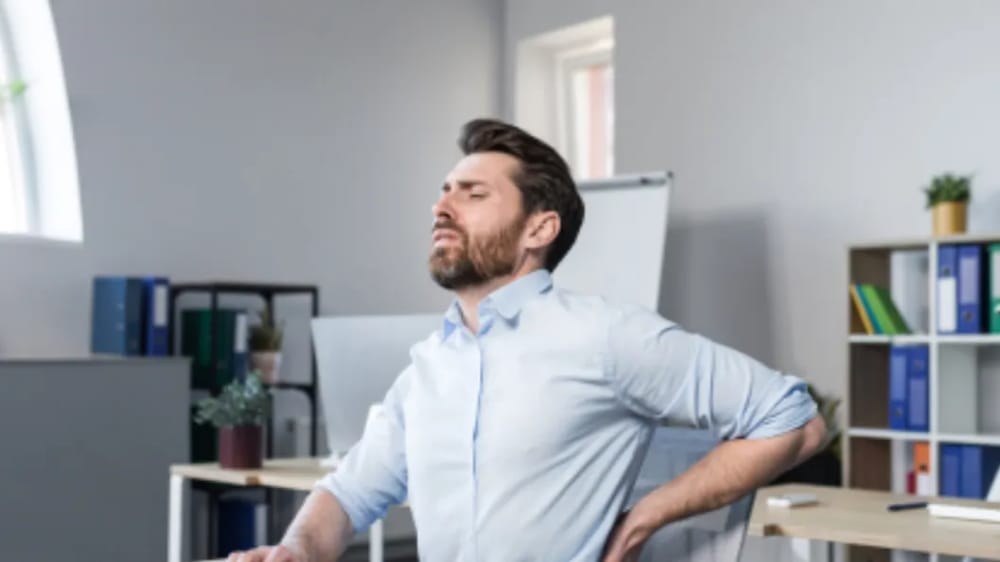
You book a massage when your back has had enough. For an hour, someone works the knots out of the muscles that have been screaming since Tuesday, and you walk out loose, warm, and convinced you've finally cracked it. Then by the weekend the tightness is creeping back, and within a week you're more or less where you started. If that cycle is familiar, you've probably asked the honest question: does massage help back pain, or is it an expensive way to feel good for a day?
The fair answer is that massage genuinely helps with one part of the problem and doesn't touch another. Knowing which is which is the difference between using it well and chasing it forever.
What massage actually does
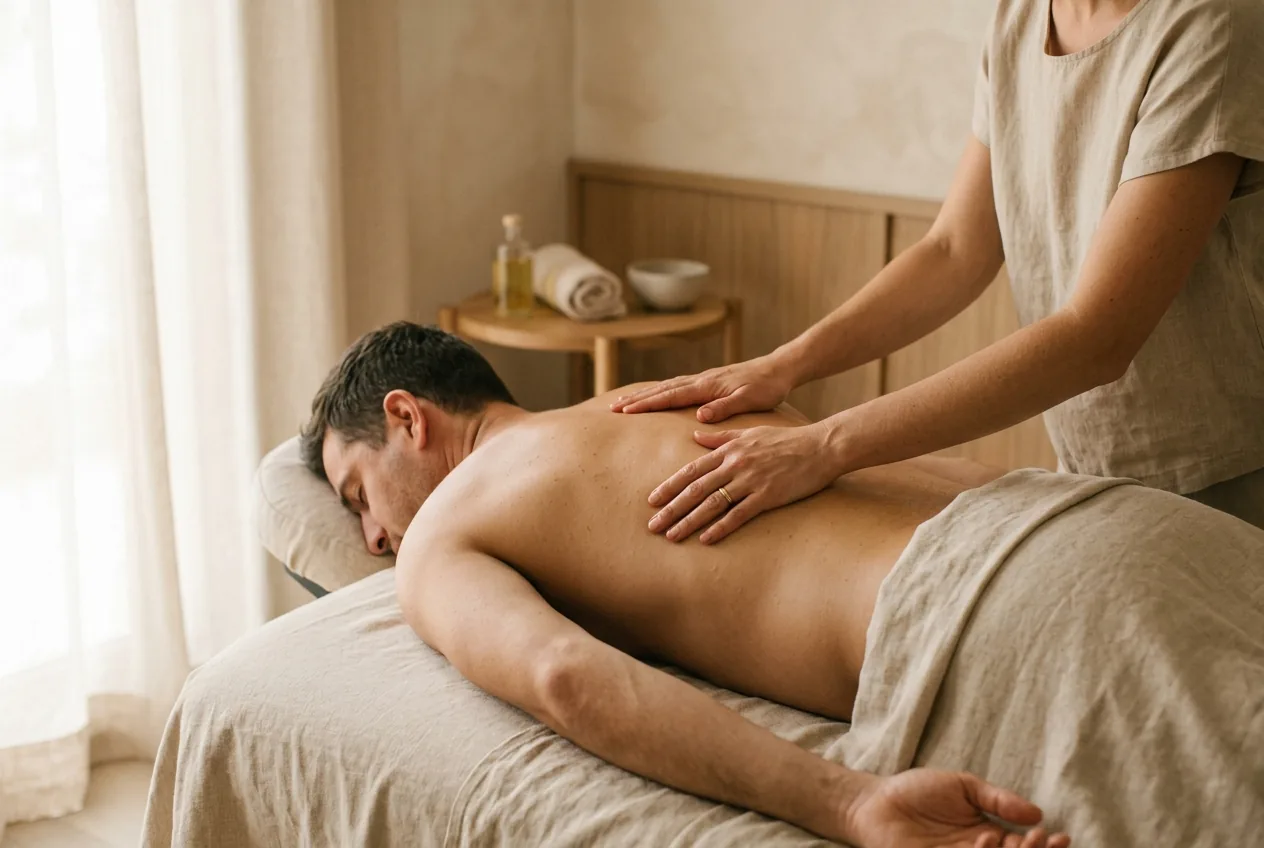
Massage works on muscle and the nervous system. When a therapist kneads a tight, overworked muscle, a few real things happen: the muscle relaxes, local blood flow increases, and your nervous system dials down the tension and pain signals in that area. For a back that's locked up with muscular tightness and guarding, that can feel like enormous relief, and it's not imaginary. The muscles really do let go.
For short-term relief of muscle tension and the misery that rides along with it, massage earns its place. It can calm a guarded back, ease a stress-loaded set of upper traps, and make movement feel possible again. People with tense, knotted muscles often get real, if temporary, benefit.
That last word is the catch. Temporary.
Massage releases the tight muscle. It doesn't change the reason the muscle was tight.
Why the relief doesn't last
Here's the part that explains the cycle. Most chronic, non-traumatic back tension isn't random. The muscles that get tight are tight for a reason — usually they're compensating for a postural imbalance. When some muscles switch off and stop doing their share, others have to overwork to cover, and they're the ones that knot up and ache.
Massage releases the overworked muscle beautifully. But the moment you go back to your desk, your car, your slumped evening on the couch, the same imbalance is still there. The switched-off muscles are still switched off. So the overworked ones go right back to covering, and the tension rebuilds. You didn't fail to relax enough. The driver was never in the muscle the therapist was working — it was in the pattern that keeps overloading it.
That's why massage as a standalone fix tends to plateau. It treats the symptom expertly and leaves the cause untouched.
How to actually use massage well
This isn't an argument against massage. It's an argument for using it as a tool, not a cure.
- Use it to break a flare. When your back is locked and guarded, a massage can loosen things enough that you can move and start gentle exercise. That's a great use.
- Pair it with movement, not instead of it. The relief window after a massage is the ideal time to do the strengthening and mobility work that actually changes the pattern, while the muscles are relaxed and willing.
- Don't expect it to fix posture. No amount of kneading switches a dormant muscle back on or changes how you sit. That part is on the movement side.
If you also like heat for tension relief, the heat or ice for back pain guide covers when each helps. And if you're weighing hands-on treatments more broadly, chiropractor versus physical therapist and alternative medicine for back pain put massage in context with the other options.
What massage can't replace
The thing massage can't do is rebuild the part of your body that's not pulling its weight. If your glutes have gone quiet and your lower back is overworking to cover, a back massage feels great and your glutes are still quiet. If your head sits forward and your upper traps are holding it up all day, working the traps loose just resets a clock that starts ticking again the moment you sit down.
That work — reactivating the dormant muscles and changing the daily load — is what makes relief stick. It's also why people who only ever get massages tend to become regulars: the tension always comes back because nothing addressed why it was there.
When to see a doctor
Posture work and massage are education and tension relief, not medical care. Most muscular back tension responds well to gentle treatment. But see a doctor before relying on massage if you have numbness, tingling, or weakness spreading into a leg or arm, any loss of bladder or bowel control, pain after a fall or accident, a fever with back pain, unexplained weight loss, or pain that's severe or steadily worsening. Massage can also be unsuitable over certain conditions, so when something feels off, get it assessed first.
The piece that makes relief last
Massage is a good way to calm a tense, overworked back. What it can't do is tell you which muscles switched off and which are overworking to cover — and that pattern is specific to you.
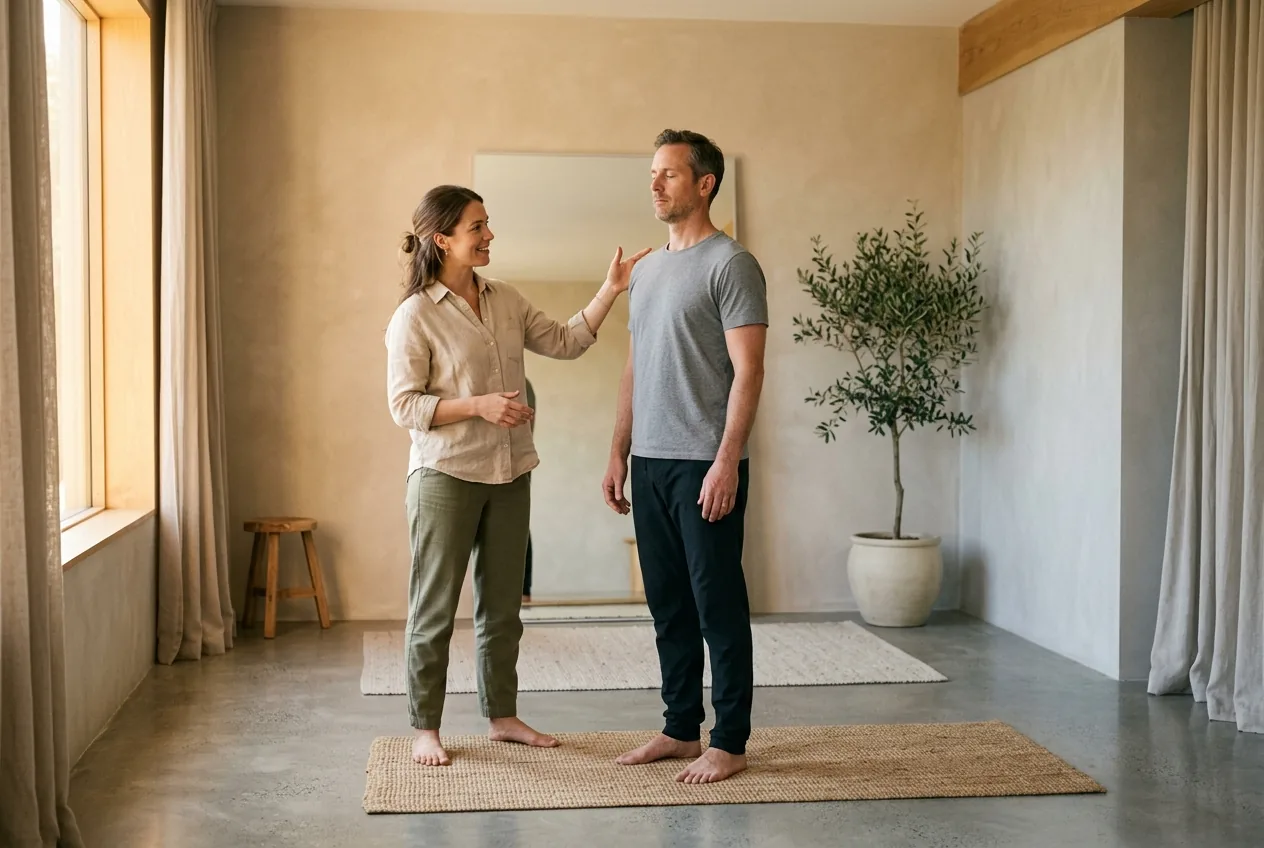
A proper posture assessment measures your actual deviations and builds a daily routine that reactivates the quiet muscles and unloads the overworked ones. Use massage to feel good in the moment, and the routine to make sure the tightness has less and less reason to come back.
Common questions
Does massage actually help back pain?
Yes, for short-term relief of muscular tension. Massage relaxes tight, overworked muscles, improves local blood flow, and calms the nervous system, which can ease a guarded, aching back. The limitation is that the relief is usually temporary because massage doesn't address the postural imbalance making the muscles tight in the first place.
Why does my back pain come back after a massage?
Because the massage releases the overworked muscle but doesn't change the reason it was overworking. If some muscles have switched off and others are compensating, going back to your usual sitting and movement reloads the same muscles, and the tension rebuilds within days.
How often should I get a massage for back pain?
There's no fixed answer, but if you find yourself needing one constantly just to stay functional, that's a sign the underlying cause isn't being addressed. Using massage occasionally to break a flare, paired with daily strengthening and mobility work, tends to be more effective than relying on it alone.
Is massage or exercise better for back pain?
They do different jobs. Massage gives quick tension relief; targeted exercise changes the pattern that causes the tension. For lasting results, exercise matters more, but using massage to loosen things first can make the exercise more comfortable and effective.