If your back feels worse the longer you stand, eases the second you sit or lean over a cart, and you find yourself bending forward without thinking to get relief, your body is already telling you something. The position that helps you is forward bending — flexion. Lumbar flexion exercises take that instinct and turn it into a routine, and for the right kind of back, they can be the difference between a painful walk and a comfortable one.
Flexion just means bending your lower spine forward, the opposite of arching it back. Some backs feel better in flexion, some feel worse, and which one you are decides whether these exercises help or hurt.
Why some backs love flexion
Your lower spine has small joints at the back and openings on each side where nerves exit. When you arch backward (extension), those joints close and the openings narrow. When you bend forward (flexion), the joints open and those nerve channels widen.
For people whose pain comes from a narrowing of those spaces — the picture in spinal stenosis — standing and walking arch the lower back just enough to crowd the nerves, which is why the legs start to ache, burn, or go heavy after a few minutes upright. Sit down or lean forward, and the spaces open, and the relief is often quick and obvious. That on-when-standing, off-when-sitting pattern is the tell.
Flexion exercises lean into that. They gently train and hold the lower back in the position that opens those spaces, which can ease symptoms and, over time, make standing and walking more comfortable. If this sounds like your pattern, the targeted routine in spinal stenosis exercises builds on the same idea.
If sitting and leaning forward bring relief and standing brings the ache, your back is pointing you toward flexion.
The lumbar flexion exercises that help
Move slowly, breathe, and stay inside the comfortable range. These should ease symptoms, not provoke them. Mild stretch is fine; pain shooting down a leg means back off.
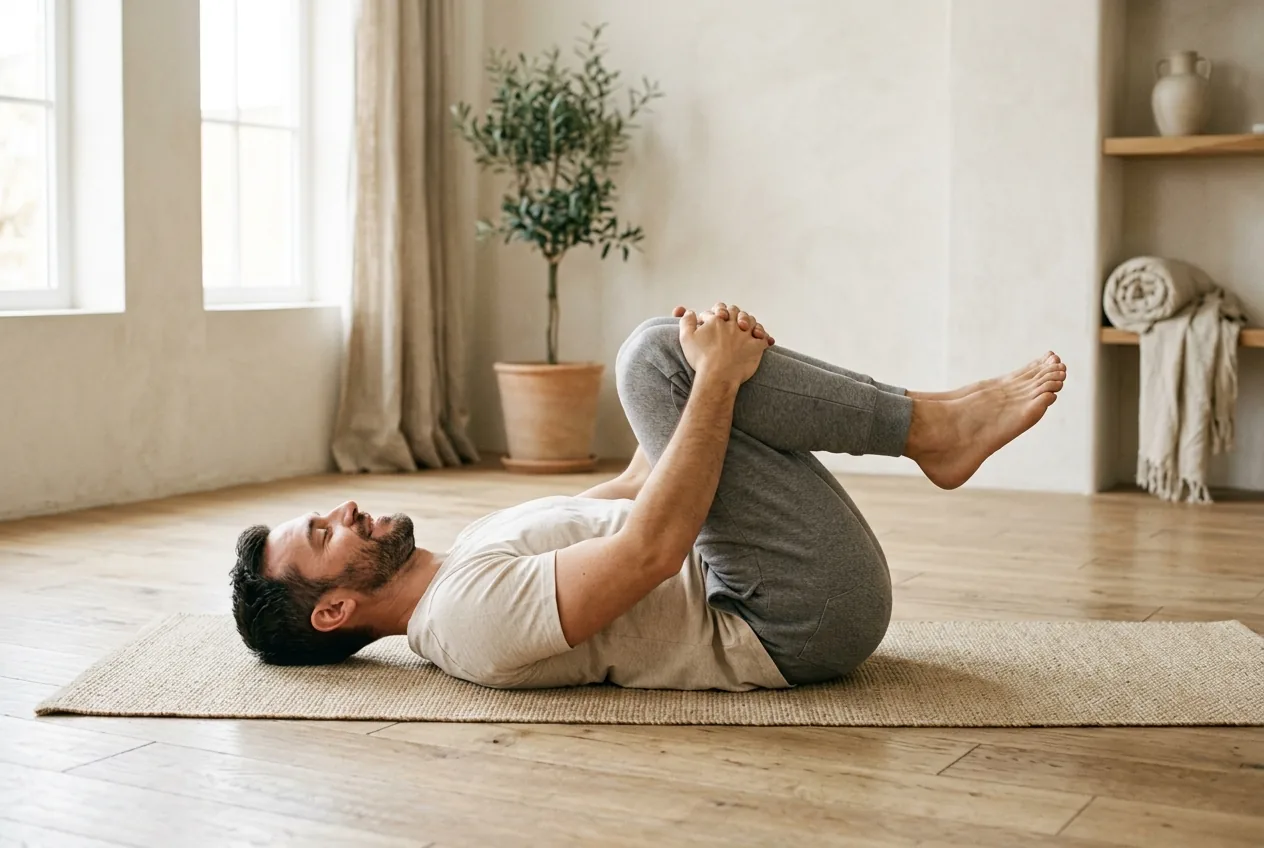
Single knee to chest
Lie on your back, knees bent. Bring one knee up toward your chest and hold it gently with both hands, feeling a mild stretch in the lower back and hip. Hold fifteen to twenty seconds, lower, and switch. Keep the other foot flat or the knee bent to protect the lower back. Two or three per side.
Double knees to chest
From the same position, bring both knees up toward your chest and hold them with your hands, letting your lower back round gently into the floor. This is the most direct flexion stretch — you can feel the lower spine open. Hold fifteen to twenty seconds, then lower with control. Repeat three to five times. The full how-to lives in the knees to chest stretch.
Posterior pelvic tilt
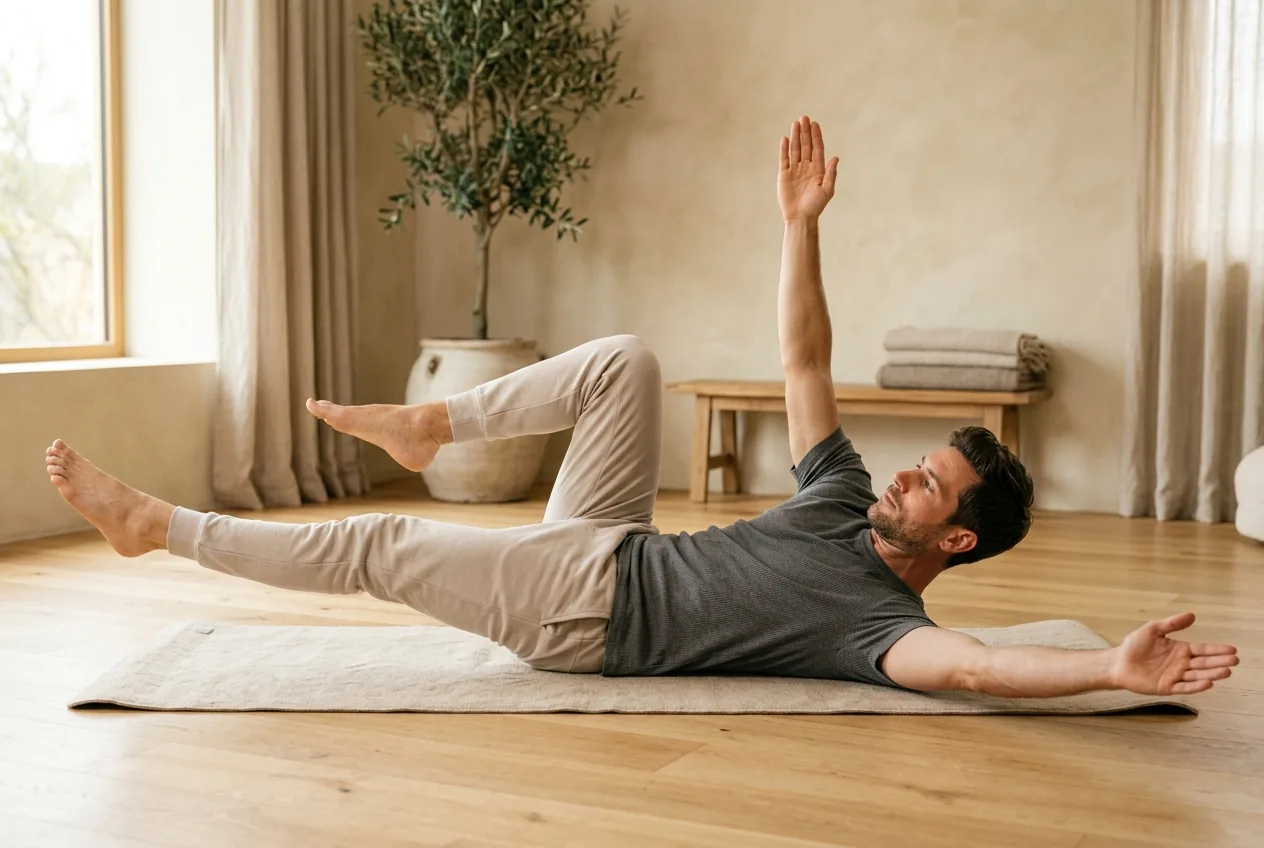
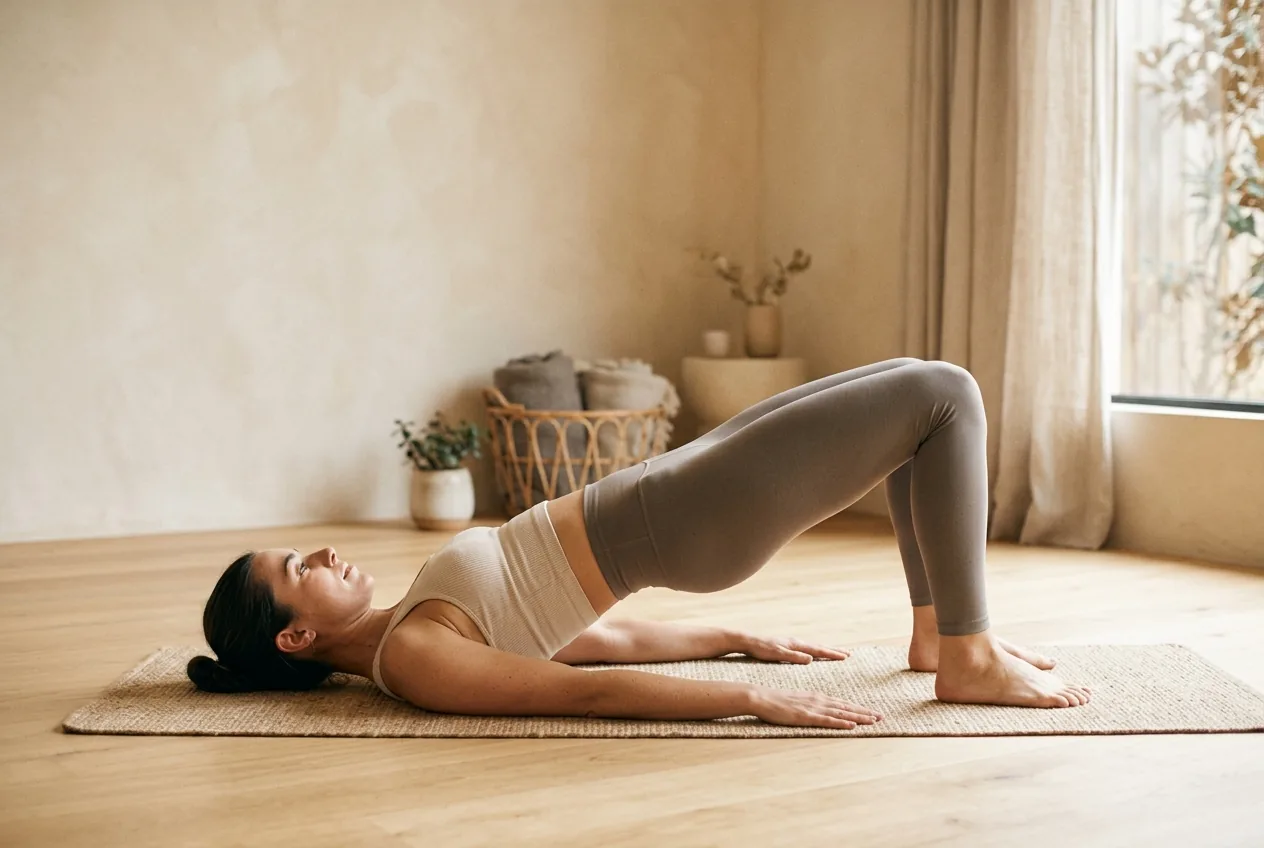
Lie on your back, knees bent, and gently flatten your lower back into the floor by tilting your pelvis, tightening your lower belly. Hold a few seconds, then release. This is a small, controlled movement that trains the flexion position actively rather than just stretching into it. Ten slow reps.
Seated flexion stretch
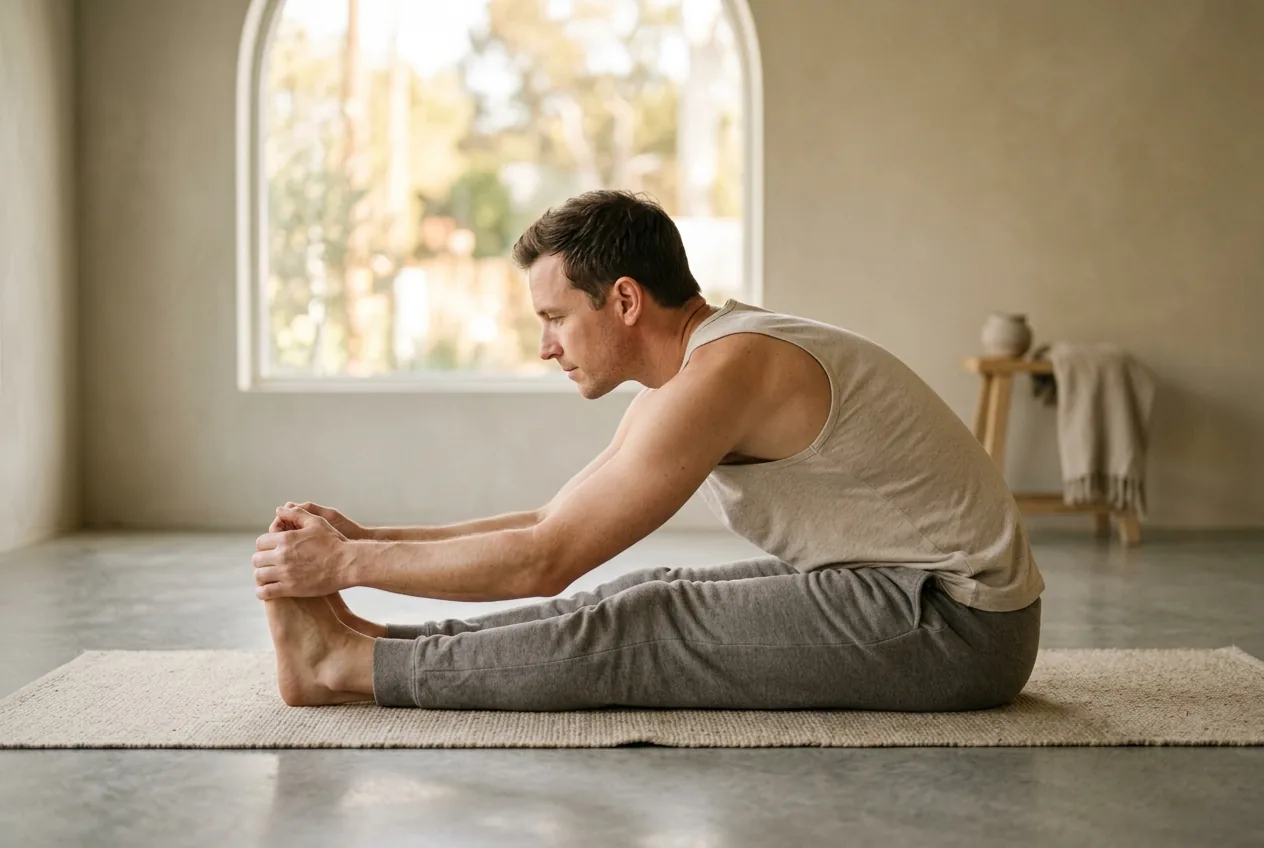
Sit on the edge of a sturdy chair, feet flat, and slowly curl forward, letting your hands reach toward the floor between your feet as your lower back rounds. Go only as far as comfortable, hold a few seconds, then roll back up. This brings the relief position into a sitting posture you use all day. Five to eight slow reps.
Child's pose
From hands and knees, sit your hips back toward your heels and reach your arms forward, letting your lower back round and lengthen. This is a gentle, supported flexion stretch you can hold and breathe into. Hold twenty to thirty seconds. The child's pose for back pain covers modifications if your knees or hips object.
How to use flexion through the day
The exercises matter, but so does what you do between them. If flexion is your relief position, build small amounts of it into standing and walking:
- Lean on the cart. Pushing a shopping cart or a stroller bends you slightly forward and is why some people can walk a store comfortably but not an open sidewalk. Use it.
- Take sitting breaks before the ache builds. Don't wait for the legs to give out. Sit or lean forward for a minute before symptoms peak, and you can often go further overall.
- Try a slight forward lean uphill. Walking uphill or on an incline flexes the spine a touch and is often easier than flat or downhill walking for these backs.
- Pace your standing tasks. Break long standing jobs into chunks with a forward-lean reset in between.
When to see a doctor
These exercises are education and posture therapy, not medical treatment, and stenosis is a diagnosis a clinician makes. See a doctor promptly if you have new or spreading numbness, tingling, or weakness in the legs, any loss of bladder or bowel control, numbness around the groin or inner thighs, pain after a fall, fever with back pain, or unexplained weight loss. If standing-related leg symptoms are new or worsening, get them assessed before starting any routine.
Why flexion isn't right for every back
Here's the honest catch, and it's a big one. Flexion exercises help backs that feel better bending forward — but for a back whose pain comes from a disc and feels worse with sitting and bending, the same knees-to-chest stretch can make things noticeably worse. The two patterns pull in opposite directions, and choosing wrong slows you down. The reliable way to know which camp you're in is which positions consistently ease your symptoms and which provoke them. A posture assessment that maps how your spine is actually loaded is one way to settle that question rather than guessing from a single stretch — because matching the routine to your pattern is the whole point.
Common questions
What are lumbar flexion exercises?
They're movements that bend the lower spine forward — knees to chest, pelvic tilts, child's pose, seated forward bends. Bending forward opens the small joints and nerve channels at the back of the spine, which eases pain for people whose symptoms come from those spaces being crowded, like in spinal stenosis.
Are flexion exercises good for spinal stenosis?
Often, yes. Stenosis pain typically worsens with standing and arching and eases with sitting and forward bending, so flexion exercises that open the narrowed spaces tend to help. They're not right for every back, though, so it's worth confirming your pain follows the standing-worse, sitting-better pattern first.
When should I avoid flexion exercises?
If your back feels worse when you sit, bend forward, or round your spine — and better when you stand or arch — flexion exercises may aggravate it. That pattern often points to a disc-related problem that prefers extension. Stop any flexion move that worsens pain or sends symptoms down a leg, and get assessed.
How often should I do lumbar flexion exercises?
If they ease your symptoms, a gentle daily routine is reasonable, broken into short sessions through the day rather than one long one. Stay inside the comfortable range, stop anything that worsens pain, and build amounts of the flexion position into your standing and walking too.