
Getting out of a chair shouldn't feel like a negotiation. But when sciatica is acting up, that line of pain down the back of the leg makes you cautious about every move — and at a stage of life where a fall or a strained back carries more weight, caution is smart, not weak. The trouble is that doing nothing stiffens everything up and makes the next move harder still.
So this is the middle path: gentle sciatica stretches for seniors that ease the nerve without putting you on the floor in a position you can't get out of, or pushing into pain that backfires. The goal isn't to bend like you're thirty. It's to give the nerve a little room each day and keep your hips and back from seizing.
How sciatica works, briefly
Sciatica is pain along the path of the sciatic nerve — the large nerve that runs from the lower back through the buttock and down the back of each leg. Something along that path is crowding or irritating the nerve: often a disc or a narrowing in the spine, sometimes a tight muscle deep in the buttock. The nerve then broadcasts the trouble down its whole length, which is why a problem in your back shows up as pain in your leg.
The aim of gentle stretching isn't to "fix" the nerve by force. It's to keep the surrounding muscles and joints loose so they stop adding pressure, and to nudge the body toward the positions that relieve rather than aggravate. Slow and steady wins this one.
The rules that keep it safe
Before any move, a few ground rules that matter more at this stage of life than any single stretch:
- Never stretch into the shooting leg pain. A mild pull in a muscle is fine. Pain that zings or buzzes further down the leg means stop and back off — that's the nerve telling you it's being irritated, not freed.
- Hold a steady surface. Do standing moves next to a counter, a sturdy chair, or a wall. The point is to never need to catch yourself.
- Move slowly, breathe normally. No bouncing, no holding your breath, no forcing the end range.
- Warm up first. A few minutes of walking around the house before you stretch makes everything safer and more effective.
- Stop if you feel dizzy, and rise from the floor or a chair slowly to avoid a head rush.
Seated moves you can do from a chair
If getting down to the floor is hard or risky, you can do plenty from a sturdy, armless chair.
Seated figure-four. Sit tall toward the front of the chair. Cross one ankle over the opposite knee so your shin makes a rough "4." Sitting up straight, gently hinge forward from the hips until you feel a stretch deep in the buttock and outer hip of the crossed leg. Hold 20 to 30 seconds, breathe, and switch sides. This targets the deep hip muscles that often press on the nerve.
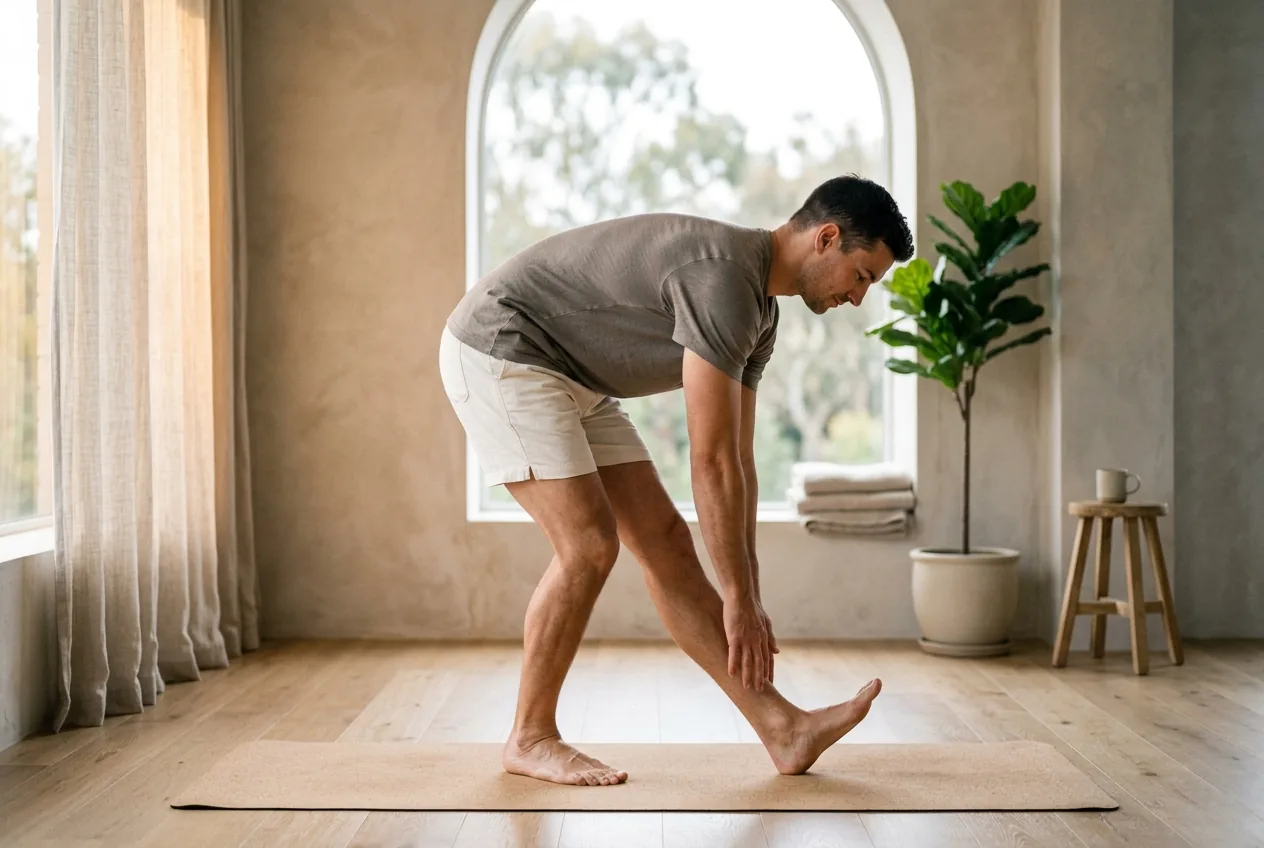
Seated forward fold, gently. Sit at the front of the chair, feet flat. Let your hands slide down toward your knees or shins — only as far as a mild, comfortable pull in the lower back, never into leg pain. Hold a few breaths and roll back up slowly. Keep this small; it's about easing tension, not touching your toes.
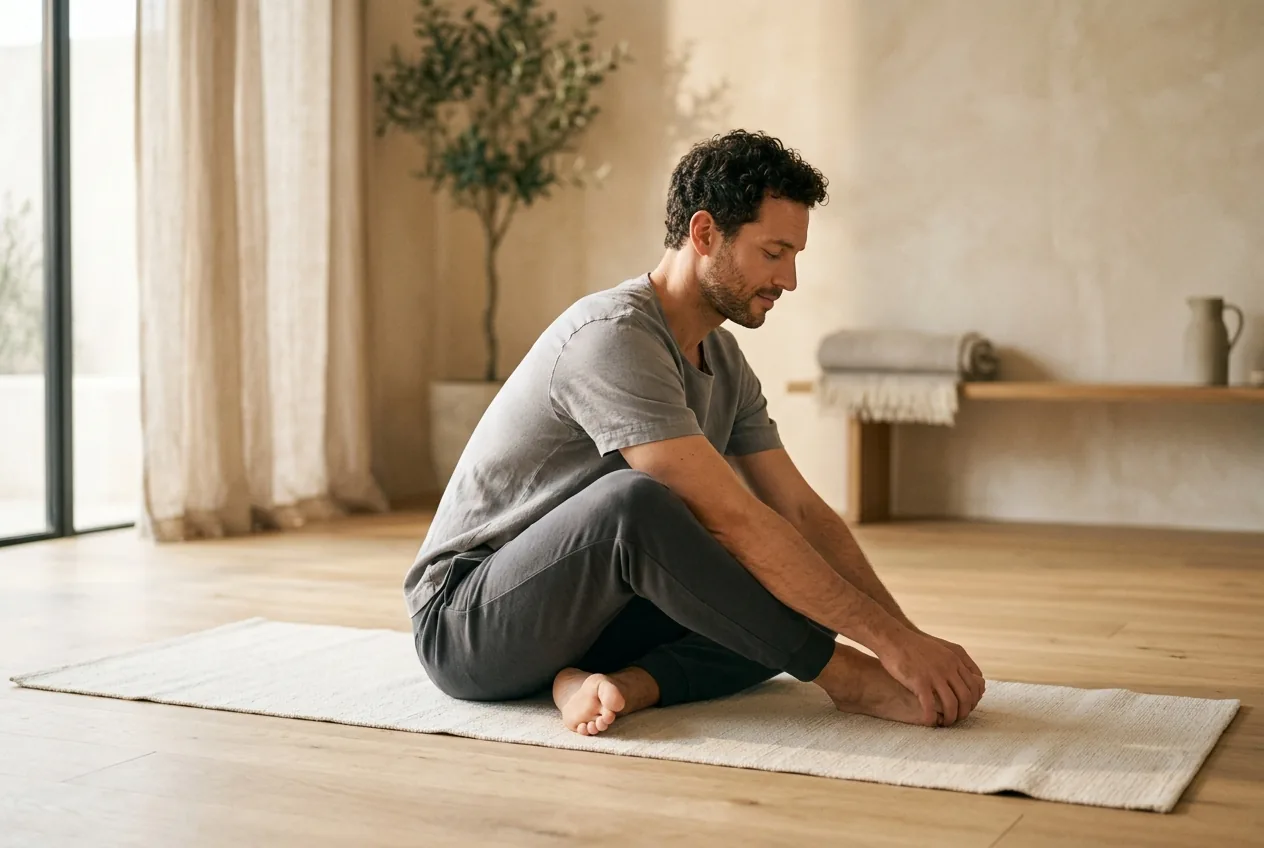
Seated knee hug. Sitting tall, draw one knee up toward your chest with both hands, just to a gentle stretch in the buttock and lower back. Hold, lower slowly, switch sides. A simple way to decompress without leaving the chair.
Lying-down moves if the floor or bed is comfortable
Done on a firm bed or a padded floor — wherever you can get down and up safely — these are some of the gentlest options.
Single knee to chest. Lie on your back, both knees bent, feet flat. Draw one knee toward your chest with your hands, keeping the other foot down. Hold 20 to 30 seconds, lower slowly, switch. Then, if comfortable, hug both knees gently together. This is one of the kindest lower-back releases there is.
Gentle knee rolls. Lie with both knees bent and feet flat. Keeping your shoulders down, let both knees drift slowly to one side just a few inches, then back through center to the other side. Small, slow, controlled. It loosens the lower back without loading it.
These overlap with the wider routine in sciatica stretches at home, which is built to calm the nerve rather than poke it — useful if you want a few more options once these feel easy.
What to skip
Some popular stretches do more harm than good when a nerve is involved, and a few are simply not worth the fall risk later in life.
- Aggressive toe-touches and deep forward folds. They drag the nerve taut and can light up a disc-related case.
- Anything that puts you in a position you can't safely get out of, especially deep floor twists or moves that require popping up quickly.
- Bouncing or forcing the end of a stretch. Slow and held always beats fast and forced.
- Pushing through leg pain. Worth repeating: increasing leg symptoms means back off.
Beyond stretching, gentle daily movement is the real engine of relief. The broader set of gentle back exercises for seniors pairs well with these stretches for keeping the back and hips resilient over time.
When to see a doctor
Most sciatica is mechanical and eases with gentle, daily movement. A few signs mean you should be seen promptly rather than wait: leg or foot weakness that's clearly getting worse, a foot that drags or won't lift, numbness spreading into the saddle area between your legs, or any loss of bladder or bowel control — those last two are a same-day emergency. Also get checked if the pain followed a fall, comes with fever or unexplained weight loss, or is severe and steadily climbing. Sudden, severe back pain after a fall deserves prompt attention, since bone health changes the picture as we age.
Why a matched routine beats a generic one
Here's the honest limit of any list of stretches: it's a starting point. The reason one move eases a person's nerve while another aggravates it is that their underlying postures differ. A pelvis tilted too far one way, a lower back that's lost its natural curve, hips that no longer sit level — each decides which stretches help and which crowd the nerve further.
A posture assessment takes the guesswork out: you measure your own deviations and follow a daily routine matched to them, all gentle and in your control. If these stretches help a little but the pain keeps returning, knowing your specific pattern is usually the missing piece — and the posture therapy approach is built to find the cause underneath the symptom rather than chase it.
Go slow, hold something steady, respect the leg pain, and give a few weeks of gentle daily work before you judge it.
Common questions
What is the safest sciatica stretch for seniors?
Seated and lying moves are safest because they keep you supported. The single knee-to-chest stretch and the seated figure-four are gentle, effective starting points. Always stop short of any shooting leg pain and hold a steady surface for standing moves.
How often should seniors do sciatica stretches?
Once or twice a day is plenty for most people, done gently and consistently. Daily, low-effort stretching beats occasional hard sessions. Warm up with a few minutes of walking first, and never push into pain.
Can stretching make sciatica worse?
Yes, if you stretch into the shooting leg pain or use aggressive forward folds that drag the nerve taut. The fix is to keep movements small and stop the moment leg symptoms increase. A mild muscle pull is fine; nerve zing is not.
Should an older adult rest or stretch with sciatica?
Gentle movement usually beats rest. Long stillness stiffens the back and hips and tends to wind the nerve up. Short walks plus a few gentle daily stretches help more than lying still, as long as you avoid sharp or shooting pain.