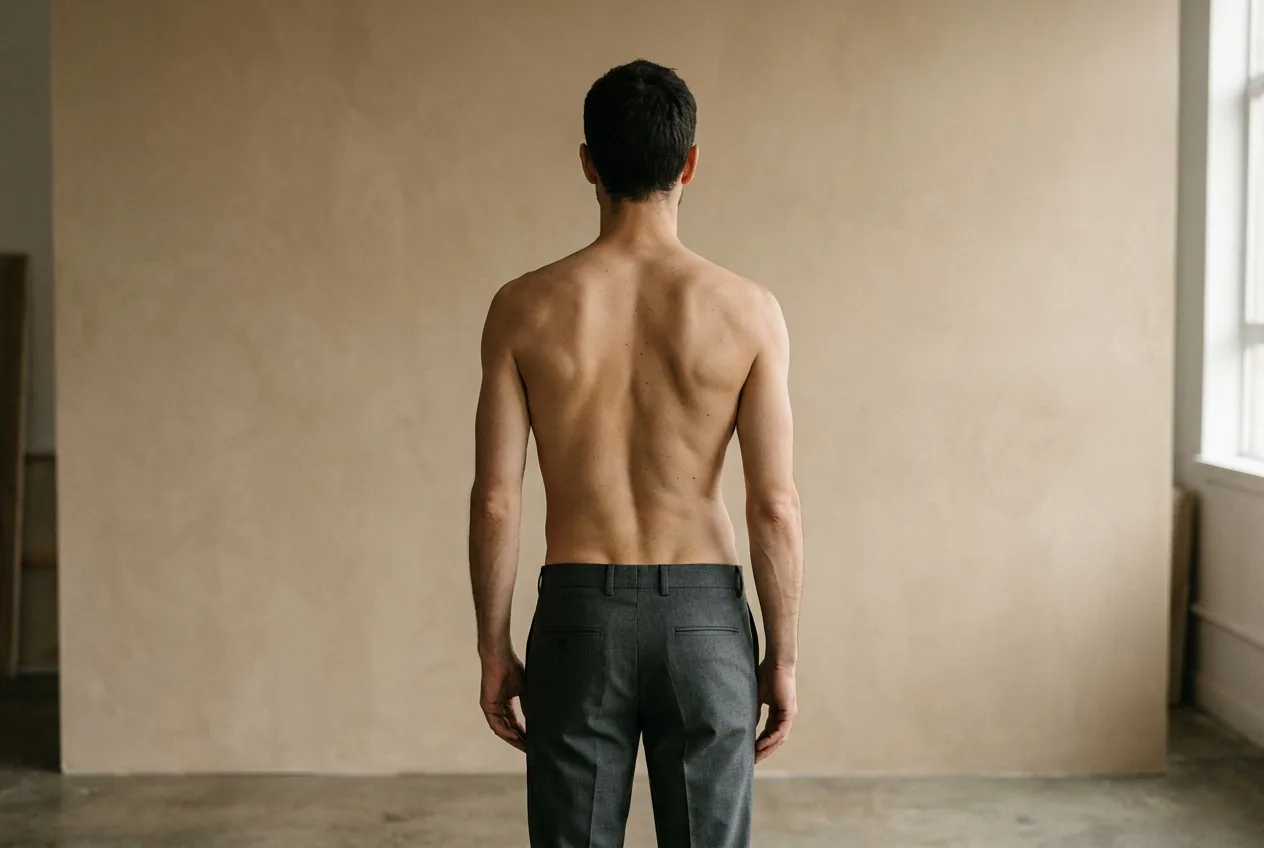
You catch yourself sideways in a mirror or a shop window and one shoulder sits higher than the other, or your waist looks uneven, with more of a gap on one side than the other. Maybe a clinician once mentioned a curve in your spine, and ever since you've wondered whether there's anything you can actually do about it without bracing or surgery.
Let's be straight from the start, because honesty matters more here than reassurance. Scoliosis exercises do not straighten a scoliotic spine. What movement and posture work can do is meaningful in its own right: ease the muscular aches that come with the curve, keep you mobile and strong, even out how the load sits across your body, and help you feel less at the mercy of it.
What scoliosis is, briefly
Scoliosis is a sideways curve of the spine, often with a degree of rotation, so the spine bends to one side rather than running straight down the middle. In adults it's usually one of two stories. Some carried a curve from adolescence that's simply still there. Others develop a curve later as the spine changes with age. Either way, it's a structural feature of the spine, which is why no amount of stretching reshapes the bone.
What does respond to exercise is everything draped around that curve. A curved spine loads the muscles unevenly — one side works harder, the other goes slack — so you get tight, achy patches on one side and weakness on the other. That muscular imbalance is where most of the day-to-day discomfort comes from, and that's the part you can influence.
You're not trying to straighten the spine. You're balancing the muscles around it so the curve costs you less.
Why generic stretching can backfire
Here's the catch that catches a lot of people. A scoliotic spine is asymmetric, so the two sides of your body genuinely need different things. The muscles on the concave (inner) side of a curve are often short and tight; the muscles on the convex (outer) side are often overstretched and weak.
Do the same stretch equally on both sides and you can deepen the imbalance — stretching an already-overstretched side while doing nothing for the tight one. This is the same trap that makes generic posture advice fail for everyone, just sharper here. With scoliosis, the asymmetry is built in, so symmetrical routines miss the point. The work has to account for which side is which.
This is exactly why structured, scoliosis-specific approaches exist (the Schroth method is the best known): they teach side-specific positioning and breathing rather than one-size-fits-all stretches. If your curve is significant, working with a clinician trained in those methods is worth far more than any list of moves online.
Movement that generally helps
With that caveat front and center, here are categories of work that tend to help most people living with a mild to moderate curve. None of this replaces a professional assessment of your specific curve.
Core stability over crunches
A stable trunk supports a curved spine better than a weak one. Gentle, even core work — the bird dog exercise, dead bugs, side planks held for time — builds support without forcing the spine into end-range bends. Side planks in particular can be loaded a touch more on the weaker side to start closing the gap, but get that side-choice checked rather than guessing.
Keeping the spine mobile
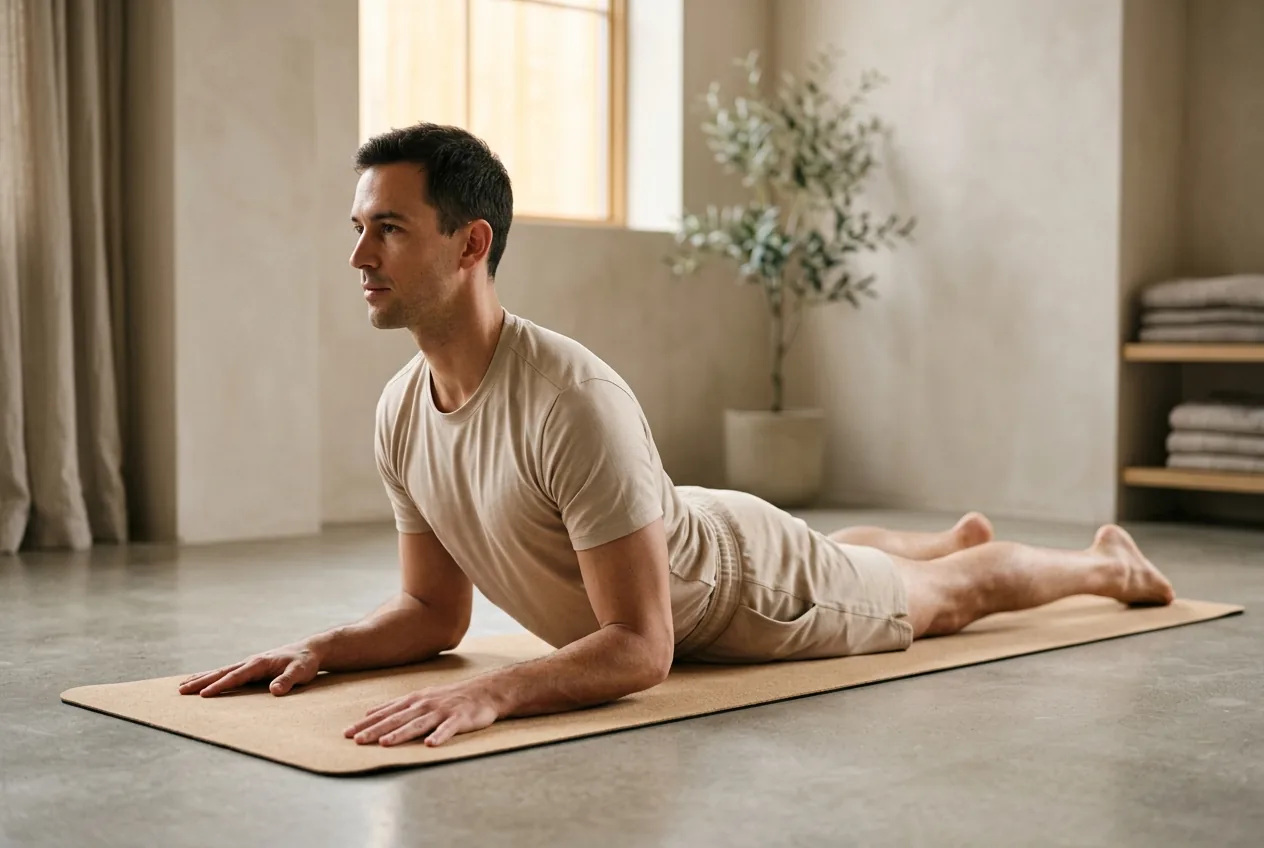
A curve plus stiffness is worse than a curve that moves. The cat-cow stretch keeps the spine moving gently through flexion and extension, and easy rotations through the upper back help you keep range. Move within comfort — this is about maintenance, not forcing anything.
Easing the overworked side
The tight, achy band on one side responds to gentle, targeted release rather than aggressive stretching. Slow breathing into the tight ribs, light side bends away from the tight side, and soft work on the hips below it can take the edge off. Because curves often pull the pelvis off level, work on uneven hips sometimes belongs in the picture too.
Strength for the long haul
Strong glutes and a strong upper back take load off a spine that's already working unevenly. Bridges, rows with a band, and the kind of upper-back work in wall angels all help you carry yourself with less fatigue through the day.
What to be careful with
- Be cautious with heavy, end-range spinal bending and twisting under load until a professional clears it.
- Avoid loading one side hard while ignoring the other — symmetry by default is the wrong instinct here.
- Don't chase a "straight" spine in the mirror by forcing positions. The goal is comfortable, balanced movement, not a cosmetic fix.
- Be wary of generic routines that treat both sides identically.
When to see a doctor
This is posture education, not medical advice, and scoliosis is a structural spinal condition that warrants proper assessment. See a clinician if your curve is new, visibly worsening, or causing pain that's severe or steadily increasing; if you have numbness, tingling, or weakness in the arms or legs; any loss of bladder or bowel control; or shortness of breath you think relates to your chest shape. In children and teens, a visibly uneven back when bending forward should always be evaluated. A professional can tell you how much curve you have and whether structured therapy, bracing, or monitoring fits your case — that has to come before any exercise plan.
Why your specific curve decides your plan
Everything here is general, and with scoliosis general only takes you so far, because the whole problem is asymmetry. Which side is tight, which way the curve bends, whether your pelvis is involved — those details decide what helps and what quietly makes the imbalance worse. The same move can ease one person's curve and aggravate another's.
That's the case for measuring rather than guessing. Alongside proper medical care for the curve itself, a posture assessment reads your actual deviations and builds work around your specific pattern instead of a symmetrical template. For a first look at how your body is sitting, you can check your posture at home, then take that to someone who can confirm it.
With a curved spine, the question is never "which stretch." It's "which side, which direction, how much" — and that's specific to you.
Common questions
Can exercises straighten scoliosis?
No. Scoliosis is a structural curve of the spine, so exercise can't reshape the bone. What targeted movement and posture work can do is ease the muscular aches, keep you mobile and strong, balance how the load sits across your body, and help you feel more in control — which is worthwhile even though the curve itself stays.
What exercises should you avoid with scoliosis?
Be cautious with heavy, end-range spinal twisting and bending under load until a professional clears it, and avoid loading both sides identically, since that can deepen the imbalance. The safest approach is exercise matched to which way your curve bends, which usually means getting your specific curve assessed first.
Is walking good for scoliosis?
Walking is generally a gentle, helpful way to stay mobile and active, and it doesn't force the spine into risky positions. It won't correct the curve, but staying active tends to ease stiffness and keep the supporting muscles working, which helps with day-to-day comfort.
Should I do the same stretches on both sides?
Usually not. Because a scoliotic spine is asymmetric, the two sides often need different work — one side tight, the other overstretched. Symmetrical routines can widen that gap, which is why side-specific guidance from a clinician trained in scoliosis methods is so valuable.