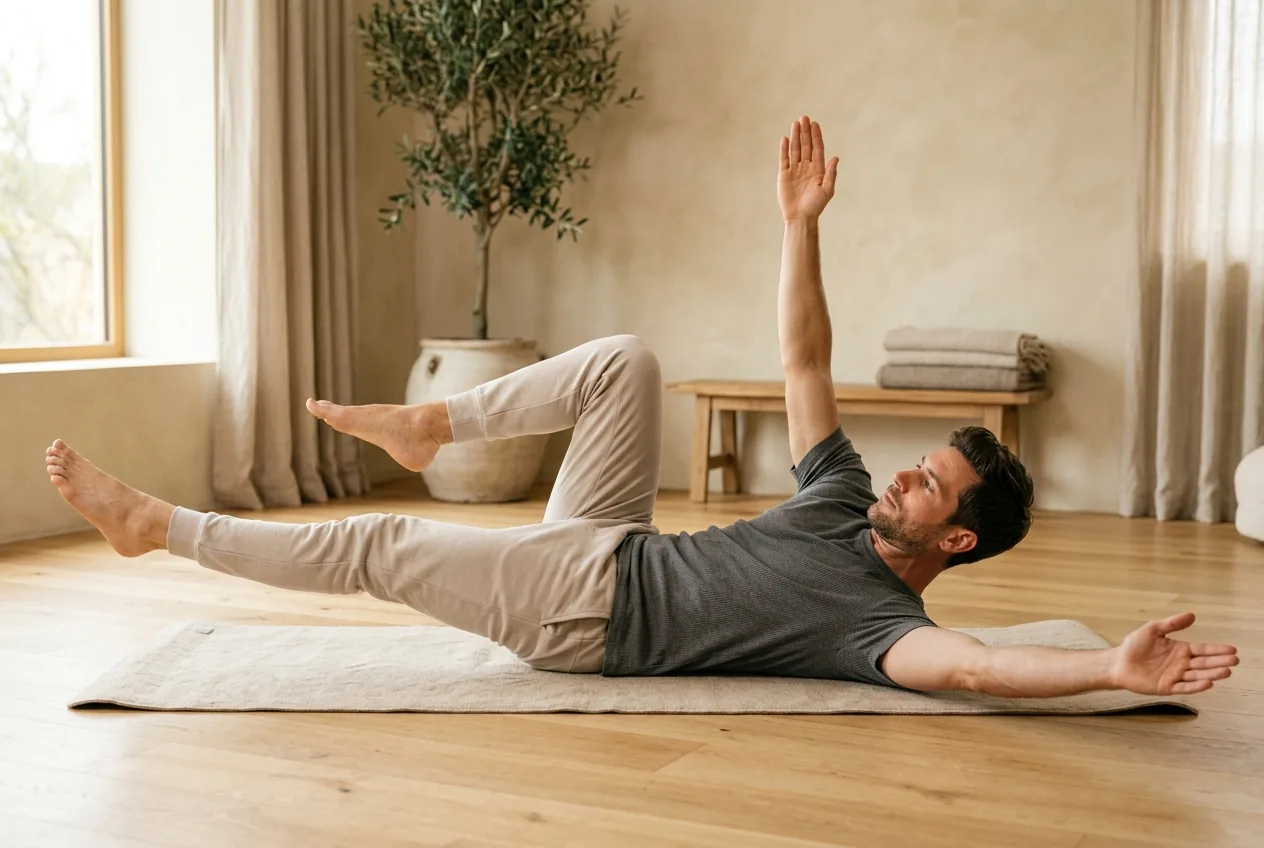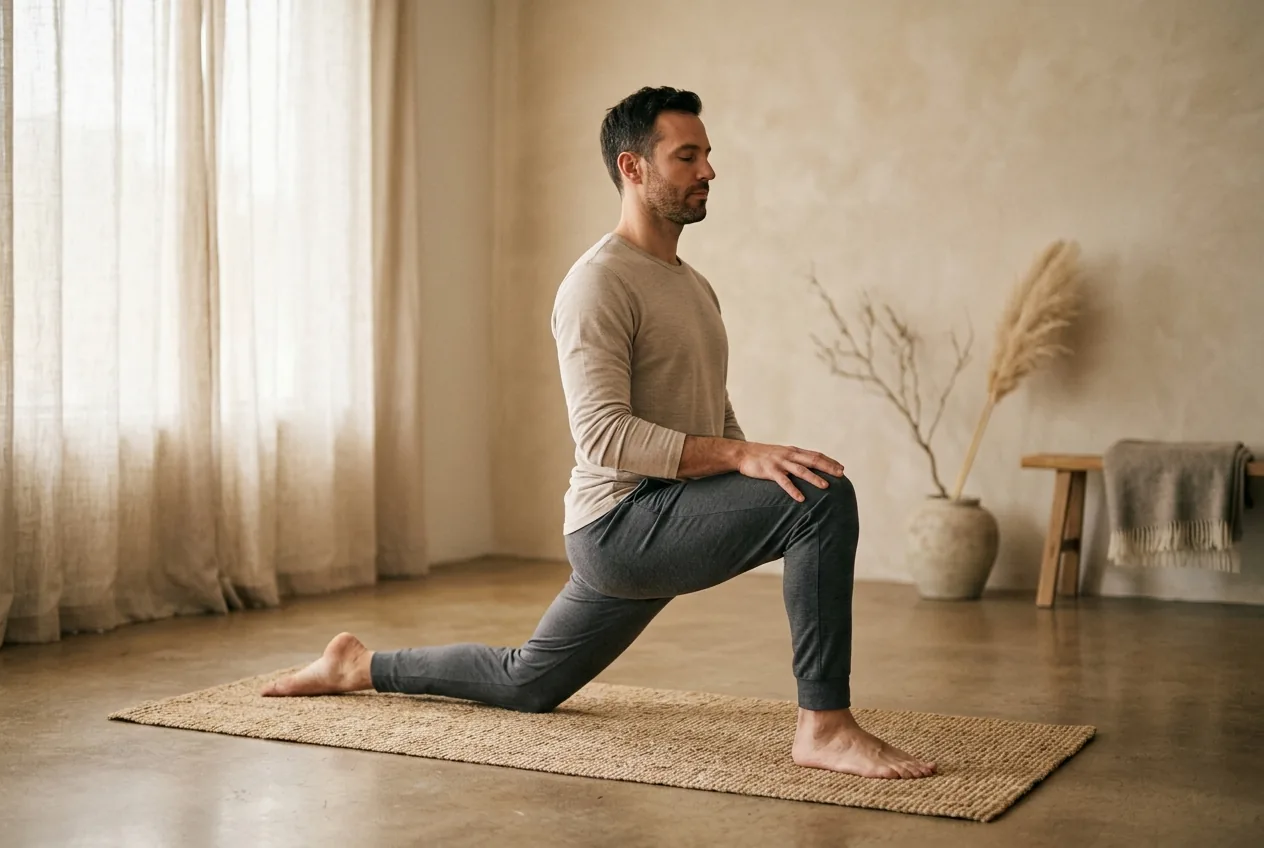

If your lower back is the part that aches after a long drive or a day at the desk — but your backside feels like nothing happened — that mismatch is the clue. Weak glutes and back pain are tied together more often than most people guess. The glutes are the largest muscles in your body and they're built to power your hips. When they stop pulling their weight, the work doesn't disappear. It moves up the chain to your lower back.
Trainers call the switched-off version "dead butt." The clinical name is gluteal amnesia. The plain version: your glutes have forgotten how to fire on time, and your spine has been covering for them.
How a muscle that big goes quiet
Your glutes are designed to be active. They extend your hip when you stand, walk, climb stairs, and stand up from a chair. The catch is that they're also easy to switch off, and sitting does exactly that.
When you sit, two things happen at once. Your glutes are stretched and pressed under your body weight, getting no signal to contract. At the same time, the hip flexors at the front of your hips stay shortened and tight. Spend enough hours like this and your body recalibrates. The tight hip flexors send a steady "stay relaxed" message to the glutes — a reflex called reciprocal inhibition — and the glutes oblige. They go quiet even when you stand up and start moving.
Now every hip movement that should be glute-powered gets borrowed from somewhere else: the lower back, the hamstrings, the front of the hips. The lower back wasn't built to be a primary mover. Asked to do it all day, it gets tight, fatigued, and sore. This is the same compensation pattern behind a lot of stubborn back ache — the wrong muscles doing the job because the right ones checked out.
Your back isn't weak. It's overworked, because it's doing your glutes' job as well as its own.
A quick self-test
You don't need a clinic for a rough read. Try this lying on your back with both knees bent, feet flat.
- Squeeze your glutes hard and lift your hips into a bridge.
- Notice what fires first and what fires hardest.
If you feel it mostly in your hamstrings, your lower back, or you get a cramp behind your thigh — and barely anything in your glutes — that's a sign your glutes aren't leading the movement. A second check: standing on one leg, can you keep your pelvis level, or does the opposite hip drop? A dropping hip points to weak glute control on the standing side.
These aren't diagnoses. They're signals that the pattern is worth addressing.
Three moves to wake the glutes up
The goal isn't to exhaust the muscle. It's to re-establish the connection — to get the glutes firing first, on time, so they start reclaiming the work.
Glute bridge. The foundation. Lie on your back, knees bent, heels under your knees. Tuck your tailbone slightly, squeeze your glutes, then press through your heels to lift your hips into a straight line from shoulders to knees. Hold two seconds, lower slowly. The full step-by-step is in the guide to the glute bridge for back pain. Do 2 sets of 10.
Clamshell. Lie on your side, knees bent and stacked, feet together. Keeping your feet touching, lift the top knee like a clam opening — without rolling your hips backward. You should feel it in the side of your backside. 2 sets of 12 per side.
Standing hip hinge. Stand with soft knees, push your hips straight back (not down) like you're closing a car door with your backside, then squeeze your glutes to stand tall. This rehearses the glute-led pattern you'll use all day when you bend and lift. 2 sets of 10.
Do these daily, slowly, with attention on feeling the glute work. A few focused minutes beats a long sloppy session. The order matters too: start with the bridge to find the connection, then the clamshell to build the side glutes, then the hinge to rehearse it standing. That sequence walks the muscle from "lying down and isolated" toward "working the way real life asks it to."
One more cue that helps everything click: before each rep of any of these, take a second to consciously squeeze your glutes *first*, before the limb moves. Weak glutes aren't only weak — they fire late. Teaching them to fire on time is half the battle.
What to stop doing
Waking the glutes up is only half the job. The other half is releasing what keeps them shut off.
- Don't sit for hours unbroken. Stand and take ten steps every 30–45 minutes. Movement resets the signal.
- Don't skip the hip flexors. Tight hip flexors keep the glutes inhibited, so a daily hip-flexor stretch helps the glute work actually land.
- Don't only stretch your back. Stretching an overworked back feels good for an hour, then the imbalance pulls it tight again. The fix is upstream, at the glutes.
These moves pair well with core exercises for lower back pain, which steady the spine while your glutes relearn their job.
How long before it changes anything
Be patient with the timeline. Waking up a muscle that's been dormant for years is closer to learning a habit than building a bicep. Many people notice the *connection* — actually feeling their glutes fire — within a week or two of daily practice. Noticing less back ache in everyday movements usually takes longer, often several weeks of consistency, because the back has to learn it can hand the work back. The progress is real but quiet. Don't quit at two weeks because you can't see a difference in the mirror; the difference shows up first in how a long drive or a day on your feet feels.
When to see a doctor
A quiet glute is a training problem, not an emergency. But see a clinician promptly if you have numbness, tingling, or weakness running down a leg, any loss of bladder or bowel control, back pain after a fall or accident, fever with back pain, unexplained weight loss, or pain that's severe or steadily worsening. Those need a proper look, not a clamshell.
Why waking the glutes isn't always enough on its own
Strengthening weak glutes helps a lot of people. But the reason your glutes switched off — and the exact way your body compensated for it — is specific to your posture. A forward-tipped pelvis loads the glutes differently than a flattened one, and the right emphasis changes with it.
That's why the same glute routine clears one person's back pain and barely touches another's. Knowing your own alignment is what turns generic glute work into the routine that actually holds. A posture assessment measures where your body deviates and builds the sequence around it — so you're not guessing which muscle to chase.
Wake the glutes. Release the hip flexors. Match it to your pattern. Repeat it daily. That's how a back stops doing a job that was never its own.
Common questions
Can weak glutes cause lower back pain?
They often contribute. The glutes are built to power your hips, and when they go quiet the work shifts up to your lower back, which wasn't designed to be a primary mover. Asked to do it all day, the back gets tight and sore.
What is "dead butt" syndrome?
It's the everyday name for glutes that have switched off, often from long hours of sitting — the clinical term is gluteal amnesia. The muscles haven't disappeared; they've stopped firing on time, so other muscles cover for them.
How do I test if my glutes are weak?
Lie on your back, knees bent, and lift into a bridge. If you feel it mostly in your hamstrings or lower back and barely in your glutes, that's a sign. You can also stand on one leg and check whether the opposite hip drops.
How long does it take to wake up weak glutes?
Many people feel the connection — actually sensing their glutes fire — within a week or two of daily practice. Less back ache in everyday movement usually takes several weeks, because the back has to learn it can hand the work back.