
You read that slouching causes back pain, so you square your shoulders, lift your chest, and sit up properly — and within ten minutes your back is aching worse than when you slumped. It feels like a cruel joke. The position everyone calls "correct" is the one that hurts, and sliding back into a slouch is the only thing that brings relief. So why does your back hurt when you sit up straight?
The answer is reassuring once you hear it. In most cases, sitting up straight doesn't hurt because it's wrong. It hurts because the muscles that hold you upright have gone weak and out of practice, and you're suddenly asking them to do a job they haven't done in years.
Good posture is work your muscles forgot how to do
Holding yourself upright isn't passive. A set of muscles along your spine, around your core, and through your hips fire gently and constantly to keep you stacked up against gravity. They're endurance muscles, built to hum along for hours at low effort.
When you slump, those muscles switch off. The chair back and your own ligaments take the load instead, and the muscles get a free ride. Do that for years — through school, through a desk career — and they quietly lose their endurance. They're still there, but they fatigue almost immediately when called on.
So when you sit up straight, you fire muscles that have been dormant for a long time. Within minutes they tire and start to ache, the same way your legs would burn if you suddenly held a wall-sit after years of not exercising. The pain isn't a sign the posture is wrong. It's a sign the muscles are deconditioned and getting fatigued fast. That's a fixable problem, not a structural one.
This is the same endurance issue that shows up across posture — the muscles can do the job, they've just lost the stamina for it. It's covered from the other angle in how to improve posture.
Why slumping feels better (and why that's misleading)
Slumping feels like relief because it hands the work back to your ligaments and the chair, letting the tired muscles rest. In the short term, that's genuinely more comfortable. The problem is that the relief is borrowed. Held slumped for hours, your ligaments and joints take a slow strain, and the muscles get even less practice, so they get even weaker. The slump that feels good now is what keeps the upright position feeling hard tomorrow.
There's also a chance you're "sitting up straight" wrong. A lot of people, told to sit tall, jam themselves into a stiff, over-arched military posture — chest thrust out, lower back cranked into a deep curve, shoulders yanked back. That's not good posture; it's a different kind of strain, and it aches fast too. Real upright sitting is taller and more relaxed than that, which is worth getting right via proper sitting posture.
What to actually do about it
The fix isn't to give up and slump. It's to rebuild the endurance gradually and stop demanding eight hours of perfect posture from muscles that can't yet manage ten minutes.
- Build up in small doses. Sit up well for a few minutes, then let yourself relax before the ache sets in, then sit up again. You're training the muscles in intervals, the way you'd build any endurance. Over weeks they hold longer before tiring.
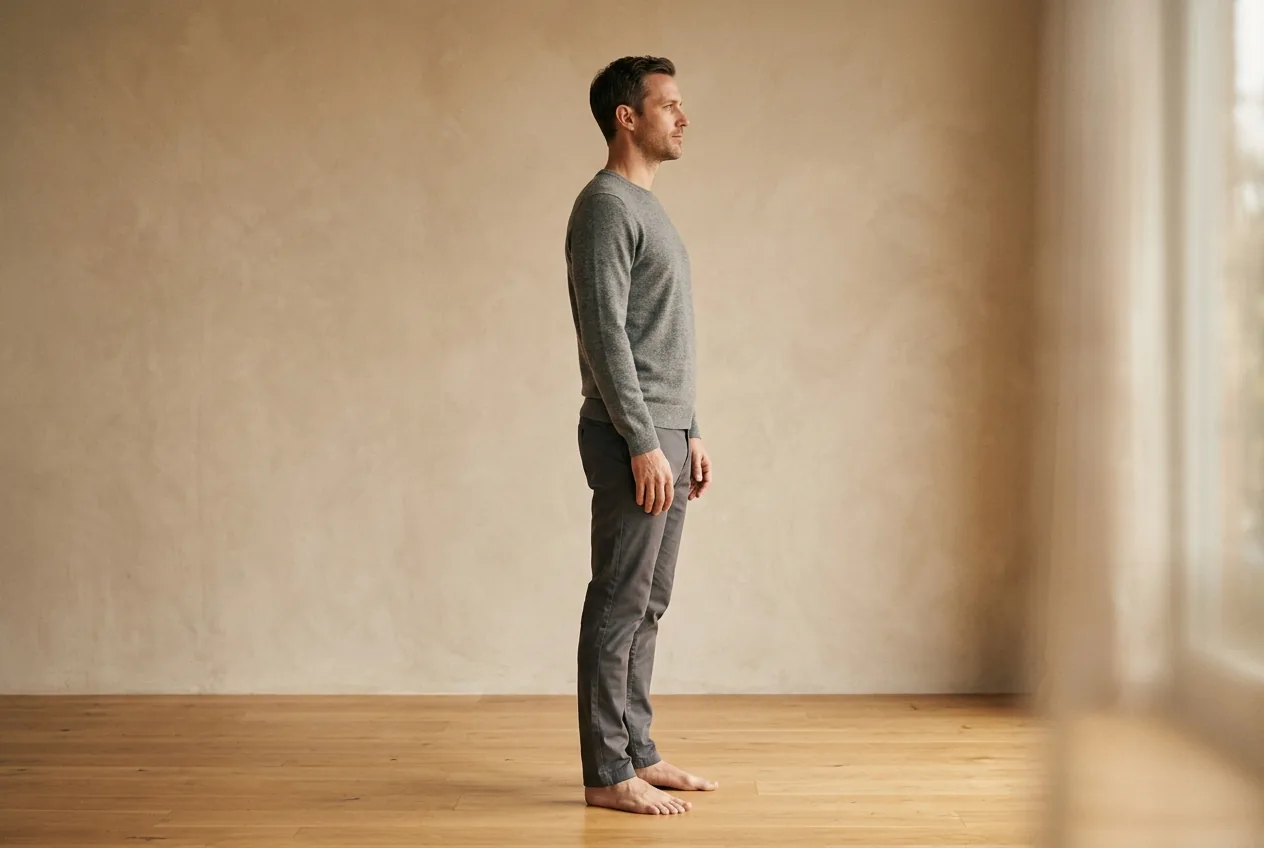
- Don't over-do the "straight." Aim for tall and easy, not braced and arched. Stack your head over your shoulders and your shoulders over your hips, with the lower back in its natural gentle curve — not forced into a deep one.
- Support the lower back. A small cushion in the curve of your lower back lets the chair share the load while your muscles build, so sitting tall isn't all-or-nothing.
- Strengthen the holding muscles outside of work. The deep core and the muscles along your spine respond to gentle, regular training. The pairing in core exercises for lower back pain targets exactly the muscles that fatigue when you sit up.
- Move often. Even strong postural muscles aren't meant to hold one position for an hour. Stand and shift every half hour so nothing has to work flat-out the whole time.
Sitting up straight hurts because the muscles forgot the job — not because the job is wrong. Endurance comes back with practice.
When to see a doctor
Aching that comes on after a few minutes of sitting tall, eases when you rest the muscles, and gradually improves over weeks of practice is the ordinary picture of deconditioning. See a clinician promptly, though, if upright sitting brings on numbness, tingling, or weakness in the legs, any loss of bladder or bowel control, pain that started after a fall or accident, fever with back pain, unexplained weight loss, or pain that's severe or steadily worsening. Pain that's sharp and immediate the instant you straighten, rather than a slow fatigue ache, is also worth getting looked at.
Why some people need a different starting point
Here's the wrinkle. For most people the upright ache is plain deconditioning, and building endurance fixes it. But for some, sitting up straight hurts because their spine is being pushed into a position it doesn't tolerate — too much arch, or a back that's lost its normal curve and resists the upright shape. For them, grinding away at "sit up straight" can backfire. The same instruction helps one person and aggravates another, depending on how their spine is actually shaped and loaded. That's why knowing your own pattern beats following a universal rule. A posture assessment that measures how your spine actually sits shows whether you simply need endurance or whether your "straight" is loading the wrong place, so you train toward the position your back can hold rather than one that fights it.
For most readers, the takeaway is simple and hopeful: the muscles work, they've just lost the stamina. Build it back in small doses and upright stops being a chore.
Common questions
Why does sitting up straight hurt my back?
Most often because the postural muscles that hold you upright have lost their endurance from years of slumping, so they fatigue and ache within minutes of being asked to work. The pain is a sign of deconditioned muscle, not wrong posture. Building the endurance back gradually — in short intervals through the day — makes upright sitting comfortable again.
Is it normal for good posture to feel uncomfortable at first?
Yes. If your postural muscles haven't held you upright in years, asking them to do it suddenly feels like work and aches quickly, just like any out-of-practice muscle. As long as the ache is a fatigue feeling that eases with rest and improves over weeks, it's a normal part of rebuilding endurance, not a warning sign.
Should I sit up straight if it hurts?
Sit up well in short doses rather than forcing it for hours. Hold tall for a few minutes, relax before the ache sets in, then repeat — that builds endurance without overloading muscles that aren't ready. Avoid jamming into a stiff, over-arched "military" posture, which strains the back differently. If straightening causes sharp pain rather than slow fatigue, get it checked.
How long until sitting up straight stops hurting?
With regular practice in small doses and some gentle strengthening of the core and back muscles, most people notice it gets easier over a few weeks as the endurance returns. There's no fixed timeline — it depends on how deconditioned the muscles were. Consistent short bouts daily build the stamina faster than occasional long efforts.