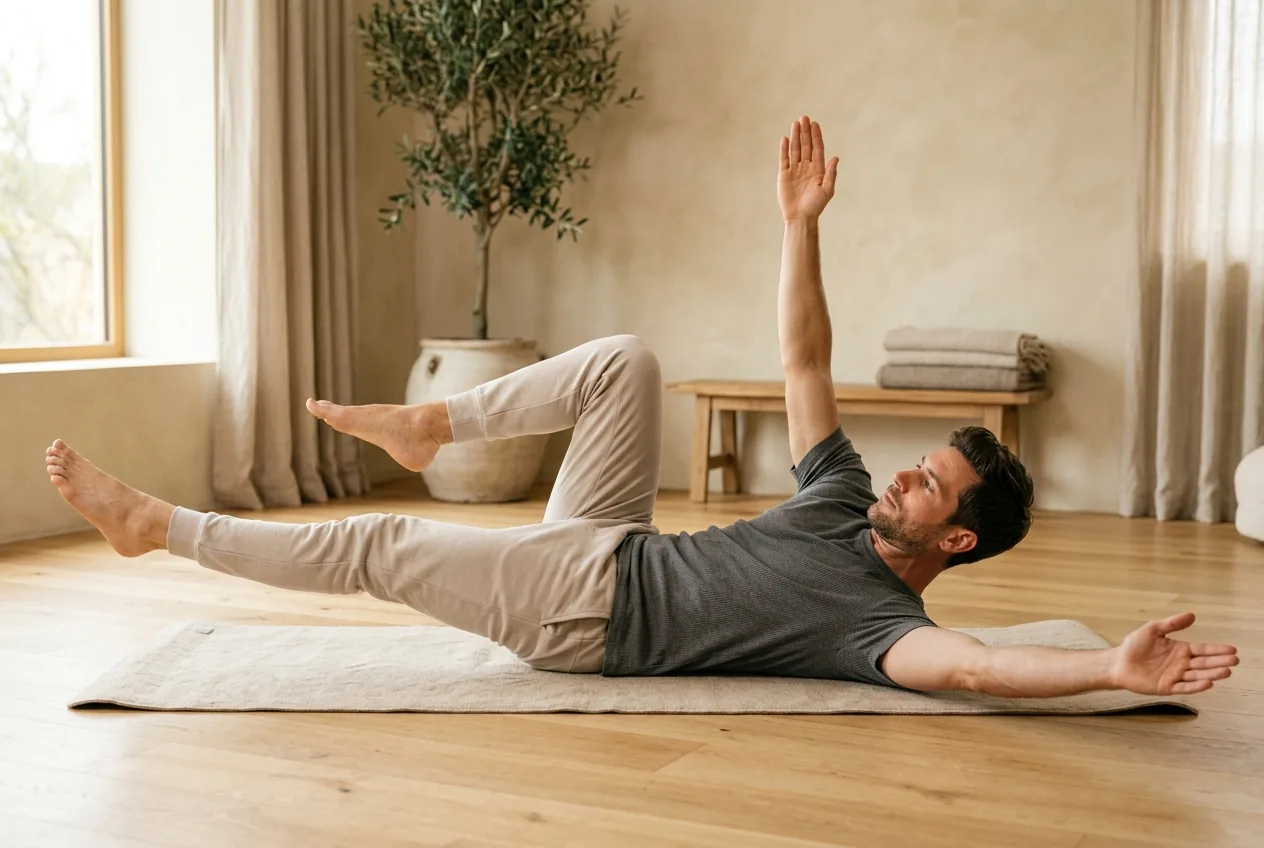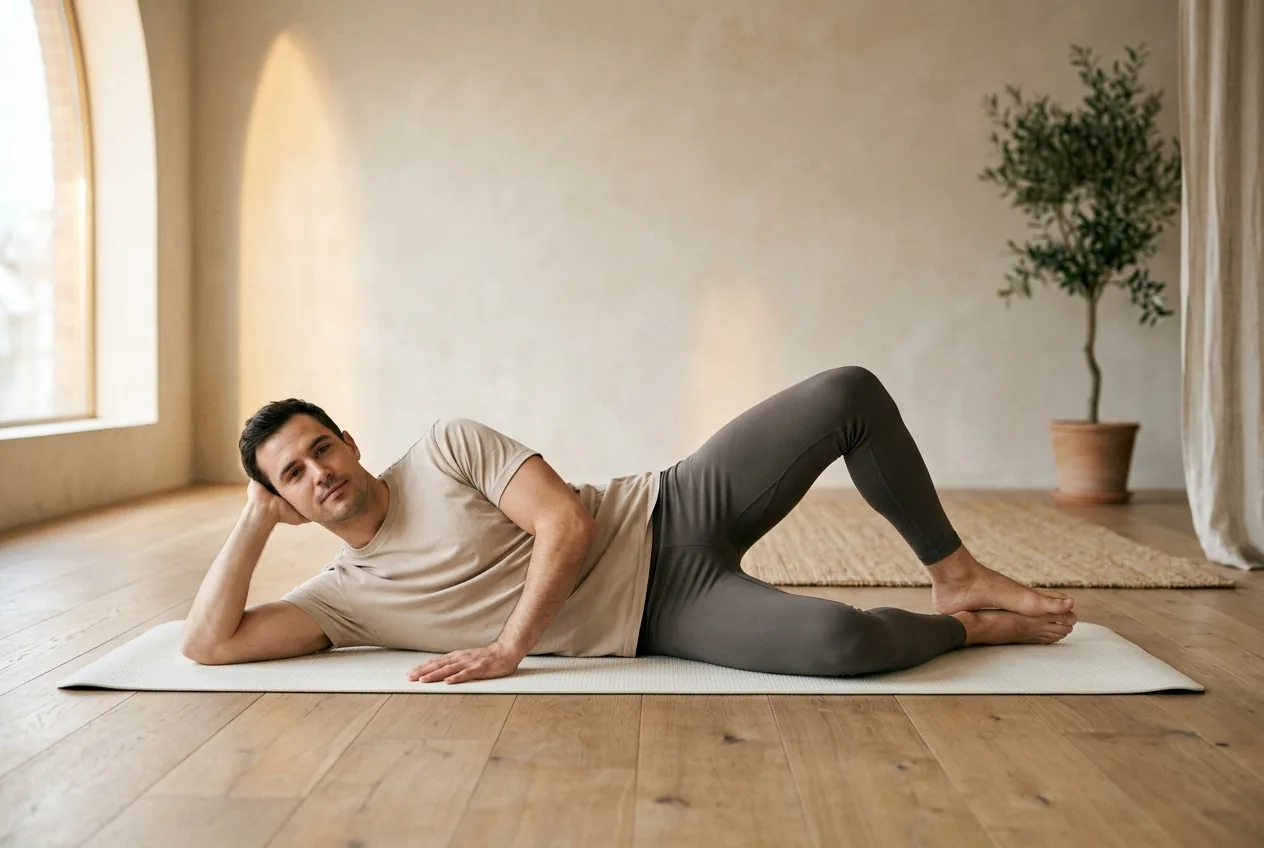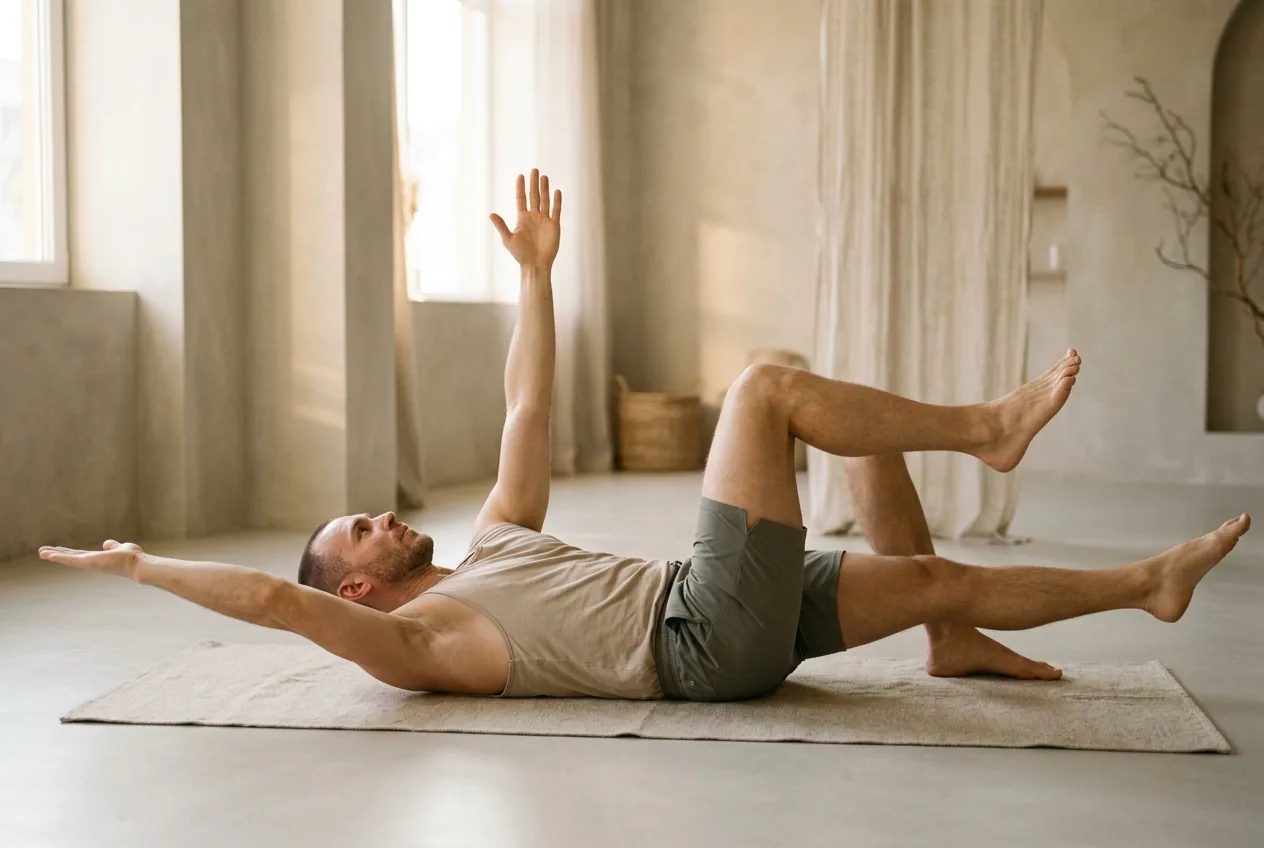
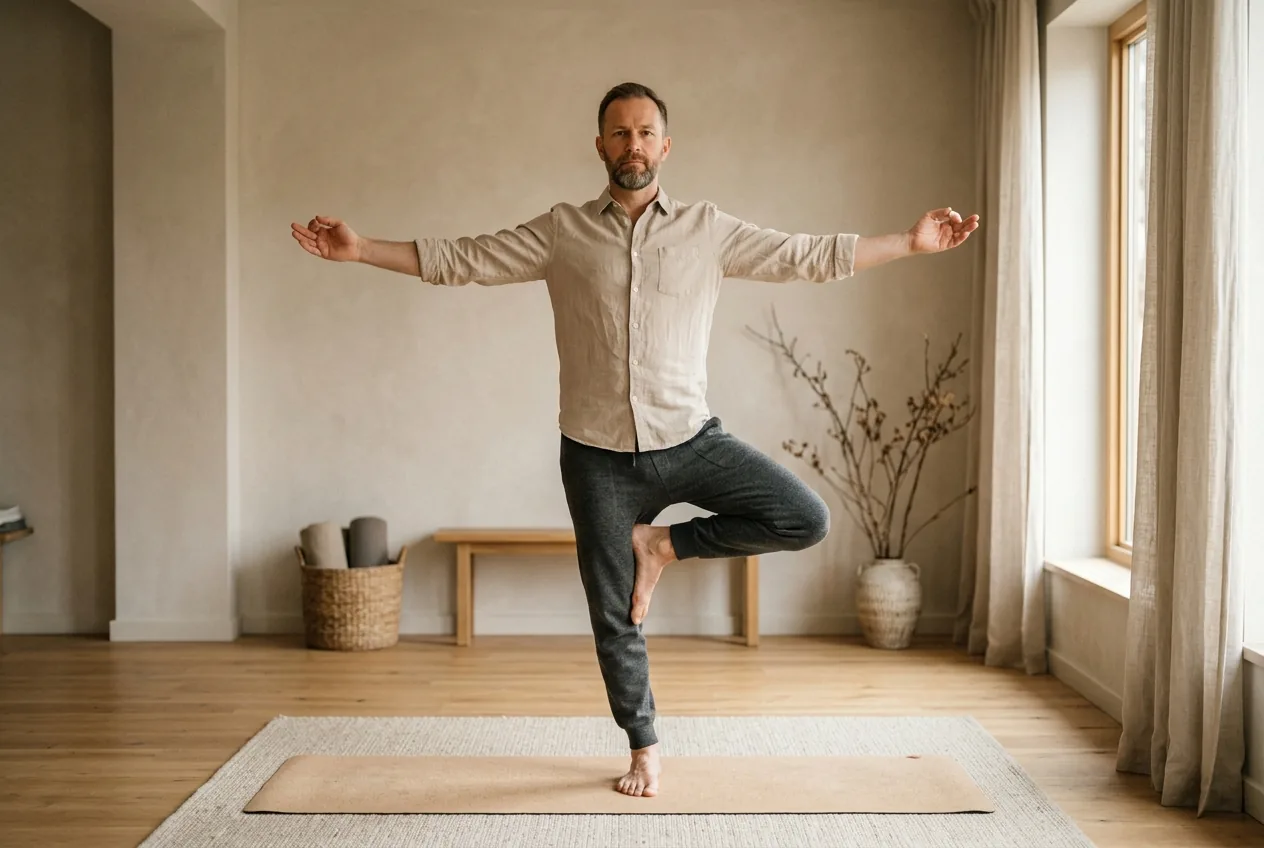
You step off a curb you didn't quite see, or you reach up to a high shelf, and for a half-second your body lurches before it catches itself. That little wobble — and how long it takes you to recover from it — tells you something about your balance. Balance exercises are how you make that recovery faster and that wobble smaller, and they do more for your posture than most people expect.
Balance isn't a separate skill from posture. The same system that holds you upright when you're still is the one that catches you when you tip. Train one and you train the other.
Why balance and posture are the same job
Standing still looks like doing nothing. It isn't. Your body is making constant tiny corrections — your ankles, hips, and the deep muscles along your spine all firing in small bursts to keep you over your feet. Your inner ear, your eyes, and the sensors in your joints feed your brain a steady stream of "where am I" information, and the muscles answer.
When that system is sharp, you stand tall without thinking and you catch a stumble before it becomes a fall. When it dulls — from sitting most of the day, from age, from never being challenged — you stand with more sway, you recover slower, and you start bracing instead of balancing. People who've lost balance confidence often stiffen up, lock their joints, and hold a guarded posture that ironically makes them less stable.
The good news is the balance system responds to training quickly. Spend a few minutes a day asking it to work, and the corrections get faster and quieter.
Balance isn't standing still. It's a thousand small corrections, and they get sharper the more you ask for them.
Standing balance workout: the core moves
You don't need equipment. You need a sturdy surface within reach — a counter, a heavy chair, a wall — so you can do these safely. Practice near support, not clinging to it. The goal is to challenge balance, not to avoid it.
Single-leg stand
Stand tall, hold the counter lightly, and lift one foot a few inches off the floor. Find your balance, then let go of the counter if you can. Hold for ten to thirty seconds, then switch. Stand tall through your spine — don't hunch over to concentrate. Three rounds per leg. This is the single most useful balance drill there is.
Heel-to-toe walk
Walk in a straight line placing the heel of one foot directly in front of the toes of the other, like walking a tightrope. Keep your eyes ahead, not on your feet. Ten to fifteen steps, turn, and come back. Use a wall alongside you for a fingertip touch if needed.
Weight shifts
Stand with feet hip-width apart and slowly shift your weight fully onto one foot, then the other, feeling the muscles in your standing ankle and hip work to hold you. Slow and deliberate, ten shifts each way. This teaches your body to control the transfer — the exact moment most stumbles happen.
Sit-to-stand without hands
From a sturdy chair, stand up and sit down without using your hands, controlling the lower all the way down. This trains the strength and balance you use dozens of times a day. Eight to ten reps. If standing tall when you reach the top is part of the work, it ties straight into how to stand properly.
Tandem stance
Stand with one foot directly in front of the other, heel touching toe, and hold. This narrows your base and forces the small stabilizers to work harder than a normal stance. Hold twenty to thirty seconds each way.
How to make balance harder safely
Once a move feels easy, progress it — an exercise your body has mastered stops training it. Step up the challenge one notch at a time:
- Close your eyes. Take away vision on a single-leg stand (near support) and your body has to rely on the joint sensors and inner ear. This is a big jump in difficulty, so keep a hand near the counter.
- Stand on a softer surface. A folded towel or a cushion makes the ground less predictable and wakes up the ankle stabilizers.
- Add a head turn or reach. Look left and right, or reach across your body, while balancing. Real life rarely asks you to balance while staring straight ahead.
- Hold longer or let go sooner. Build the time on one leg, and let go of support a little earlier each week.
A few minutes most days beats one long session. Balance is a daily-practice skill — it fades when you stop and returns when you start again. For older adults especially, pairing balance with gentle strength work makes the biggest difference, which is why these sit alongside gentle back exercises for seniors.
Common mistakes
- Hunching to concentrate. People curl forward and look at the floor when balancing. Stand tall and look ahead — good posture is part of good balance.
- Holding the breath. Bracing and holding your breath makes you stiffer and less stable. Breathe normally and let your body sway and correct.
- Never letting go of support. If you grip the counter the whole time, you're not training balance. Practice near it, touch it only when you need it.
- Progressing too fast. Closing your eyes on a wobble cushion on day one is how falls happen. Earn each step.
When to see a doctor
Balance training is exercise, not medical treatment. See a clinician promptly if you've had a fall, if you get dizzy, lightheaded, or feel the room spinning, if your balance has worsened suddenly, or if you have new numbness, weakness, or tingling in your legs. Sudden balance changes can have medical causes worth checking, and a clinician can also tailor a program if you're at higher risk of falls.
Why your balance pattern is your own
Balance drills help nearly everyone, but how you lose balance is specific to you. A body that carries its weight forward over the toes wobbles differently than one that sits back on the heels, and the posture underneath that — where your head, ribs, and pelvis actually stack — shapes which corrections your body struggles with. General balance work is a solid starting point. Knowing how your own alignment is loaded tells you which direction your stability is weakest, which is what a posture assessment matched to your pattern is for, instead of guessing.
Common questions
What are the best balance exercises for beginners?
Start with the single-leg stand and weight shifts near a counter, then add heel-to-toe walking and the sit-to-stand. These build the foundation safely. Keep support within reach, stand tall, and progress only when a move feels genuinely easy. A few minutes most days works better than one long session.
How do balance exercises improve posture?
The same deep muscles that hold you upright when still are the ones that catch you when you tip. Training balance sharpens those stabilizers and teaches your body to stack itself over your feet rather than bracing or slumping. Steadier balance and taller posture come from the same system.
Can balance exercises help prevent falls?
Yes. Balance training is one of the better-supported ways to reduce fall risk, especially when paired with leg strength work. It speeds up the small corrections your body makes and improves how quickly you recover from a stumble. Practice near support and build difficulty gradually.
How long until balance improves?
Many people notice steadier balance within two to four weeks of near-daily practice, because the balance system adapts quickly. The gains fade if you stop, so a few minutes most days as a lasting habit keeps the steadiness you build.