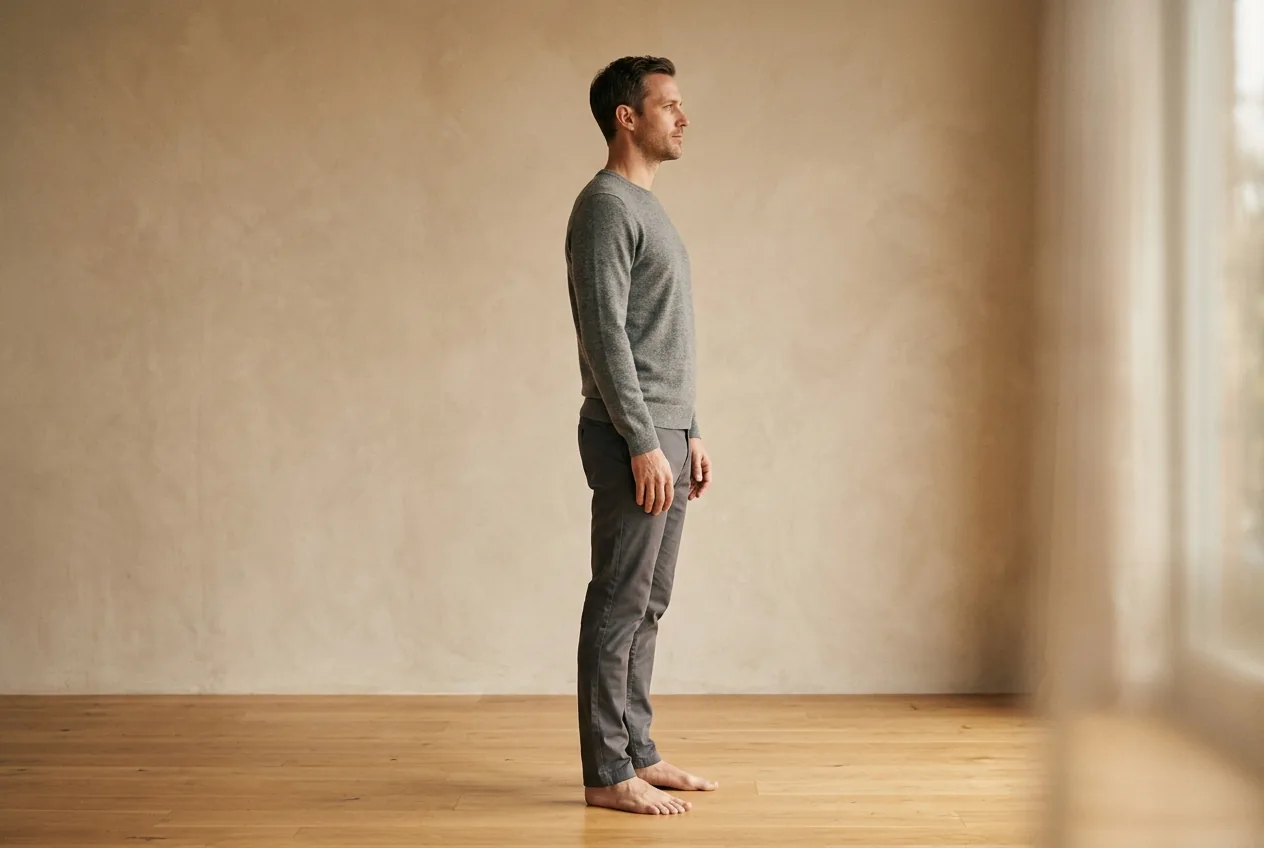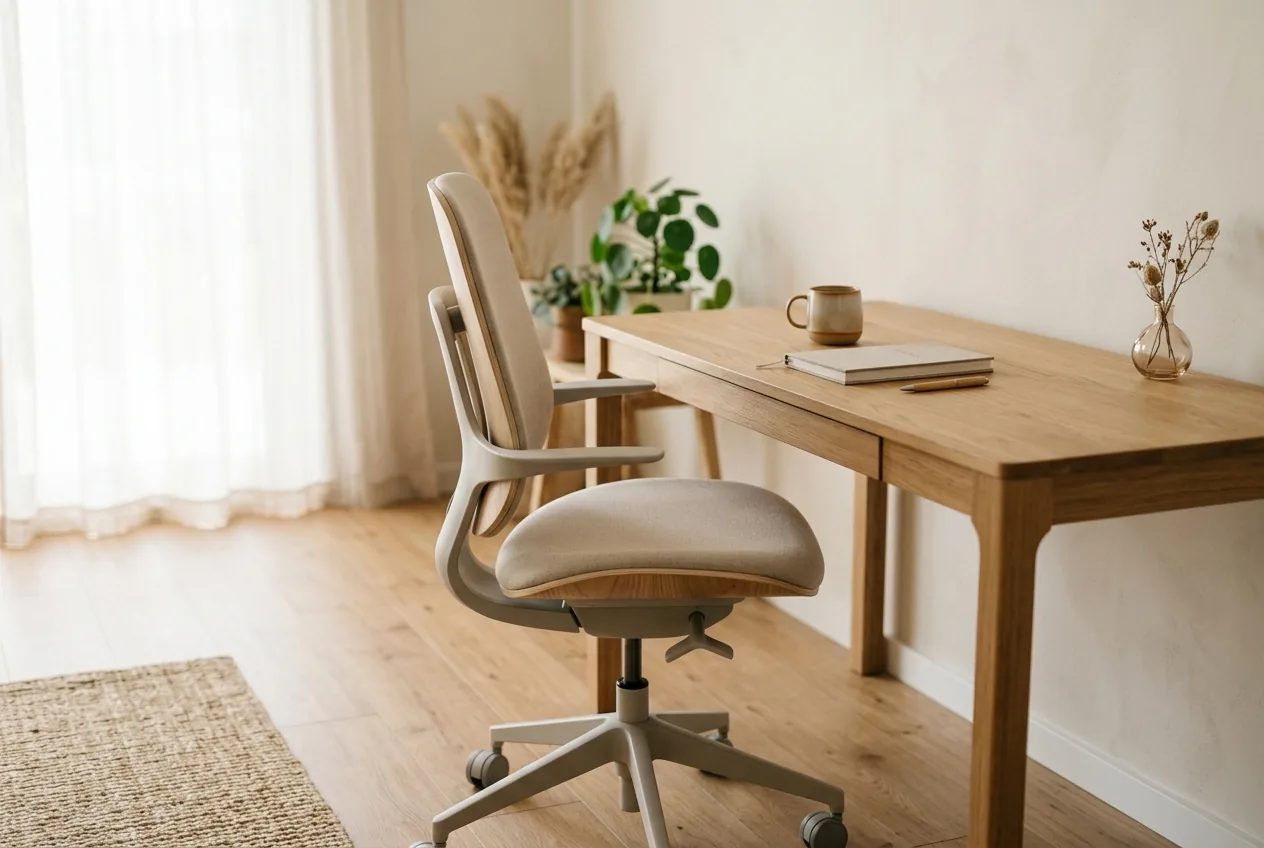
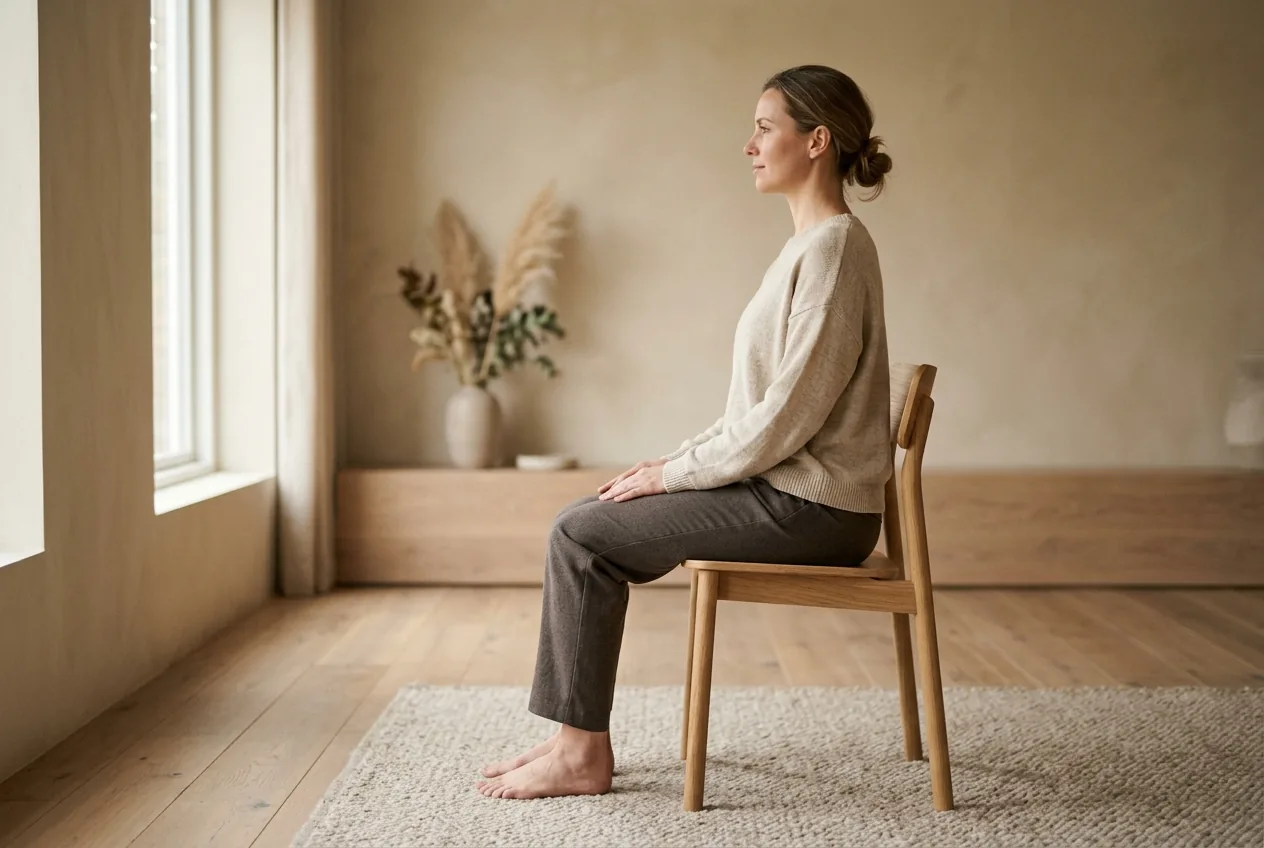
You shift in your chair for the tenth time, trying to find the spot where your back doesn't pull to one side, where you don't feel like you're slowly leaning. With scoliosis, sitting can feel like a position you never quite settle into — your spine has a sideways curve, and a chair built for a straight one doesn't quite fit. Finding the best sitting position for scoliosis is less about one perfect posture and more about keeping your back supported and even so your curve doesn't collapse further into the chair.
First, an honest frame. Scoliosis is a structural sideways curve of the spine, and how you sit doesn't cause it or cure it. What sitting does affect is comfort, fatigue, and whether you spend hours letting the curve sag or sitting in a way that supports it. That's worth getting right, because you sit for a lot of your day. Here's how.
Why sitting feels harder with scoliosis
A scoliotic spine isn't symmetrical, so the muscles on either side aren't working evenly to begin with. One side tends to be tight and overworked, the other lengthened and tired. When you sit, especially without support, the spine tends to settle toward its curve, and the already-tired side has to hold harder to stop you tipping. That's the fatigue and the constant shifting — your back is doing uneven work just to keep you upright in a seat designed for an even spine.
The aim of good sitting here is to take that work off the muscles by supporting the spine evenly, so it isn't slowly collapsing into the curve over a long sitting day.
With scoliosis, the goal of sitting isn't to force your spine straight. It's to support it evenly so the curve doesn't sag deeper as the hours pass.
The best sitting position for scoliosis
Build it from the base up, and lean on support rather than muscle effort.
Sit fully back in the chair. Get your hips all the way to the back of the seat so the backrest can actually support your spine. Perching forward leaves your whole back unsupported, and the curve sags fastest that way.
Keep your hips level. This is the big one. Sit evenly on both sit bones rather than leaning onto one side or tucking a leg under you. If you tend to collapse toward your curve, a small wedge or folded towel under the lower hip can help level the pelvis — but go gently and by feel; what evens one person's pelvis can worsen another's. Crossing the same leg for hours tilts the pelvis and is worth dropping.
Support the lower back evenly. A lumbar cushion that fills the natural curve of your lower back helps the spine stack rather than slump. Make sure it sits centered, not pushed to one side.
Feet flat, knees level with hips. The same base rules that hold any pelvis neutral — covered in proper sitting posture — apply here, and a level base makes it easier to keep the hips even above it.
Keep your screen centered and at eye level. A screen off to one side makes you rotate and lean all day, feeding the curve. Square it up in front of you.
The rule that matters most: move
Here's the part that beats any single position. No posture is good if you hold it for hours, and that's doubly true with scoliosis, where staying still lets the curve settle deeper and the tired side stiffen. The most useful thing you can do is break up sitting often — stand, walk, change position every 30 minutes or so. Movement keeps the spine fed and stops the slow collapse into the curve that long sitting causes.
Quick standing resets and a few gentle desk stretches through the day do more than chasing the perfect chair position. With scoliosis especially, variety of position is the friend; frozen stillness is the enemy.
Where exercise fits
Sitting well manages the day. It doesn't change the underlying curve. For that, scoliosis is usually managed with specific exercise that strengthens the weaker, lengthened side and works on the muscle imbalance around the curve — ideally guided, since the right moves depend on the direction and location of your particular curve. There's a starting overview in scoliosis exercises. The general principle that a sideways imbalance leaves uneven shoulders and uneven hips in its wake is worth understanding too, because those are often part of the same picture.
The key point: a generic back routine isn't right for scoliosis, because the curve makes your two sides need different things. The same stretch can help one side and aggravate the other.
When to see a doctor
This is posture education, not medical advice, and scoliosis is a structural condition that should be managed with a clinician. See one promptly if your curve appears to be getting worse, if you have new or increasing back pain, numbness, tingling, or weakness in the legs, any loss of bladder or bowel control, changes in breathing, or pain that's severe or steadily worsening. Scoliosis management — including which exercises are right for your curve — should be guided by a professional who has assessed your spine.
Why your sitting and your curve need a matched approach
Because scoliosis makes your spine asymmetrical, the right support and the right exercise depend entirely on your specific curve — its direction, its location, how your pelvis and shoulders sit around it. A position that evens out one person's spine can deepen another's. That's exactly why generic advice falls short here.
Understanding your own pattern is the starting point. A posture assessment can map how your spine, shoulders, and hips actually sit, which helps you and your clinician aim support and exercise in the right direction rather than guessing. Sitting well takes the daily load off; knowing your pattern guides the work that addresses the imbalance underneath.
The best sitting position for scoliosis is a supported, even one you change often — not a perfect pose you hold for hours.
Common questions
What is the best sitting position for scoliosis?
Sit fully back so the chair supports your spine, keep your hips level on both sit bones, use a centered lumbar cushion to support the lower back's curve, and keep your feet flat with knees level with your hips. Keep your screen square in front of you. Above all, change position often rather than holding any one posture for hours.
Does sitting badly make scoliosis worse?
Sitting doesn't cause scoliosis or change the structural curve, but slumping into the curve for hours adds fatigue and discomfort and lets the tired side stiffen. Sitting with even support and breaking it up with movement keeps you more comfortable and stops the slow collapse into the curve over a long day.
Should I use a cushion or wedge for scoliosis?
A centered lumbar cushion helps support the lower-back curve, and a small wedge under the lower hip can help level a pelvis that collapses toward the curve. Both should be used gently and by feel, because what evens one curve can worsen another. It's best to check the approach with the clinician managing your scoliosis.
Can exercise help scoliosis or just sitting position?
Exercise is where the underlying imbalance is addressed — strengthening the weaker, lengthened side and working the muscles around the curve. Sitting position manages daily comfort and fatigue but doesn't change the curve. Because the right exercises depend on your specific curve, they should be guided, not pulled from a generic routine.