You've heard a hundred times that a strong core protects your back. So you did crunches, lots of them, and either nothing changed or your back got crankier. That's a common and confusing outcome — and it's not because core strength is a myth. It's because crunches train the wrong thing. The core exercises for lower back pain that actually help look almost nothing like the sit-ups you were sold.
Your core isn't your six-pack. It's the deep cylinder of muscle wrapping your trunk — the transverse abdominis, the obliques, the muscles alongside your spine, the diaphragm on top and the pelvic floor below. Their job isn't to crunch you forward. It's to hold your spine steady while your arms and legs move. Train that, and your back gets a built-in brace. Train the crunch, and you mostly get better at curling forward — a position your desk already gives you too much of.
Why crunches miss the point
A crunch is repeated spinal flexion. It bends your spine forward against load, over and over. That's hard on the discs if one's already irritated, and it does little for the deep stabilizers that keep your spine safe when you bend to pick up a kid or reach into the car. It's one of the moves worth rethinking, which is why it shows up among exercises to avoid with lower back pain.
The better approach trains the core to resist movement — to stay stable while everything around it works. That's what your back actually needs from it.
Four core exercises that protect your back
Do these slowly, with control. Quality beats reps. Breathe normally — don't hold your breath. Stop short of any back pain.
1. Dead bug
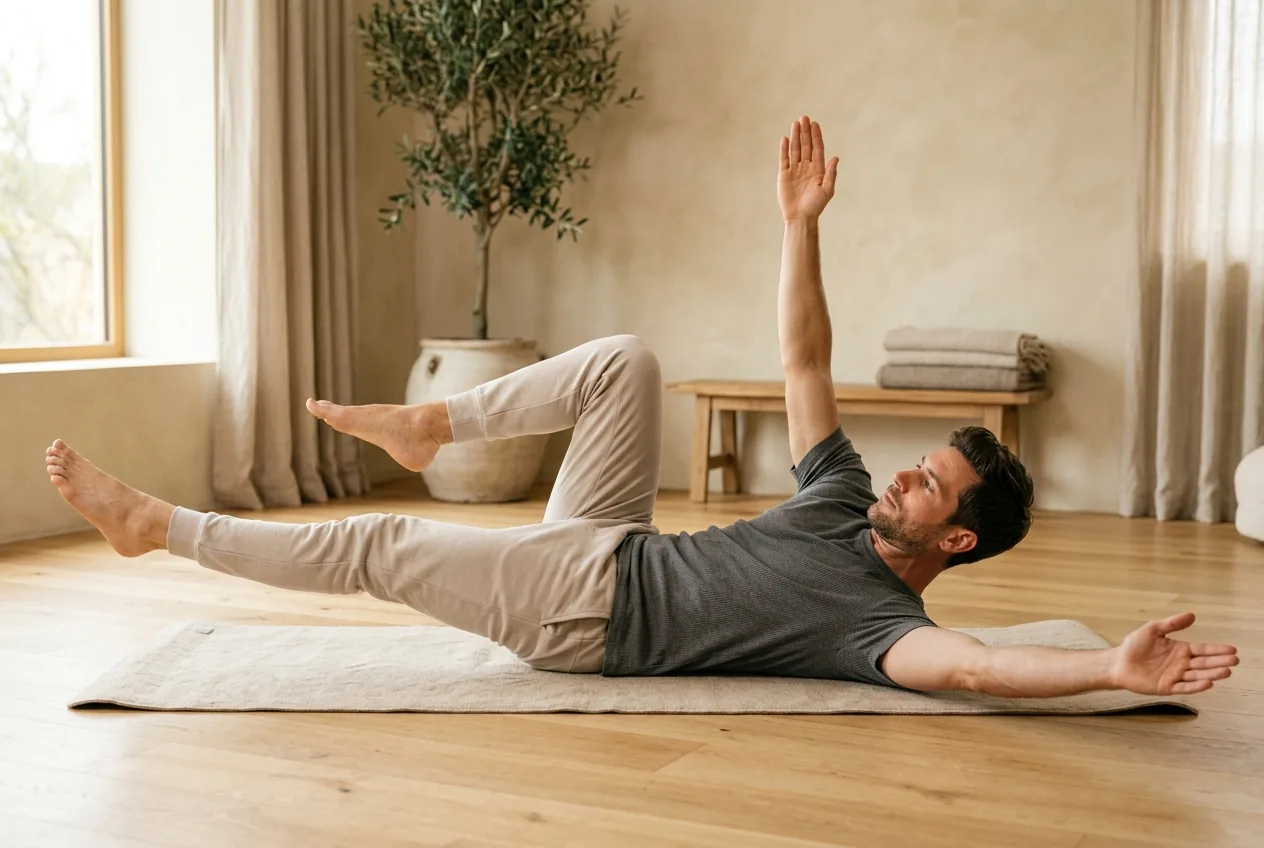
Lie on your back, knees bent and lifted so your shins are parallel to the floor, arms reaching toward the ceiling. Press your lower back gently into the floor and keep it there. Slowly lower one arm overhead and the opposite leg toward the floor, then return and switch sides. The whole point is that your lower back doesn't arch off the floor as your limbs move.
Start with 6–8 slow reps per side. If your back arches up, make the movement smaller.
2. Bird dog
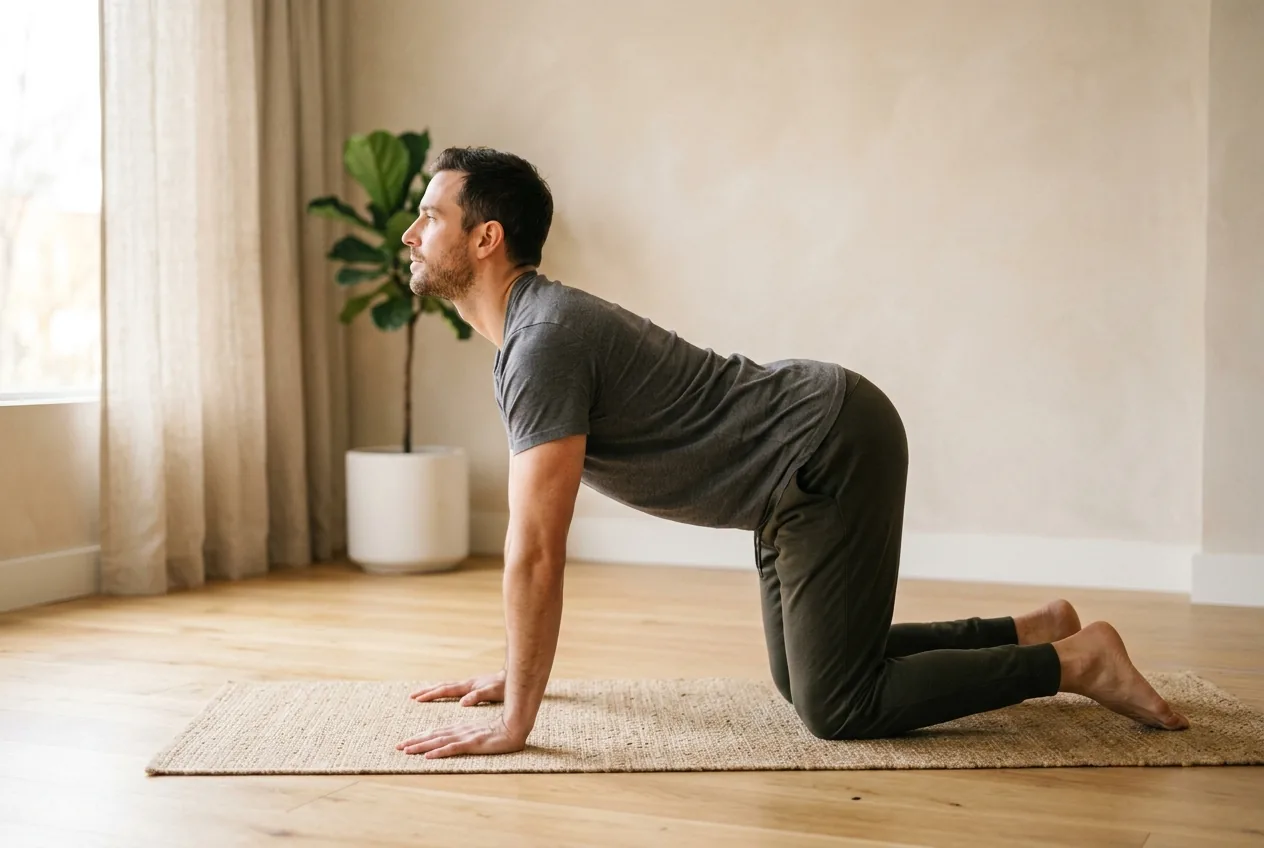
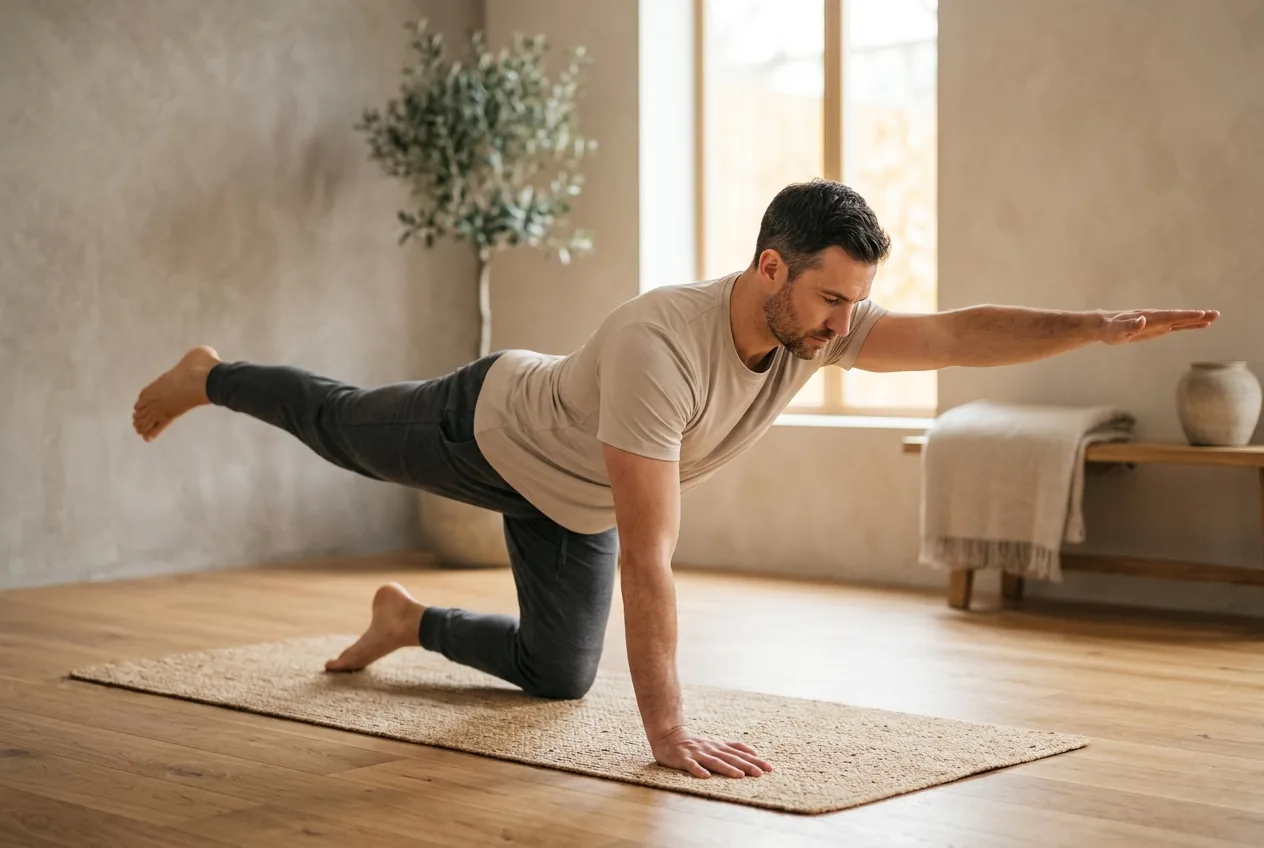
On hands and knees, brace your trunk gently and extend one arm forward and the opposite leg back until both are level with your body. Hold for two or three seconds without letting your lower back sag or your hips twist, then return and switch. This trains the stabilizers alongside your spine while keeping it neutral.
Aim for 8 per side. There's a fuller breakdown in the bird dog exercise.
3. Plank (and side plank)
A plank — forearms and toes, body in a straight line, hips neither sagging nor hiked — trains the whole core to hold the spine stable. Start with 15–20 seconds and build up. Quality matters more than time: the moment your lower back starts to sag, you're done.
The side plank trains the obliques and the muscles that stop you collapsing sideways. Drop a knee to make it easier while you build strength.
4. Glute bridge
Lie on your back, knees bent, feet flat. Squeeze your glutes and lift your hips until your body forms a straight line from knees to shoulders, then lower slowly. This isn't only a glute move — weak glutes force the lower back to do their job, so firing them up takes load off your spine. The connection runs deep, as the glute bridge for back pain explains.
Do 10–12 slow reps, focusing on the squeeze rather than height.
A good core holds your spine still while you move. That's protection. Curling it up against gravity is just exercise.
How to put them together
Three or four short sessions a week beats one long one. A simple round: dead bug, bird dog, plank, glute bridge — one or two sets each, controlled. Ten minutes, no equipment. Consistency matters far more than intensity for back protection.
Keep your breathing easy and your spine neutral throughout. If a move sharpens your pain rather than just challenging the muscle, back off and shrink the range.
How to know you're doing them right
The most common mistake is letting the lower back take over. On the dead bug and bird dog, the giveaway is your lower back arching off the floor or your hips twisting as you move a limb — that means the small range you can control honestly is smaller than the range you're attempting. Shrink it. A tiny, clean rep beats a big, sloppy one every time.
On the plank, watch for sagging hips. The moment your lower back dips toward the floor, the exercise has stopped training your core and started loading your spine. End the hold there rather than grinding out seconds. With the glute bridge, you should feel the work in your glutes, not your lower back; if your back is doing the lifting, slow down and focus on squeezing the glutes before your hips leave the floor.
A good rule: if you can't keep your spine neutral, the version you're doing is too hard. Make it easier until your control catches up. That's not a setback — it's exactly how the deep stabilizers get strong.
When to see a doctor
Core training is for ordinary mechanical back pain. See a clinician promptly if you have numbness, tingling, or weakness spreading into a leg, any loss of bladder or bowel control, pain after a fall or accident, fever with back pain, unexplained weight loss, or pain that's severe or steadily worsening. Don't try to strengthen through those signals.
Why even good core work needs to fit your pattern
These four moves are safe and useful for most backs, because they build stability without bending the spine. But here's the limit. How much you should emphasize, say, glute work versus deep abdominal control depends on your particular imbalance. Someone whose pelvis tips forward and whose lower back over-arches needs a different balance than someone with a flat back and weak, switched-off glutes. The same routine helps both somewhat, but neither maximally.
That's the gap between general advice and your own pattern. Most chronic back pain comes from specific muscles switching off while others overwork — and strengthening blindly can accidentally reinforce the overworking side. A posture-based approach to chronic back pain measures which of your muscles have gone quiet and which are straining, then targets the right ones in the right order. It turns "do these four" into "do these, because this is what your body is missing."
Start with the four moves a few times this week. Skip the crunches. If your back feels steadier within a couple of weeks — less likely to twinge when you bend or lift — you're building the kind of core strength that actually counts.
Common questions
What are the best core exercises for lower back pain?
Moves that train your core to hold the spine steady rather than bend it: dead bugs, bird dogs, planks and side planks, and glute bridges. They build the deep stabilizers that brace your back when you bend or lift.
Do crunches help or hurt lower back pain?
Crunches tend to miss the point. They bend the spine forward against load, which is hard on irritated discs and does little for the deep stabilizers, so they often leave a cranky back no better.
How often should I do core exercises for my back?
Three or four short sessions a week works well — one or two sets of each move, ten minutes, no equipment. Consistency matters far more than long or intense sessions for back protection.
Why does my lower back hurt during core exercises?
Usually because your lower back is taking over for muscles that should be doing the work. If your back arches off the floor or your hips sag, shrink the range until you can keep your spine neutral and feel the right muscles working.