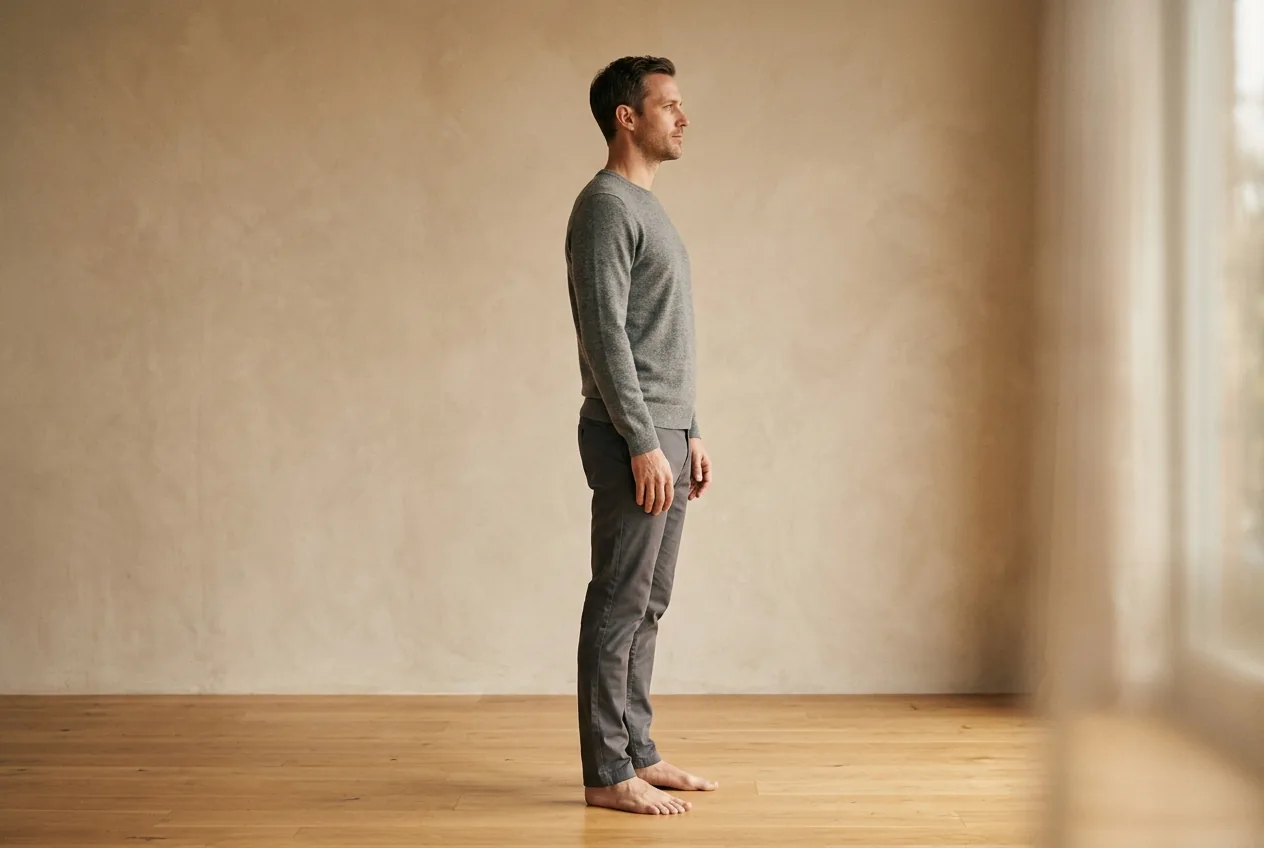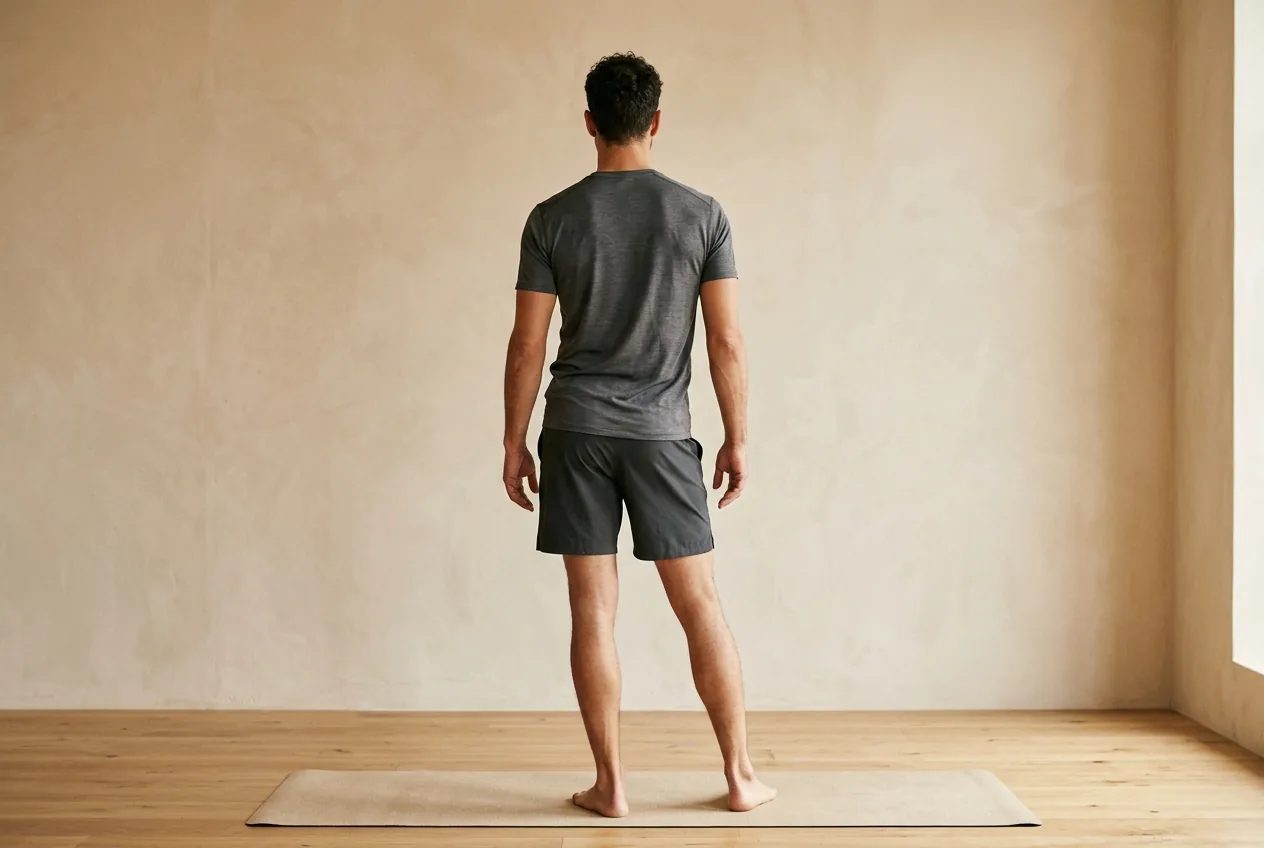
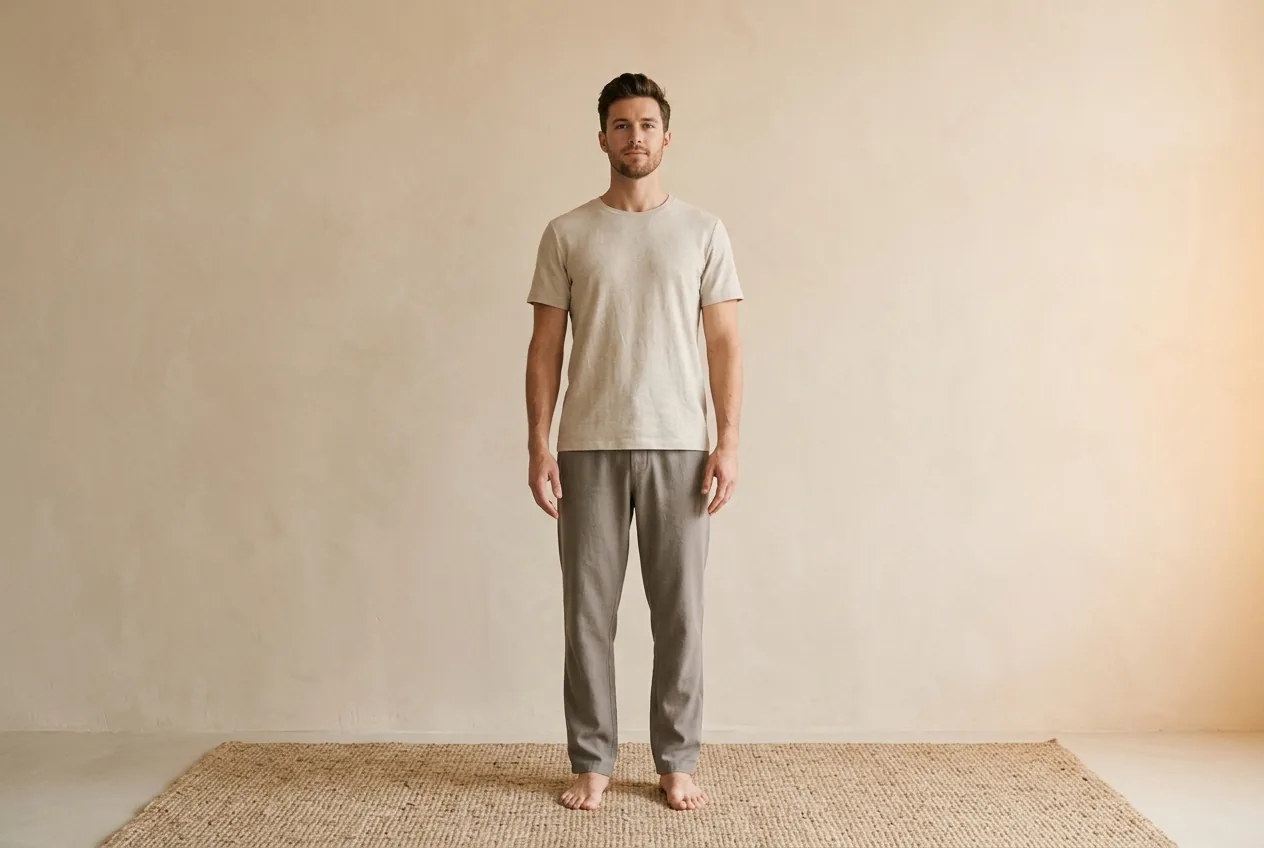
You straighten up in front of the mirror, pull your head back over your shoulders, settle your ribs down, and suddenly you look taller. Then you slump back into your normal stance and an inch or so vanishes. So you wonder: is that real height, or just a trick of standing tall for a second?
It's real, with an honest catch. Does good posture make you taller? Yes — it can give you back height you already have but lose to slumping. What it can't do is add height beyond your actual frame. The difference between those two things is the whole answer, so let's go through it properly.
The height you lose to posture
Your spine isn't a straight pole. It's a stack of bones with natural curves and soft cushions (the discs) between them. When your posture drifts — head forward, upper back rounded, lower back collapsed — those curves deepen and the stack folds in on itself a little. You don't get shorter in your bones. You get shorter in how you're carrying them.
Add up the slumps. A head that pokes forward drops your crown height. A rounded upper back curls the top of the stack down. A collapsed posture compresses the whole line. Across all of it, most people are carrying somewhere in the range of a half-inch to a couple of inches less standing height than their frame actually allows, simply because they're folded rather than stacked.
Stand in genuinely good posture — the easy, stacked alignment where your bones carry you — and you reclaim that. The head comes back over the shoulders, the curves return to their natural proportion, and you stand at your true height instead of your slumped one.
Good posture doesn't grow you. It stops you losing the height you've already got.
Why it's not a gimmick
Two real mechanisms are at work, not just "stand up straight for the photo."
Decompression of the curves. When you unround a hunched upper back and bring a forward head back over the shoulders, you're literally lengthening the folded part of the stack. That's measurable height, and it's the part you can keep — if your muscles can hold the better position without you thinking about it.
The daily disc shuffle. Here's a known, uncontroversial fact: almost everyone is slightly taller in the morning than at night. Through the day, gravity gently compresses the discs between your vertebrae, and they rehydrate and recover overnight. The effect is small, usually under an inch, and it's normal. Good posture doesn't change this rhythm, but loading your spine evenly rather than crushing one side of it is kinder to those discs over the long run.
So the height you reclaim from posture is the slump you remove. It's permanent only to the extent that the better posture becomes your default — which is the catch.
The catch: a pose isn't a habit
Here's where most "stand tall for instant height" advice falls apart. You can pull yourself into an upright stack for a photo, but if your muscles are wired for the slump — tight chest, weak upper back, a forward head riding on a rounded spine — you'll drift right back the moment you stop concentrating. That's the rounded shoulders problem in a nutshell: the shape follows the strength.
To keep the reclaimed height, the upright position has to become the one your body holds on its own. That means trading the imbalance: releasing what's tight and switching on what's weak, until standing tall costs no effort. Then the extra inch isn't a pose you adopt — it's just how you stand.
Whether you can reclaim a little or a lot depends on how folded you currently are. Someone with a pronounced forward head posture and a rounded upper back has more to gain back than someone already close to neutral.
What good posture won't do for height
Let's be clear so you're not chasing the wrong thing.
- It won't make you taller than your skeletal frame. Your bone length is set; posture only affects how fully you stand into it.
- It won't lengthen your legs or your actual spine.
- It won't keep working if you go straight back to slumping all day. Reclaimed height needs the habit to hold.
- It won't add inches overnight. Retraining the muscles to hold the upright stack takes weeks of steady work.
If your interest is feeling taller and standing into your full frame, posture is the lever. If you're hoping to exceed your genetic height, no posture work — or anything else non-surgical — does that.
When to see a doctor
This is posture education, not medical advice. See a clinician if you notice that you've actually lost height over time alongside back pain, if you have a visibly worsening curve in your spine, pain with numbness or weakness in a limb, any loss of bladder or bowel control, pain after a fall, or unexplained weight loss. A real, measured loss of height in adulthood is worth getting checked rather than assuming it's just posture.
How much can you reclaim, really?
The honest answer is: as much as you're currently slumping, no more and no less. For someone carrying a forward head and a rounded back, that can be a visible inch or more once the position holds. For someone already fairly upright, it's modest. Either way it's height you own and are leaving on the table.
How much you have to gain, and what's holding you in the slump, is specific to you. That's the reasoning behind a real posture assessment: it measures your actual deviations and builds the routine to bring you back to your full stack. For a first look, check your posture at home with a side-on photo and see how folded you really are.
The tape measure won't read higher than your frame. But stand into all of it, and most people are taller than they've been letting themselves be.
Common questions
Does good posture really make you taller?
It makes you stand at your true height instead of a slumped, compressed version of it. Slumping — a forward head, a rounded back, a collapsed stack — costs most people somewhere from a half-inch to a couple of inches of standing height. Good posture reclaims that, but it can't add height beyond your actual frame.
How much taller can good posture make you?
However much you're currently losing to slumping, which varies a lot. Someone with a pronounced forward head and rounded upper back might reclaim a visible inch or more once they can hold the better position; someone already close to neutral gains little. It's reclaimed height, not new height.
Is the height from good posture permanent?
It lasts to the extent that the upright posture becomes your default. If you pull yourself tall for a moment but your muscles are wired for the slump, you'll drift back. Keeping the reclaimed height means retraining the tight and weak muscles so standing tall takes no conscious effort.
Why am I taller in the morning than at night?
The soft discs between your spinal bones compress slightly under gravity through the day and rehydrate overnight, so almost everyone is a touch taller in the morning. The difference is usually under an inch and is completely normal. Good posture doesn't change this cycle, but loading the spine evenly is easier on those discs over time.