Your lower back seized up this morning, you're standing in front of the bathroom cabinet, and you genuinely cannot remember: is it heat or ice? Everyone has a confident opinion, half of them contradict each other, and meanwhile your back is still talking to you.
Heat or ice for lower back pain comes down to a fairly simple distinction once you know what each one does. Neither is a cure — they're tools for managing how the pain feels while your back settles. Use the right one at the right time and you'll be more comfortable. Use the wrong one and, at worst, you waste an afternoon.
What each one actually does
They work in opposite directions, which is the whole reason the choice matters.
Ice narrows blood vessels and slows things down. It numbs the area, calms inflammation, and quiets down an angry, freshly irritated muscle or joint. Think of it as putting out a small fire.
Heat does the reverse. It widens blood vessels, increases blood flow, relaxes tight muscle, and eases stiffness. It's soothing and loosening rather than calming-down.
Ice calms an angry back. Heat loosens a stiff one. Most of the choice is just figuring out which you've got.
That's the core of it. Fresh, sharp, inflamed pain usually wants cold. Old, stiff, achy, muscular tightness usually wants warmth.
When to reach for ice
Ice tends to be the better choice in the first day or two after pain flares up, especially if it came on suddenly.
- The first 24–48 hours of a new flare. If you tweaked your back lifting something or it locked up out of nowhere, cold helps settle the initial irritation.
- Sharp, hot, or swollen-feeling pain. When the area feels inflamed and reactive, cold quiets it.
- After an activity that aggravated it. If a particular movement flared things up, ice afterward can blunt the response.
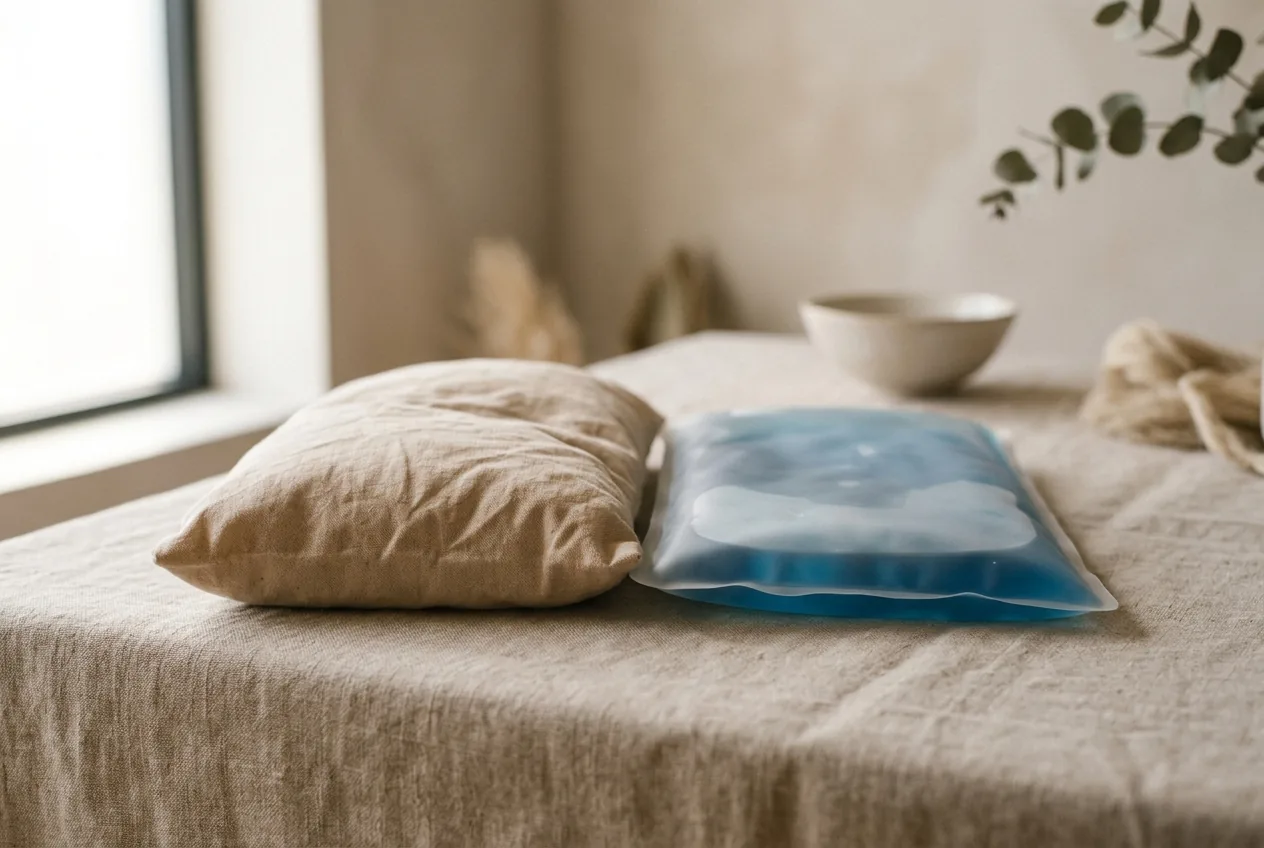
How to use it: a cold pack or a bag of frozen peas wrapped in a thin towel — never directly on skin — for 15–20 minutes at a time, with at least an hour between sessions. Don't fall asleep on it.
One caution people skip: more is not better with cold. Going past 20 minutes doesn't speed anything up and can irritate the skin or the nerves underneath. Set a timer, take it off, and come back later if you need another round.
When to reach for heat
Heat is usually the friend of the stiff, lingering, tight-muscle back — which is what most chronic sufferers are actually dealing with day to day.
- Stiffness, especially in the morning. If you wake up tight and braced, heat before you move helps you loosen enough to get going.
- Aching, tense muscle. Chronic low-grade tension responds well to warmth.
- Before activity or stretching. A warm back stretches more comfortably and safely than a cold one.
How to use it: a heating pad, hot water bottle, or a warm shower or bath, 15–20 minutes at a time, comfortably warm, not scalding. Don't lie on a heating pad for hours or sleep on one — that's a burn risk and it can leave you more sluggish, not less.
A small trick worth knowing: a warm shower or bath spreads heat more evenly than a flat pad pressed against one spot, and it lets you move gently while you're warm. If your back is stiff first thing, a few minutes under warm water before you start the day often does more than the same time lying on a pad afterward.
A practical way to decide
If you're unsure, here's a clean default. New and sharp in the last day or two: start with ice. Old, stiff, and nagging: go with heat. Tight in the morning but flared up by evening: heat to loosen up early, ice later if it gets angry. And if one genuinely feels better to you than the other, trust that — your body's feedback beats any chart.
Some people alternate, finishing with heat to relax the muscle. That's fine. There's no medal for purity here; comfort is the point.
It also helps to think about timing, not just choice. Heat earns its keep before activity — it loosens you so you can move and stretch with less guarding. Ice earns its keep after, when a movement has stirred things up and you want to settle the response. Used that way, the two aren't rivals; they bookend the day. Warm to get going, cold to calm down if you overdid it.
One thing neither does: build anything. They don't strengthen a weak muscle or lengthen a tight one. They buy you comfortable hours, and comfortable hours are worth buying — just spend some of them on the work that actually changes your back.
What heat and ice share is a ceiling. Both manage the *sensation*. Neither touches *why* your lower back keeps tightening or flaring in the first place. If you're reaching for the heating pad most mornings, the pad isn't the problem to solve — the recurring tightness is. That's worth understanding rather than just soothing, which is why we dig into why back pain keeps coming back separately.
When to see a doctor
Heat and ice are for ordinary mechanical pain. A few signs mean you should stop self-treating and see a clinician promptly: numbness, tingling, or weakness spreading down a leg, any loss of bladder or bowel control, back pain after a fall or accident, fever alongside back pain, unexplained weight loss, or pain that's severe or steadily getting worse. Also, if you have reduced skin sensation or diabetes, be extra cautious with both heat and cold, since you may not feel a burn or frostbite developing.
The part the heating pad can't reach
Here's the honest limit. Heat and ice are comfort tools, and good ones. But if your lower back keeps stiffening up, the deeper reason is usually mechanical: muscles that have gone tight and overworked while others switched off, leaving your spine loaded unevenly all day. The pad eases the result. It doesn't change the load.
Lasting relief comes from changing that pattern — and the catch is that the right pattern to fix is specific to you. A generic stretch or routine helps one posture and can aggravate another. That's the idea behind a posture-based method that measures your own deviations and builds a daily routine to match. Posture itself drives more of this than most people expect, which is why it's worth understanding whether your posture is feeding the pain.
So: ice the fresh and angry, heat the stiff and old, and don't sleep on either. Then go after the reason you keep reaching for them in the first place.
Common questions
Should I use heat or ice for a sudden back spasm?
For a fresh spasm in the first day or two, ice usually helps more — it settles the initial irritation. Once the sharp edge fades and you're left stiff, heat tends to feel better.
Can I alternate between heat and ice?
Yes. Some people switch between the two and finish with heat to relax the muscle. There's no strict rule, so let comfort guide you, and keep each application to about 15 to 20 minutes.
How long should I leave a heat or ice pack on?
Around 15 to 20 minutes at a time for either one. Longer doesn't speed anything up and can irritate skin or nerves, so set a timer and take a break of at least an hour before the next round.
Why does heat feel better in the morning?
Morning stiffness is usually tight, braced muscle rather than fresh inflammation, and warmth loosens that. A warm shower before you start moving often does more than lying on a pad afterward.