
You can put a finger right on it — that tight, ropey knot between your shoulder blades, a little to one side of your spine. You've dug into it with a tennis ball, had someone press on it, booked a massage. It eases for an afternoon. By the next day it's back, in exactly the same spot.
A knot that won't go away is frustrating because everything you try seems to work for an hour and then quit. The reason is simple: you're treating the spot that hurts, but the spot that hurts isn't the cause.
Why the knot keeps coming back
That tender band of muscle between your shoulder blades — usually the rhomboids or the middle traps — is almost always overworked, not tight in the way you think. It's not short and cramped. It's long, strained, and stuck switched on, holding a load it can't put down.
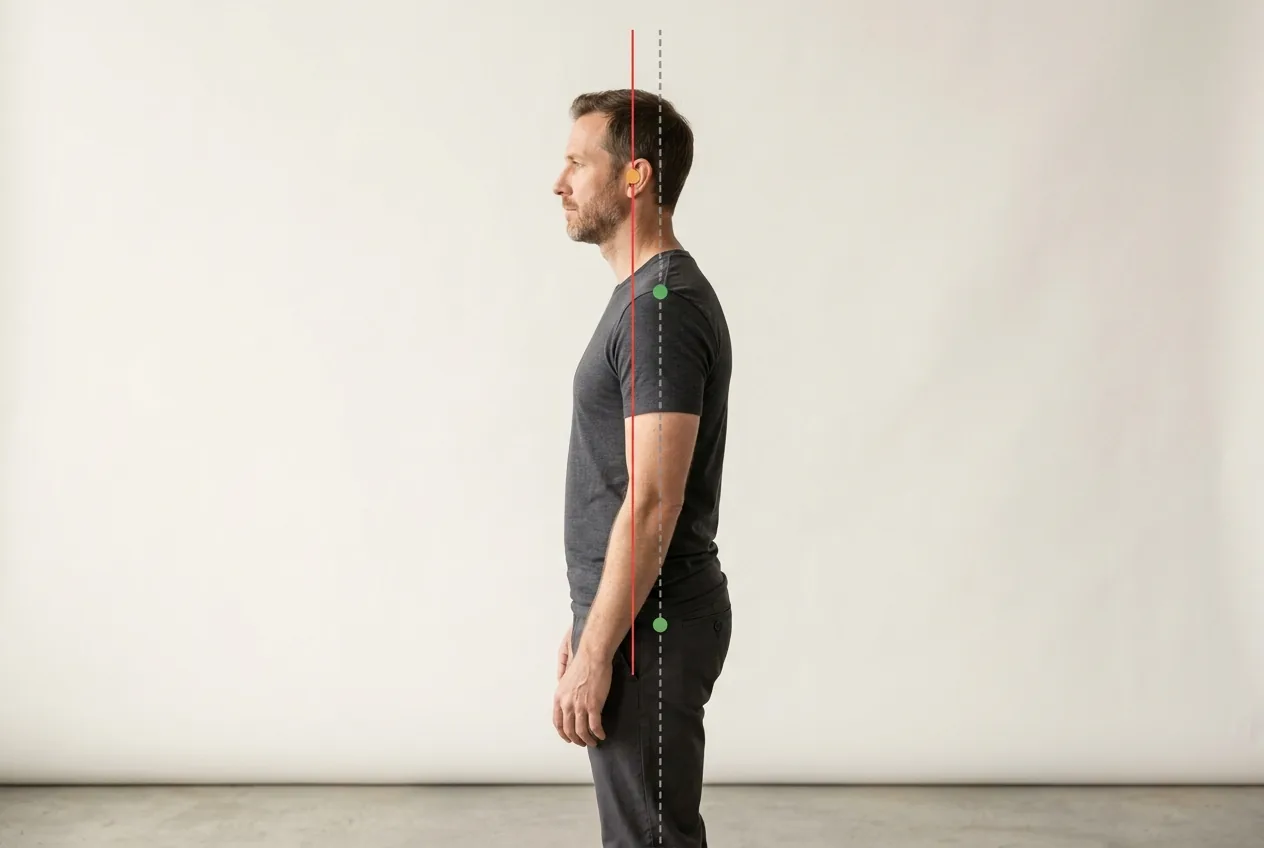
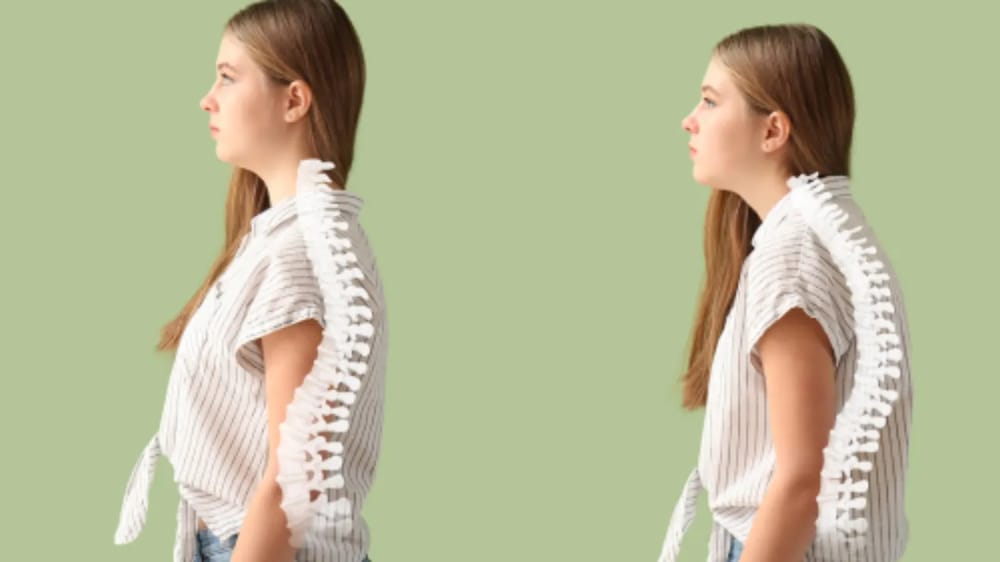
Here's the setup. When your head drifts forward and your shoulders round in toward a screen, the muscles across your chest and the front of your shoulders shorten. The muscles between your shoulder blades get pulled long and have to fire constantly just to stop your upper back collapsing further forward. A muscle that never gets to fully relax becomes a tender, ropey knot. Massage it and you relieve the symptom, but the moment you sit back down at your desk, the same forward pull switches it right back on.
This is why the knot tracks so closely with forward head posture. Fix the forward pull and the knot has a reason to let go. Keep the forward pull and no amount of pressing will keep it gone.
The knot isn't tight from doing too little. It's exhausted from doing too much, all day, with no relief.
Pressing on it isn't wrong — it's just not enough
Self-massage and pressure do something real: they interrupt the muscle's guarding and give you short-term relief. There's no harm in a tennis ball against the wall or a foam roller. The mistake is expecting that alone to fix a problem that's driven by posture for eight hours a day.
If you only do one thing, make it the thing that takes the load off — not the thing that pushes harder on the overloaded muscle.
What actually settles it
The fix has three parts: open the front that's pulling you forward, switch on the muscles that should be sharing the load, and change the position you spend most of your day in.
Open the chest and front of the shoulders
Stand in a doorway, forearms on the frame, and step gently through until you feel a stretch across your chest. Hold 30 seconds, twice. Tight chest muscles are half of why the knot stays loaded — release them and the muscles between your blades stop fighting a losing battle.
Wall angels to wake the right muscles
Stand with your back against a wall, heels a few inches out, lower back gently flattened. Raise your arms into a goalpost shape against the wall, then slide them up and down while keeping the backs of your hands and elbows as close to the wall as you can manage. Ten slow reps. This trains the muscles between your shoulder blades to work in their proper range instead of straining at full stretch all day.
Chin tucks to unload the chain from the top
Because the knot is downstream of a forward head, pulling your head back over your shoulders takes strain off the whole upper back. The chin tucks exercise guide covers the technique. A few short sets through the day do more than one long session.
Add a row to switch the muscle on under load
Once the area calms down, the muscles between your blades need to learn to work in their proper range, not just get stretched. A simple band row does it: anchor a resistance band at chest height, hold an end in each hand, and pull your elbows back, squeezing your shoulder blades together at the end. Slow, controlled, 10 to 12 reps. You're teaching the rhomboids and mid-traps to fire on purpose so they're less likely to seize from holding you up all day.
Move every half hour
The knot thrives on stillness. Set a reminder. Stand, roll your shoulders back a few times, do a doorway stretch, sit back down. Frequency is what changes a stuck-on muscle, not intensity. A muscle that gets a brief break and a position change every half hour never builds the deep, all-day fatigue that turns into a knot in the first place.
What to stop doing
- Stop relying on massage alone. It treats the symptom and leaves the cause running.
- Stop hunching toward your monitor for hours. Raise the screen so your head sits back, not forward.
- Stop aggressive trigger-point digging that leaves the area bruised. Firm and brief beats brutal.
- Stop working from the couch with a laptop on your knees. It loads the exact muscle you're trying to settle.
When to see a doctor
Posture work is education, not medical care. A postural knot between the shoulder blades is muscular and tends to ease as the pattern changes. But see a clinician promptly if the pain came on suddenly without a clear cause, if it comes with chest pain, shortness of breath, or pain spreading down an arm, if you have numbness, tingling, or weakness, or if there's a fever or unexplained weight loss. Pain that's severe or steadily worsening also deserves a proper look.
Why yours might need a different emphasis
Doorway stretches, wall angels, and chin tucks help most people with this knot, because the forward-rounded pattern behind it is so common. But how rounded your shoulders are, how far your head sits forward, and which muscles have switched off differ from person to person. Generic moves are a fair starting point — lasting relief comes from working your actual pattern.
A proper posture assessment measures where you've actually drifted and builds the routine around it. The knot came back every time because nothing changed the load on it. Change the load, and it finally has a reason to stay gone.
Common questions
Why does the knot come back right after a massage?
A massage releases the muscle for a while, but it doesn't change the forward-rounded position that fatigued it in the first place. You go back to your desk, the muscle reloads, and the knot rebuilds. The relief is real but temporary unless the position changes too.
Is the knot between my shoulder blades a muscle or something deeper?
A posture-driven knot is muscular, usually in the rhomboids or mid-traps that hold your shoulder blades back. If it came on suddenly with no clear cause, or comes with chest or arm symptoms, that's a different question for a clinician.
Can a tennis ball help release it?
Yes, leaning against a wall with a tennis ball over the tight spot can give brief relief. Keep the pressure firm but not brutal, hold for a slow breath or two, and don't dig hard enough to bruise.
Why do I only feel it at the end of the workday?
Because it builds from hours of holding your head and arms forward. The muscle is fine in the morning and fatigued by mid-afternoon, which is why moving every half hour matters more than one big stretch at night.