
Maybe a doctor pointed at your neck X-ray and said the curve looked "straightened," or used the phrase "military neck," and you walked out with a label and not much else. Maybe your neck just feels stiff and tired in a way that a quick stretch never fixes. Either way, the question that follows is the same: military neck, how to fix it — and is it even fixable?
The short answer: for most people, a straightened cervical curve is a posture pattern that can change, not a permanent verdict. To understand why, it helps to know what that curve is doing in the first place.
What military neck actually means
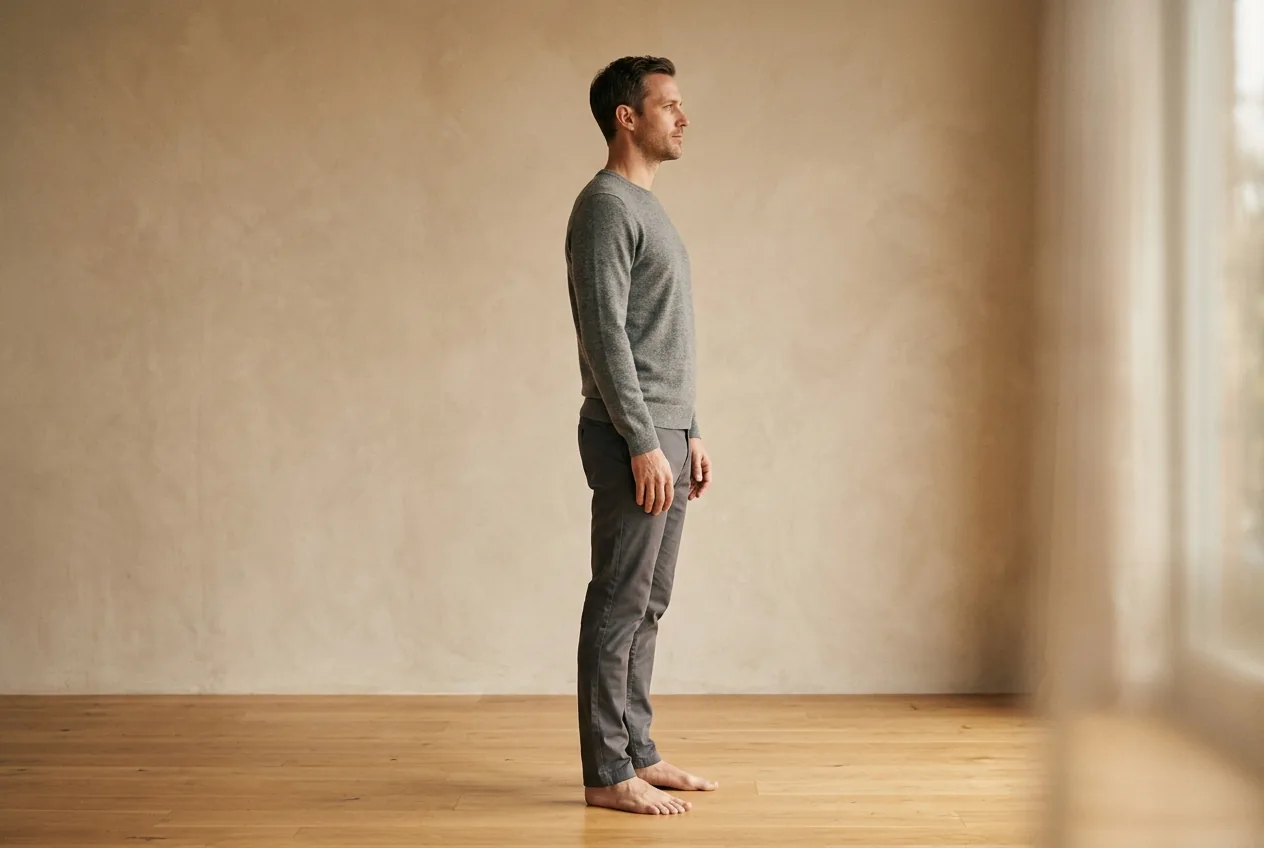
Look at a healthy neck from the side and the spine curves gently forward — a soft C-shape called the cervical lordosis. That curve isn't cosmetic. It works like a spring, balancing the weight of your head over your shoulders and absorbing the small loads of everyday movement.
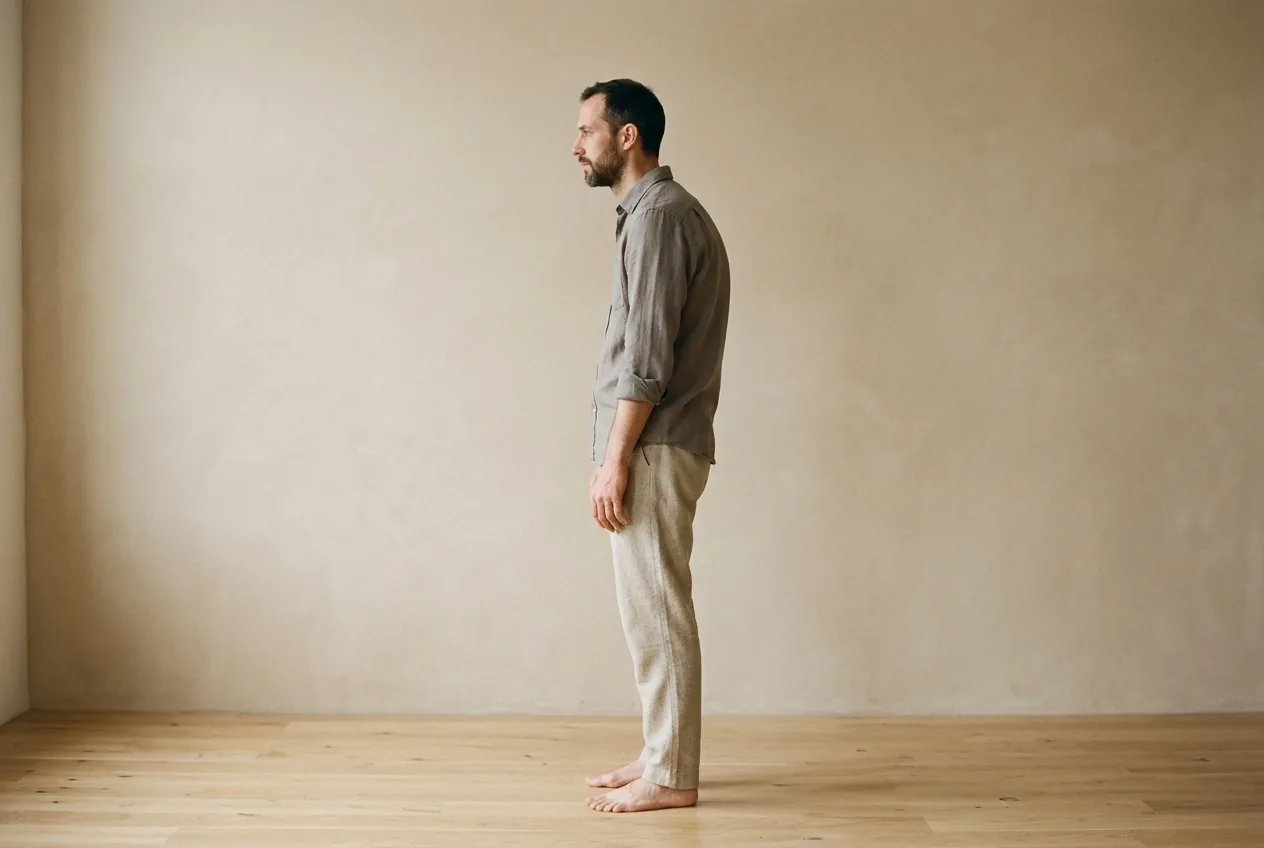
In military neck, that curve flattens out. The neck stands more vertical and rigid — the name comes from the stiff, upright "at attention" look. With the curve gone, the head tends to sit forward of where it should, and the muscles at the base of the skull and across the top of the shoulders have to work harder to hold it up. That's the stiffness and fatigue you feel by mid-afternoon.
It often overlaps with forward head posture. As the head drifts forward over years of screen time, the neck loses its curve to accommodate, and the two patterns reinforce each other. They're close cousins, and the corrective work overlaps heavily.
Why the curve disappears
A flattened cervical curve is usually built, not born. The most common driver is exactly the thing you're probably doing right now: looking down.
- Screens below eye level. Phones, laptops, and low monitors pull your head down and forward for hours a day. The neck adapts to that bent-forward position by losing its backward curve. This is the same mechanism behind text neck.
- Sustained desk posture. Leaning toward a monitor, especially with rounded shoulders, drags the head forward and flattens the curve from below.
- Muscle imbalance. The deep muscles at the front of the neck, which help hold the head balanced, switch off. The ones at the back and across the shoulders stay tight and overworked, locking the neck straight.
- Sometimes a protective response. After a neck strain or whiplash, muscles can spasm and temporarily straighten the curve. That kind usually eases as the spasm settles — worth raising with a clinician if it followed an injury.
The pattern is self-reinforcing. The flatter the curve, the more the head sits forward; the more the head sits forward, the harder the neck works and the more it stiffens into place.
Military neck: how to fix the pattern
You don't restore a cervical curve by cranking your head back and holding it. Force isn't the lever. The goal is to release the muscles holding the neck straight, switch the deep neck muscles back on, and rehearse the head sitting balanced over the shoulders until that becomes the default.
A sensible starting sequence:
- Chin tucks, done gently. Sitting or standing tall, draw your head straight back over your shoulders — making a slight "double chin" — without tipping your chin down. Hold a few seconds, release, repeat. This wakes up the deep neck flexors that should support the curve. Done correctly it's subtle, not strained. The chin tucks exercise walks through the detail.
- Open the upper back. A stiff, rounded upper back keeps the head forward. Gentle upper-back extension over a rolled towel or a chair back gives the neck a chance to sit back where it belongs.
- Release the top of the shoulders. Easy side neck stretches — ear toward shoulder, no force — calm the overworked muscles clamping the neck straight.
- Raise your screens. Lift your monitor so the top sits near eye level, and bring your phone up toward your face instead of dropping your head to it. This removes the daily input that flattens the curve in the first place.
A straightened neck isn't a sentence. It's a position the body learned — and positions can be relearned with the right repetition.
What to stop matters too. Long stretches of looking down are the engine of this pattern, so break them up. And skip the aggressive "force the curve back" maneuvers some videos push — overcranking the neck does more harm than good.
How long it takes
People want a timeline, so here's an honest one. A neck that's been losing its curve for a decade of desk work doesn't reverse in a weekend, and anyone promising that is selling something. What you can reasonably expect, with daily corrective work, is that the stiffness and end-of-day fatigue start easing within a few weeks — because those come from overworked muscles, and overworked muscles calm down relatively quickly once the load changes. The deeper change, the head sitting back over the shoulders as a new default, comes more slowly, over months, and only if you also fix the inputs: the low screens and long stretches of looking down. Skip those and you'll spend ten minutes a day undoing what the other fifteen hours rebuild.
The encouraging part is that consistency beats intensity here. A few minutes of chin tucks and upper-back work done every day does more than a long, ambitious session once a week, because you're retraining a habit, and habits respond to frequency.
When to see a doctor
This is posture education, not medical advice, and a straightened curve seen on an X-ray is common and often not the source of pain on its own. But see a clinician promptly if you have numbness, tingling, or weakness spreading into an arm or hand, neck pain that followed a fall, crash, or whiplash, severe or steadily worsening pain, fever with neck stiffness, dizziness, or trouble with balance or coordination. Loss of bladder or bowel control with neck symptoms is an emergency. A label on an imaging report is a starting point for a conversation, not a diagnosis you should manage alone.
Knowing your own neck
Here's what trips people up. Chin tucks and screen height help a flattened curve — but only if that's the main pattern, and only in the right order relative to whatever's happening in your upper back and shoulders. A flattened neck riding on a stiff, rounded upper back needs the upper back addressed too, or the neck correction won't hold.
Generic advice points you the right way. Lasting change comes from knowing your specific pattern — how far forward the head sits, what's switched off, what's overworking, and what to fix first. A posture assessment measures your actual deviations from a few photos and orders the corrective work around them, so you're not guessing at which piece to fix. If you'd like a quick first look yourself, the wall test at home shows you roughly how far your head sits in front of your shoulders.
A neck loses its curve gradually, over thousands of hours of looking down. It comes back the same way it left — through small, correct movements repeated daily, not through force at the mirror.
Common questions
What does military neck mean on an X-ray?
It means the neck's natural forward curve has flattened, so the spine looks straighter and more vertical than the usual soft C-shape. The name comes from the stiff, upright "at attention" look. It's common on imaging and often isn't the source of pain on its own.
Can a straightened cervical curve be restored?
For most people it's a posture pattern that can change, not a permanent verdict. You don't restore it by forcing the head back, but by releasing the muscles holding the neck straight, switching the deep neck muscles back on, and fixing the low screens that flattened it.
What causes loss of the cervical curve?
Usually years of looking down at phones and low monitors, sustained desk posture with rounded shoulders, and the muscle imbalance that follows. Sometimes a neck strain or whiplash causes a temporary, protective straightening that eases as the spasm settles.
How long does it take to fix military neck?
The stiffness and end-of-day fatigue often ease within a few weeks, since those come from overworked muscles that calm down once the load changes. The head sitting back over the shoulders as a new default comes over months, and only if you also fix the low screens and long stretches of looking down.