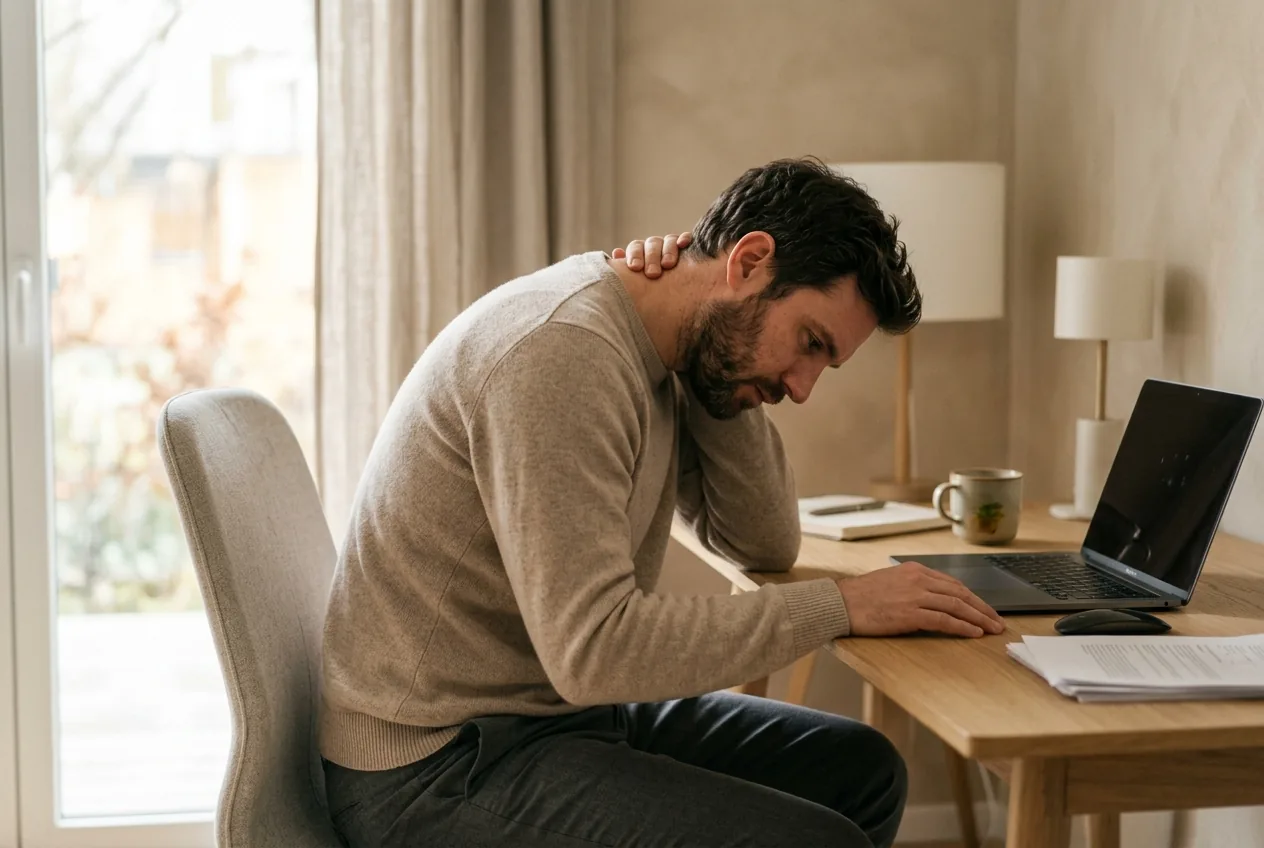
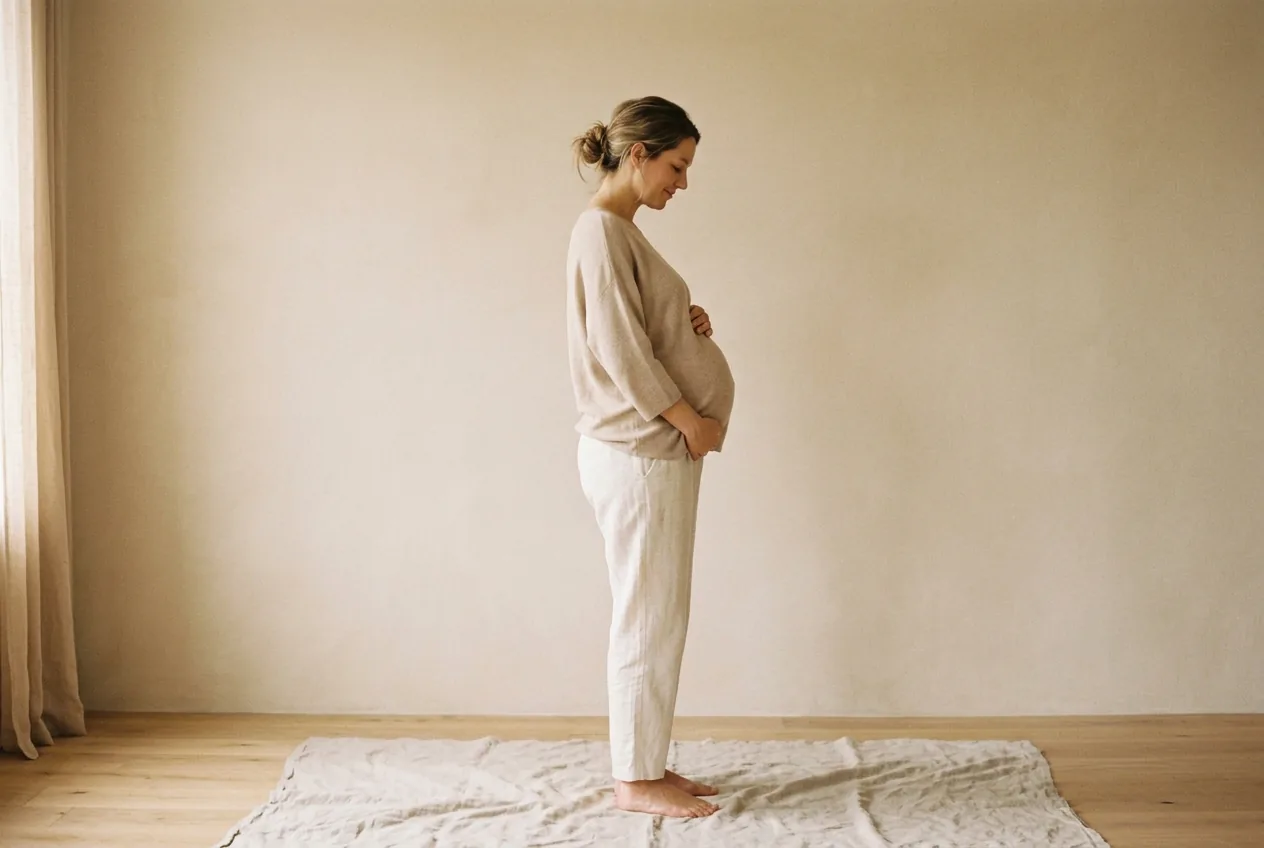
You catch your reflection at the end of the second trimester and barely recognize how you're standing. The bump is out front, the shoulders drift back, the lower back has a deeper curve, and somehow the whole thing aches by evening. Posture during pregnancy changes a lot, often faster than you expect, and it's behind much of the back and neck discomfort that comes with it.
This is your body adapting to a moving target, not doing anything wrong. Still, a few gentle adjustments make those months more comfortable. Treat everything here as general education and run new movements past your doctor, OB, or midwife first.
What actually shifts and why
Three things drive the change, and they build over the weeks.
Your center of gravity moves forward. A growing bump pulls your weight ahead of your hips, so to stay balanced most people lean the upper body back. That deepens the inward curve of the lower spine, a sway-back pattern that asks the lower-back muscles to work overtime all day.
The pelvis tips. As the front loads up, the pelvis tends to tilt forward, the hip flexors shorten, and the glutes go quiet. That combination is the classic anterior pelvic tilt, and pregnancy nudges almost everyone toward it.
The upper body rounds. Growing breasts, and later all that hunched feeding practice, pull the shoulders forward and round the upper back. The head drifts ahead of the shoulders, which feeds the forward head posture that drives neck ache and tension headaches.
Under all of it, the hormone relaxin loosens the ligaments around your pelvis to prepare for birth. Helpful later, but in the meantime joints feel less stable and strain more easily. So the posture shift and the looser joints arrive together, which is why the back complains.
Gentle adjustments through the trimesters
You don't need a rigid "correct" stance. Aim for small, frequent corrections rather than holding one pose.
Stand stacked, not leaned back. The single most useful habit is catching the lean. When you notice the shoulders drifting back and the bump pushing forward, gently bring your ribs down over your hips so you're carrying the bump rather than thrusting it out. A quick mirror check, or the steps in check your posture at home, helps you spot it.
Keep the glutes in the game. A few light glute squeezes through the day counter the forward pelvic tilt. Once cleared by your provider, a gentle glute bridge wakes up the muscles that should be supporting your lower back instead of the back doing it alone.
Open the chest. To fight the rounding shoulders, roll them back and down often, and stretch the front of the chest in a doorway. The cues in rounded shoulders translate directly, just gentler.
Sit with support. Hips back in the chair, a small cushion filling the lower-back hollow, feet flat. Don't perch on the edge or sink into a soft couch.
The aim isn't a perfect posture. It's spreading the load so no single area carries all of it.
Daily moves that take the strain off
A few low-risk habits keep the postural strain from settling in. Clear new movements with your care team, especially if you've had complications, and keep everything within a comfortable range.
- All fours. Getting onto hands and knees takes the bump's weight off your spine for a moment and is a gentle reset for an aching lower back. A slow cat-cow here feels good to many people.
- Walking. Regular short walks keep the hips and back from stiffening and reinforce a more upright carriage.
- Footwear. Swap heels for supportive flats. Heels tip the pelvis forward and exaggerate the lean-back habit.
- Position changes. Don't hold any one posture for long. Shift, walk a few steps, and rest a foot on a low stool when standing at a counter.
What to ease off
- Don't lie flat on your back for long stretches later in pregnancy; side-lying is the safer default.
- Skip deep backbends, hard twists, and anything that compresses the bump.
- Avoid carrying loads on one hip, which loads one side and worsens the tilt.
- Don't push through sharp or worsening pain.
When to call your provider
Posture-related aches usually ease with movement and support. Some symptoms need prompt attention. Contact your doctor, OB, or midwife right away if you have:
- Severe or steadily worsening back or pelvic pain
- Rhythmic or cramping pain that could be contractions, especially before your due date
- Back pain with bleeding, fluid leaking, or fever
- Numbness, tingling, or weakness spreading down a leg
- Any loss of bladder or bowel control
- Pain after a fall
This isn't a complete list. During pregnancy, when something feels off, it's always reasonable to call.
Why your adjustments should match your starting point
Pregnancy doesn't reshape everyone the same way. It stacks on top of the posture you already had. If your pelvis tipped forward before, the bump exaggerates it; if your back was flatter, the picture differs. That's why a stretch a friend loved can do nothing for you, or even bother you. The body compensates around a specific imbalance, and the same move helps one pattern and aggravates another.
So generic advice is a starting point, but the useful thing is knowing your own pattern. A short posture assessment that reads your actual alignment shows which way your pelvis and spine sit, so gentle daily work targets the muscles that need it. Clear any new routine with your provider during pregnancy, and keep it gentle.
For now, catch the lean, keep the glutes awake, and get on all fours when your back complains. Posture changing through pregnancy is normal, and a little structure makes the ride more comfortable.
Common questions
How does pregnancy change your posture?
The bump moves your weight forward, so the upper body leans back, the lower-back curve deepens, the pelvis tips, and the shoulders round. Looser ligaments add instability, which together strain the back and neck.
Can I correct my posture while pregnant?
You can gently adjust it, mainly by catching the lean-back habit, keeping the glutes engaged, and opening the chest. Don't force a rigid stance, and clear any new exercise with your care team first.
Is a swayback posture in pregnancy harmful?
The deeper lower-back curve is a normal adaptation to the forward load. It can cause ache by overworking the lower back, but gentle posture and movement habits usually ease it. Raise persistent pain with your provider.
When should I see a doctor about posture pain in pregnancy?
Call promptly for severe or worsening pain, cramping that could be contractions, bleeding or fever, leg numbness or weakness, or any loss of bladder or bowel control. When in doubt, checking is always reasonable.