A scan came back with a word you'd never heard before — spondylolisthesis — and now every exercise feels like a question mark. Is bending forward going to make it worse? Are you supposed to strengthen your back or protect it? You want to move, you just don't want to make a slipped vertebra slip further.
That instinct is sound, and getting the exercises right genuinely matters here. The right spondylolisthesis exercises build the support a shifted vertebra needs; the wrong ones load it in exactly the direction that aggravates it. Let's go through what tends to help, what to ease off, and how to train without poking the problem.
What spondylolisthesis is, in plain terms
Spondylolisthesis means one vertebra has slipped forward relative to the one below it, usually in the lower back. It happens for different reasons — a stress fracture in the bony bridge of the vertebra (common in younger, athletic people) or wear-and-tear changes that loosen the joint (more common with age). The slip is graded by how far it has moved, and most cases are low-grade and manageable.
What you feel depends on the case. Some people have no symptoms at all and only find out from a scan done for something else. Others get lower-back pain that worsens with standing and walking, eases with sitting or leaning forward, and sometimes sends symptoms into the legs if a nerve is crowded. Knowing whether your pain eases or worsens with a backward arch is one of the most useful things to notice, because it steers your whole program.
The principle that guides everything
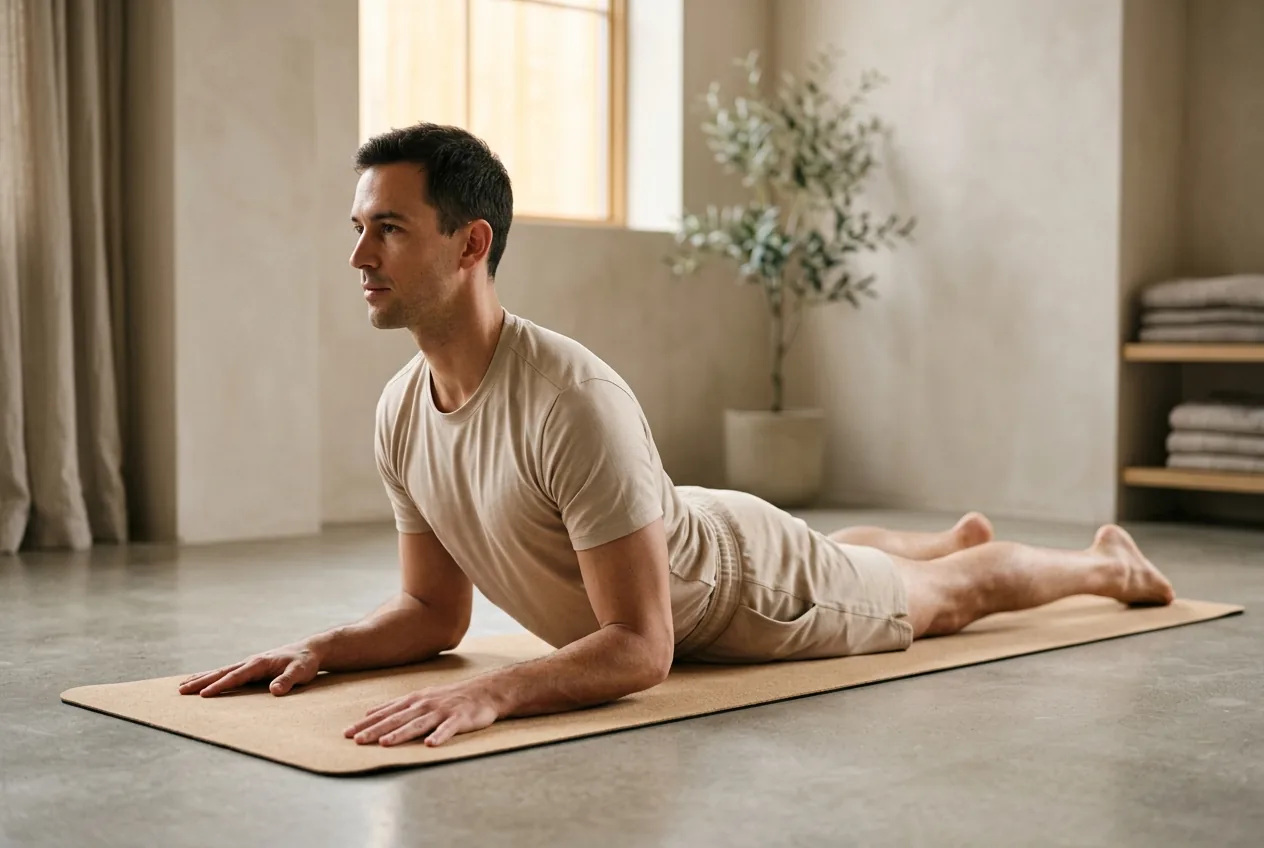
With most spondylolisthesis, the vertebra has slipped forward, and arching the lower back further tends to load that slip and irritate it. Bending and extending hard into a deep backbend can pinch the joint and aggravate things. So the general aim is to avoid repeated heavy extension and to build a stable, supported lower back that doesn't depend on cranking into the arch.
The other half of the principle: a strong, well-controlled core and good hip strength share the load so the slipped segment isn't carrying it alone. That's where the helpful exercises live.
The goal isn't a stronger arch — it's a steadier middle, so the slipped segment stops bearing the load by itself.
Exercises that tend to help
These build stability without forcing the lower back into the position it doesn't like. Move slowly, keep the lower back neutral, and stop if anything sends pain into the legs.
- Pelvic tilts. Lying on your back, knees bent, gently flatten your lower back toward the floor by tilting the pelvis, then release. This teaches control of the lower-back position. The pelvic tilt exercise covers the details.
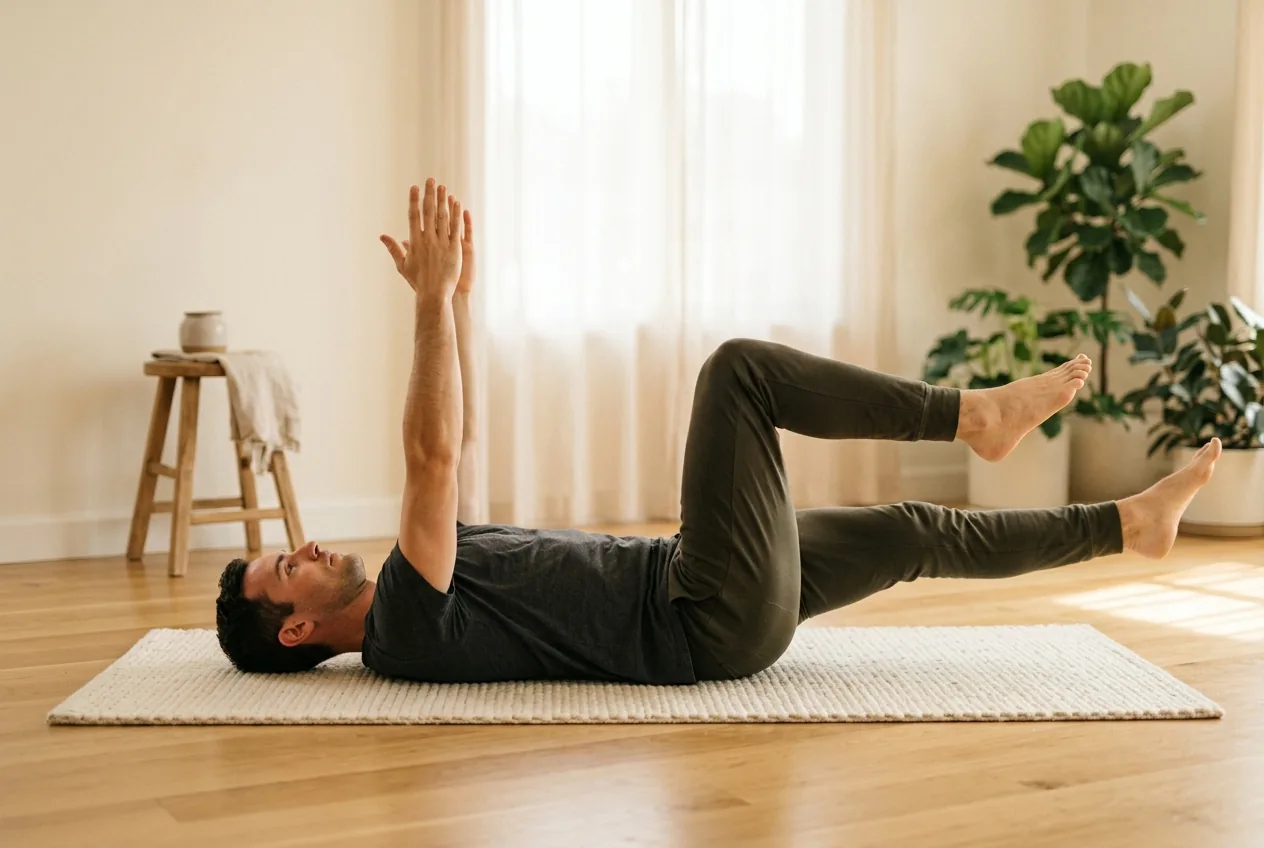
- Dead bug. On your back, arms up, knees bent at 90 degrees. Slowly lower one arm and the opposite leg while keeping your lower back glued to the floor, then switch. This trains the core to hold the spine still while the limbs move.
- Glute bridge. Strong glutes support the pelvis and take strain off the lower back. The glute bridge for back pain is a safe staple — squeeze the glutes, don't over-arch at the top.
- Bird dog, carefully. On hands and knees, extend one arm and the opposite leg while keeping the back flat and steady. Keep the reach low rather than lifting into an arch. See the bird dog exercise for form.
- Gentle core work. A flexion-light core routine builds support; the core exercises for lower back pain lean toward stability over crunching.
Consistency beats intensity. A short daily routine done well does more than an occasional hard session.
Exercises to ease off or avoid
These tend to load the slip or the joint in the aggravating direction:
- Heavy back extensions and deep backbends — repeatedly arching the lower back hard often irritates the slipped segment.
- Full sit-ups and loaded crunches that crank the lower back through a big range.
- Heavy overhead and standing barbell lifts done with the lower back arched and loaded.
- High-impact arching sports moves like repeated gymnastics-style backbends, until cleared.
- Aggressive standing toe-touches if forward bending provokes you (though many with this condition tolerate forward positions fine — let your symptoms guide it).
This overlaps with general advice on exercises to avoid for lower back pain, but spondylolisthesis adds the specific caution around heavy extension.
When to see a doctor
Get a proper assessment before starting a program, especially since exercise choice depends on your specific case and grade. See a clinician promptly if you develop leg weakness, numbness spreading down a leg or into the saddle area, or any loss of bladder or bowel control — that last one needs same-day care. Also get checked if pain is severe and worsening, followed an injury or fall, or comes with fever or unexplained weight loss.
This article is education, not a diagnosis or a treatment plan for your scan. A physical therapist or clinician who has seen your imaging can tell you which direction your spine tolerates and tailor the load. It's worth understanding who treats back pain so you see the right person.
Why your own pattern decides the program
Two people with the same diagnosis can need almost opposite routines, because one tolerates extension and the other doesn't, and because the rest of the posture chain — pelvis, hips, core — differs. Generic spondylolisthesis exercise lists can't account for that. The same backward arch that relieves one person loads another's slip.
Knowing your own pattern is what makes the program safe and effective. A posture assessment measures how your spine and pelvis are actually positioned, so the routine supports the slipped segment in the direction it can handle rather than guessing. If you're trying to train around spondylolisthesis without making it worse, the posture therapy approach is built to match the work to your specific setup.
Build the support, skip the heavy arch, and let your symptoms be the referee.
Common questions
Is exercise safe with spondylolisthesis?
For most low-grade cases, yes — and it's usually encouraged, because a stable, well-supported lower back protects the slipped segment. The key is choosing stability-focused moves and getting cleared by a clinician first, especially before heavy loading.
What exercises should I avoid with spondylolisthesis?
Generally, repeated heavy back extension and deep backbends, full loaded sit-ups, and heavy arched overhead lifts, since they tend to load the slip. Let your own symptoms guide it, and get personalized advice from someone who has seen your imaging.
Can spondylolisthesis exercises fix the slip?
Exercise doesn't move the vertebra back, but it can reduce pain and build the support that keeps the segment stable and symptoms quiet. The aim is a steadier, stronger lower back rather than reversing the slip itself.
Does walking help spondylolisthesis?
Often, yes, in tolerable amounts. Gentle walking keeps you moving without heavy loading. If standing and walking flare your pain while sitting eases it, build up gradually and pair walking with the stability exercises above.