
Your neck has been stiff and sore for days, and now there's a faint, floaty unsteadiness that comes and goes — a lightheadedness when you turn your head, or a sense that the room shifts slightly when you stand. It's unsettling, and it can be hard to know whether the two are related or whether something more serious is going on. Neck pain and dizziness do have a real connection for some people, but it's also exactly the kind of pairing where you want to be sure you've ruled out other causes first.
So this article does two jobs. It explains how a stiff, strained neck can genuinely contribute to a dizzy, off-balance feeling. And it's clear about when that explanation isn't enough and you need a doctor.
Please read this part first
Dizziness has many causes, and most of them have nothing to do with your neck — inner-ear problems, blood pressure changes, medication effects, dehydration, and others. Some causes are serious. Before you assume your dizziness is coming from your neck, it's important to have a clinician rule out other causes, especially if the dizziness is new, severe, or comes with any of the warning signs further down this page.
Treat the neck-related explanation below as something to discuss with a professional, not as a self-diagnosis. Posture work is education, not medical care.
How the neck can contribute to dizziness
With that said, the neck does play a part in balance. Your brain works out where your head and body are in space by combining three streams of information: your inner ear, your eyes, and position sensors in your joints and muscles — including a dense population of them in the upper neck. When those streams agree, you feel steady. When they disagree, you can feel off.
When the neck is stiff, strained, or full of guarding muscle tension, the position sensors in the upper neck can send muddled or reduced signals. Your brain then gets one story from your neck and a slightly different one from your eyes and inner ear. The mismatch can show up as a vague unsteadiness, lightheadedness, or a floaty feeling — often worse when you turn or hold your head in one position. Clinicians sometimes call this cervicogenic dizziness, meaning dizziness arising from the neck.
A couple of things point toward the neck being involved: the dizziness tends to track with your neck pain and stiffness, it's often a vague unsteadiness rather than a violent spinning, and it tends to ease as the neck loosens. None of that is a substitute for assessment, but it's the pattern a professional looks for.
Your upper neck helps tell your brain where your head is. When it's tense and sending muddled signals, the result can be a quiet, floaty unsteadiness.
Why a forward, tense neck makes it more likely
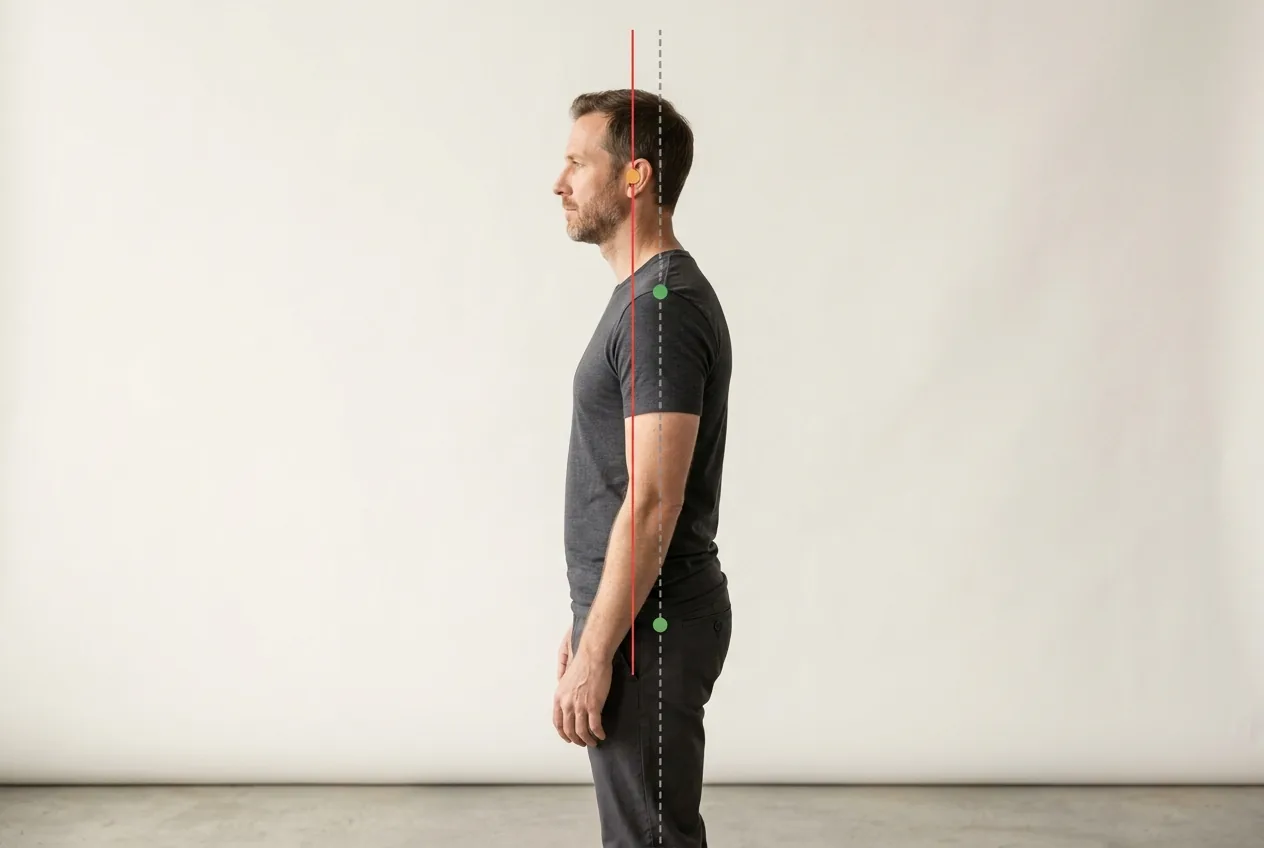
The neck that tends to get into this state is usually the one that's overworked to begin with. When the head sits forward of the shoulders all day, the upper-neck muscles stay tight and fatigued, and the small joints there get irritated. That's the same neck that produces the tension headaches and base-of-skull ache covered in neck pain at the base of your skull and tension headaches from posture.
A neck under that kind of constant load has noisier position signals, which is part of why the forward-head pattern shows up so often alongside this complaint. The underlying driver is described in forward head posture.
What tends to help (once a doctor has cleared you)
If a clinician has ruled out other causes and pointed to the neck, the approach is gentle and patient. Settling the neck tends to settle the dizziness.
- Gentle range of motion. Slow, small turns and tilts within a comfortable range keep the neck moving and feed cleaner position signals to the brain. Don't force into sharp pain or into the position that triggers dizziness.
- Chin tucks. Easing the head back over the shoulders reduces the load on the upper neck. The chin tucks exercise guide shows how, done slowly.
- Release the upper traps and base of the skull. A gentle stretch and shoulder drops reduce the guarding tension that muddles the signals.
- Move often, don't freeze. Holding the neck rigid out of fear of triggering dizziness keeps it stiff. Easy, frequent movement does more good.
Go slowly with anything that involves moving the head, and stop if a movement provokes the dizziness rather than easing it.
When to see a doctor — do not skip this
Posture work is education, not medical advice, and dizziness is a symptom that earns a proper look. See a doctor to rule out other causes, and seek urgent or emergency care if your dizziness comes with any of these:
- Sudden, severe dizziness or true spinning (vertigo), especially if it doesn't settle.
- Fainting, blackouts, or a feeling you're about to pass out.
- Numbness, weakness, or tingling in the face, arm, or leg, or trouble speaking, swallowing, or seeing.
- A sudden severe headache unlike your usual.
- Double vision, slurred speech, or loss of coordination.
- Dizziness after a head or neck injury, fall, or accident.
- A fever with neck stiffness.
Those can signal problems with the inner ear, blood pressure, or the brain and blood vessels, and they need assessment promptly. When dizziness is involved, err toward getting checked.
The neck pattern worth addressing
If your dizziness has been linked to your neck, settling the underlying tension matters — and how your head and neck actually sit is specific to you. Generic neck stretches can help one pattern and aggravate another.
A proper posture assessment measures where your head sits and builds a gentle daily routine around your actual deviations, so the upper neck stops living under constant strain. Calmer neck, cleaner signals, steadier feeling — alongside, not instead of, your doctor's guidance.
Common questions
Can neck problems really cause dizziness?
For some people, yes. The upper neck has position sensors that help the brain judge where the head is. When the neck is stiff and tense, those signals can become muddled and clash with the inner ear and eyes, producing a vague unsteadiness. But many other things cause dizziness too, so it should be confirmed by a clinician rather than assumed.
How do I know if my dizziness is coming from my neck?
Neck-related dizziness usually tracks with neck pain and stiffness, tends to be a floaty unsteadiness rather than violent spinning, and eases as the neck loosens. That pattern points toward the neck, but only a professional can confirm it after ruling out inner-ear, blood-pressure, and other causes.
Is neck pain with dizziness dangerous?
Often it's benign and tied to a tense neck, but it can also signal something serious. Get urgent care if it comes with fainting, sudden severe headache, slurred speech, facial or limb weakness, double vision, or if it followed a head or neck injury. When in doubt, get it checked.
Will treating my neck make the dizziness go away?
If a clinician has linked your dizziness to your neck, then easing the neck tension and improving how the head sits often helps the dizziness settle too. It's gradual, and it works best as part of an overall plan your doctor is aware of, not as a replacement for proper assessment.