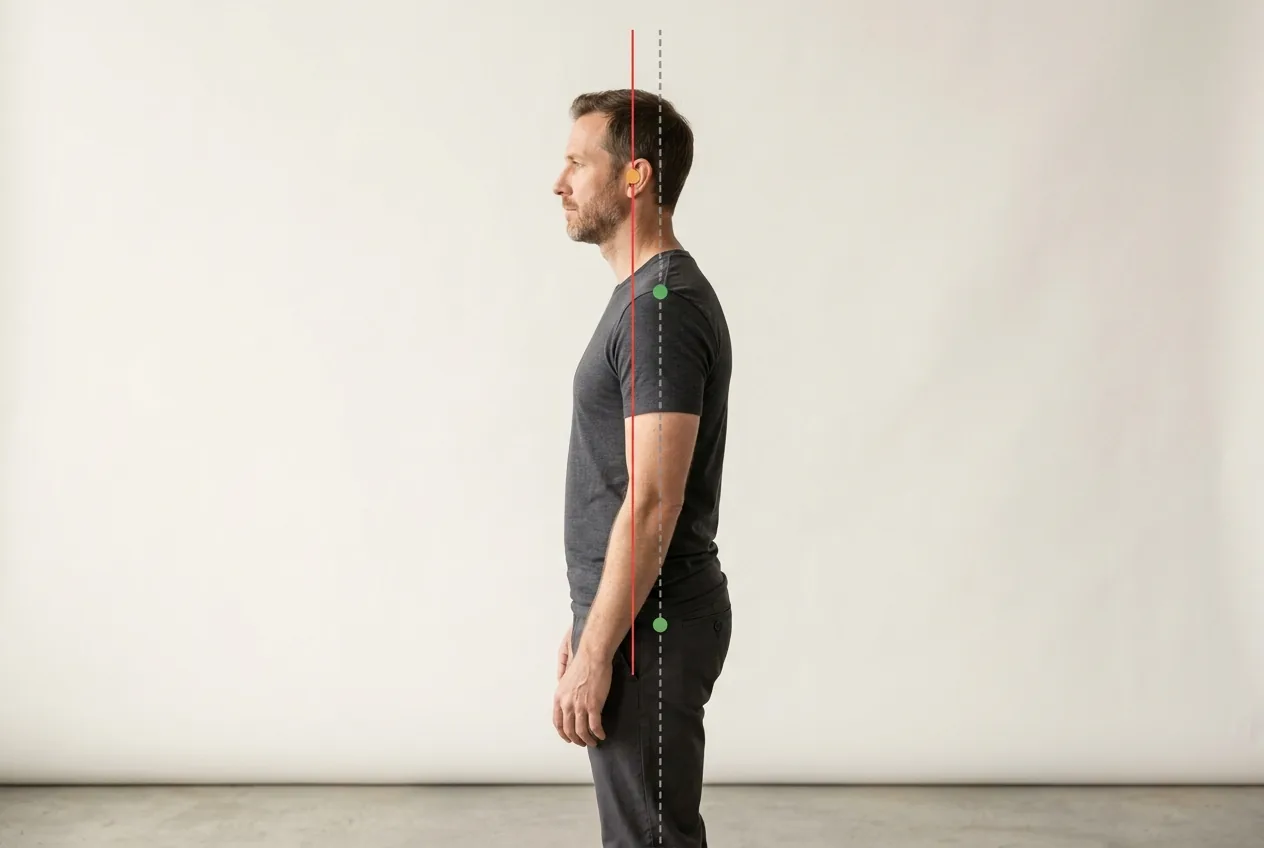

By the end of a hard day, your shoulders are somewhere up around your ears and the muscles between your neck and shoulders feel like cables. You catch yourself with them hiked up on a tense call, drop them, and two minutes later they've crept back. Neck and shoulder tension is so familiar that most people just live with it — heat pad, occasional massage, repeat.
The reason it's so stubborn is that two separate things are loading the same muscles at once: stress and sitting. Treat only one and the other keeps the tension topped up.
Why stress and sitting hit the same spot
The muscles that run from your neck out to the tops of your shoulders — the upper trapezius especially — are a meeting point for two pressures.
The first is emotional. When you're stressed, your nervous system braces. One of the most common places that bracing shows up is the shoulders, hiked up toward the ears. You're not deciding to do it; it's an automatic guard response. Hold it for hours, day after day, and the muscle stays contracted and sore.
The second is mechanical. When you sit hunched toward a screen with your head forward, those same neck-and-shoulder muscles have to work to support a head that's drifted out of position. That's the lever effect behind forward head posture — the further forward the head, the harder these muscles pull.
Stack the two — a forward-leaning desk posture plus a stressed, shoulders-up guard — and you've got the same muscles working overtime from two directions at once. That's why the tension lodges in exactly that band across the top of your shoulders and won't quit.
There's a feedback loop in it too. Tense muscles ache, the ache adds a little stress, and stress hikes the shoulders further. Sit hunched and braced for a few hours and the loop tightens on itself, which is why a bad afternoon can leave your shoulders feeling like they've fused by evening. Breaking the loop doesn't take a dramatic intervention — it takes catching it early and often, before the muscles have spent the whole day locked up.
Stress pulls your shoulders up. Sitting pulls your head forward. The same muscles pay for both.
Tackle both sides, not one
The mistake is treating this as purely physical or purely stress. A massage releases the muscle, but if you go back to a stressed, hunched day, it reloads within hours. The fix works on both fronts.
Drop the shoulders, on purpose, often
You can't think your way out of bracing, but you can interrupt it. A few times an hour, do a shoulder reset: lift your shoulders up toward your ears, hold two seconds, then let them drop fully and feel the release. Pair it with a slow exhale. The breath matters — a long, slow out-breath tells your nervous system to ease off the guard.
Chin tucks to unload the mechanical side
Pulling your head back over your shoulders takes the mechanical strain off the muscles. The chin tucks exercise guide shows the technique. Short, frequent sets through the day interrupt the hours of forward loading.
Release the upper traps and base of the skull
Tilt your ear gently toward your shoulder to lengthen the upper trap, hold 20 seconds each side. Then lie down and rest the base of your skull on two fingers or a small rolled towel for a couple of minutes. Easing the base of the skull often quiets the whole band — the tension headache from posture piece explains why that spot refers so much trouble.
Build a short reset you can actually keep
The reason these tips fail isn't that they don't work — it's that nobody remembers to do them in a busy day. So make it automatic. Tie a 20-second reset to something you already do often: every time you send an email, finish a call, or take a sip of coffee, drop the shoulders, breathe out slowly, and glide your head back over your shoulders. Anchoring it to an existing habit means it happens dozens of times a day without willpower, which is exactly the frequency these muscles need.
Move and breathe every half hour
Stand, roll the shoulders back, take three slow breaths, reset your head over your shoulders. This handles both pressures at once — it breaks the static sitting load and downshifts the stress response. If you can step away from the screen entirely for a minute, even better — looking at something across the room relaxes both the eyes and the forward-craned neck that follows them.
What to stop doing
- Stop holding your shoulders hiked without noticing. Catch it, drop them, breathe out.
- Stop sitting hunched toward the screen for hours. Raise the monitor so your head sits back.
- Stop treating it with massage alone. It helps, but it reloads if the day doesn't change.
- Stop shallow chest-breathing through stressful stretches. Slow the exhale.
When to see a doctor
Posture work is education, not medical care. Stress-and-sitting tension is muscular and tends to ease as both pressures are addressed. But see a clinician promptly if the pain comes with chest pain, shortness of breath, or pain spreading down an arm, if you have numbness, tingling, or weakness, if a severe headache arrives suddenly, or if neck stiffness comes with a fever. Pain that's severe or steadily worsening deserves a proper look, and persistent stress that's affecting your sleep or mood is worth raising with a clinician too.
Why your mix is specific to you
Shoulder drops, chin tucks, and breathing help most people, because the stress-plus-sitting combination is so common. But how much of your tension is mechanical versus how much is stress-driven, and how far forward your head sits, differ from person to person. Generic advice is a fine starting point — lasting relief comes from working your actual pattern, and from addressing the stress side honestly.
A proper posture assessment measures the mechanical side — how your head and shoulders actually sit — and builds a daily routine around it. Take the physical load off, manage the stress on top, and the cables across your shoulders finally get a chance to soften.
Common questions
Why does stress settle in my neck and shoulders?
When you're under pressure, you tend to hike your shoulders, clench, and breathe shallowly without noticing. Hold that for hours and the muscles across your neck and shoulders stay switched on, which is why a stressful day leaves them tight and sore by evening.
How can I tell if my tension is from stress or from posture?
It's usually both, and they feed each other. A clue: if the tightness eases on a relaxed day off but creeps back during deadline weeks, stress is a big driver. If it's there every day regardless of mood, the mechanical, sitting side is leading.
What's the fastest way to release neck and shoulder tension during work?
Drop your shoulders away from your ears, breathe out slowly, and glide your head back over your shoulders. Tied to something you do often, like sending an email, it happens dozens of times a day without effort, which is the frequency these muscles actually need.
Does massage fix stress tension in the neck?
It gives genuine relief, but it tends to reload if the day that caused it doesn't change. Pairing it with regular movement breaks and slower breathing makes the relief last longer.