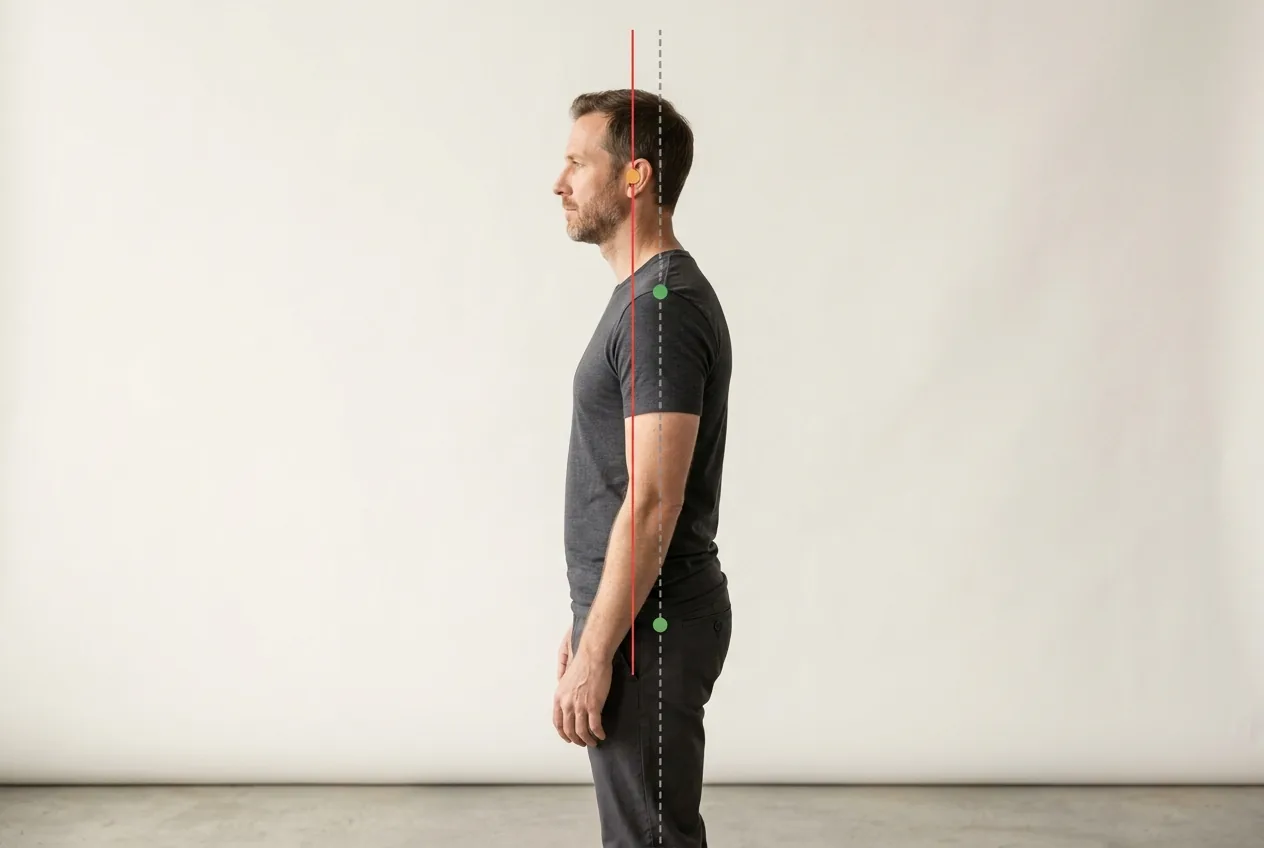

It's 2pm and your upper back is doing that thing again — a deep, burning ache between the shoulder blades that makes you want to arch backward and roll your shoulders. You shift in your chair, sit up straight for a few minutes, and then slowly melt back toward the monitor without noticing. By the end of the day the ache is a constant companion.
If you sit at a desk for a living, upper back pain between the shoulder blades is almost a rite of passage. It's also one of the most fixable patterns there is, once you stop blaming your chair and start looking at what your body is actually doing all day.
What's actually going on
The muscles between your shoulder blades and across your mid-back are postural muscles. Their job is to hold your upper body upright against gravity for hours. When you sit well, they share that work with the natural support of your spine and barely tire. When you sit slumped toward a screen — head forward, shoulders rounded, upper back curved — those same muscles get stretched long and have to fire constantly to stop you folding further forward.
A muscle that's stretched and firing all day burns. That burning ache is the signal. It's not weakness in the dramatic sense; it's fatigue from a job those muscles were never meant to do nonstop, in a position that gives them no rest.
The forward-head, rounded-shoulder posture is the engine behind almost all of it. The further your head drifts ahead of your shoulders, the harder your upper back works — the same lever effect described in forward head posture. Desk work just supplies the eight hours a day that lets the pattern set in.
It helps to picture the timeline. At 9am you sit down upright and the ache is nowhere. By late morning you've drifted toward the screen without noticing, and the muscles between your blades have been firing for two hours straight. By 2pm they're fatigued and burning, and no amount of "sitting up straight" for thirty seconds undoes it, because the moment you concentrate again you melt forward. The pain isn't a sign of weakness or damage. It's the predictable result of asking postural muscles to hold a stretched, off-balance position for a full workday with no real breaks.
The ache between your shoulder blades is the sound of overworked muscles asking to be let off shift.
The first thing to check: your screen and chair
Before any exercise, look at your setup, because no routine out-stretches a workstation that forces you to slump.
- Get the top of your monitor to roughly eye level. If you look down at your screen, your head leads forward and your upper back pays for it.
- Pull your chair in so you're not reaching for the keyboard. Reaching rounds the shoulders.
- Support your forearms on the desk or armrests so your shoulders aren't hanging all day.
- Get your feet flat on the floor so your pelvis isn't tipping you forward.
These changes alone take a surprising amount of load off the mid-back. They make every exercise below actually stick.
The daily routine that relieves it
Break up the sitting
The single most effective thing is to stop holding one position for hours. Stand every 30 minutes, even for 30 seconds. Roll your shoulders back. Reach overhead. The muscles between your blades need brief relief, not a once-a-day rescue.
Wall angels to retrain the position
Stand with your back against a wall, heels a few inches out, lower back gently flattened. Bring your arms into a goalpost shape against the wall, then slide them up and down keeping the backs of your hands and elbows close to the wall. Ten slow reps. This wakes up the mid-back muscles in their working range instead of leaving them straining at full stretch.
Chin tucks to unload from the top
Pulling your head back over your shoulders reduces the forward pull on your entire upper back. The chin tucks exercise guide shows the technique — short, frequent sets through the workday beat one long effort.
Open the chest
Tight chest muscles round you forward and keep the mid-back overloaded. A doorway stretch — forearms on the frame, step gently through — for 30 seconds, twice, counterbalances hours of hunching.
Mobilize a stiff mid-back
Hours of sitting in a fixed curve leave the upper back stiff, which forces the head further forward and piles more work on the aching muscles. A foam roller helps: lie back over a roller placed across your mid-back, support your head with your hands, and gently arch back over it, working a few inches at a time. Ten slow passes. If you don't have a roller, a rolled towel against the back of a chair and a few gentle backward arches do a lighter version. Restoring a little extension here takes real pressure off the muscles between your blades.
What to stop doing
- Stop slumping toward the monitor when you concentrate. That's exactly when the pattern bites.
- Stop sitting for two hours straight because you're "in flow." Movement beats willpower here.
- Stop blaming the ache on a weak core alone. It's a position problem first.
- Stop reaching for the painkiller before you've changed the setup. The setup is the cause.
When to see a doctor
Posture work is education, not medical care. Most desk-related upper back pain is muscular and eases as the pattern changes. But see a clinician promptly if the pain came on suddenly without cause, if it comes with chest pain or shortness of breath, if you have numbness, tingling, or weakness in an arm, or if there's a fever or unexplained weight loss. Pain that's severe or steadily worsening deserves a proper look. The related ache and knots are covered in the knot between your shoulder blades that won't go away if that describes yours more closely.
Why the right routine is specific to you
Fixing your workstation, breaking up sitting, and doing wall angels help most desk workers, because the forward-slumped pattern is so common. But how far your head sits forward, how rounded your shoulders are, and which muscles have switched off vary from person to person. Generic advice is a fine starting point — lasting relief comes from working your actual pattern.
A proper posture assessment measures where you've drifted and builds a daily routine around it. The ache showed up because of how you spend your hours. Change the hours, and the 2pm burn stops being inevitable.
Common questions
Why does my upper back ache after sitting at a desk all day?
The muscles between your shoulder blades spend the day holding your arms and head forward toward a screen. By mid-afternoon they're fatigued from working in a lengthened, overloaded position, which shows up as a burning ache. Breaking up the sitting is what relieves the load.
Is upper back pain between the shoulder blades a sign of something serious?
Usually it's muscular and tied to posture. Get it checked promptly if it came on suddenly without cause, comes with chest pain or shortness of breath, or brings numbness or weakness in an arm.
Will strengthening my upper back stop the pain?
It helps, because muscles that can hold your shoulder blades back resist the forward slump for longer. But strength alone won't fix it if your workstation keeps pulling you forward all day. Setup and movement come first.
Does a standing desk fix upper back pain?
It can help by changing your position through the day, but standing badly is no better than sitting badly. The benefit comes from alternating positions and keeping your screen at eye level, not from standing itself.